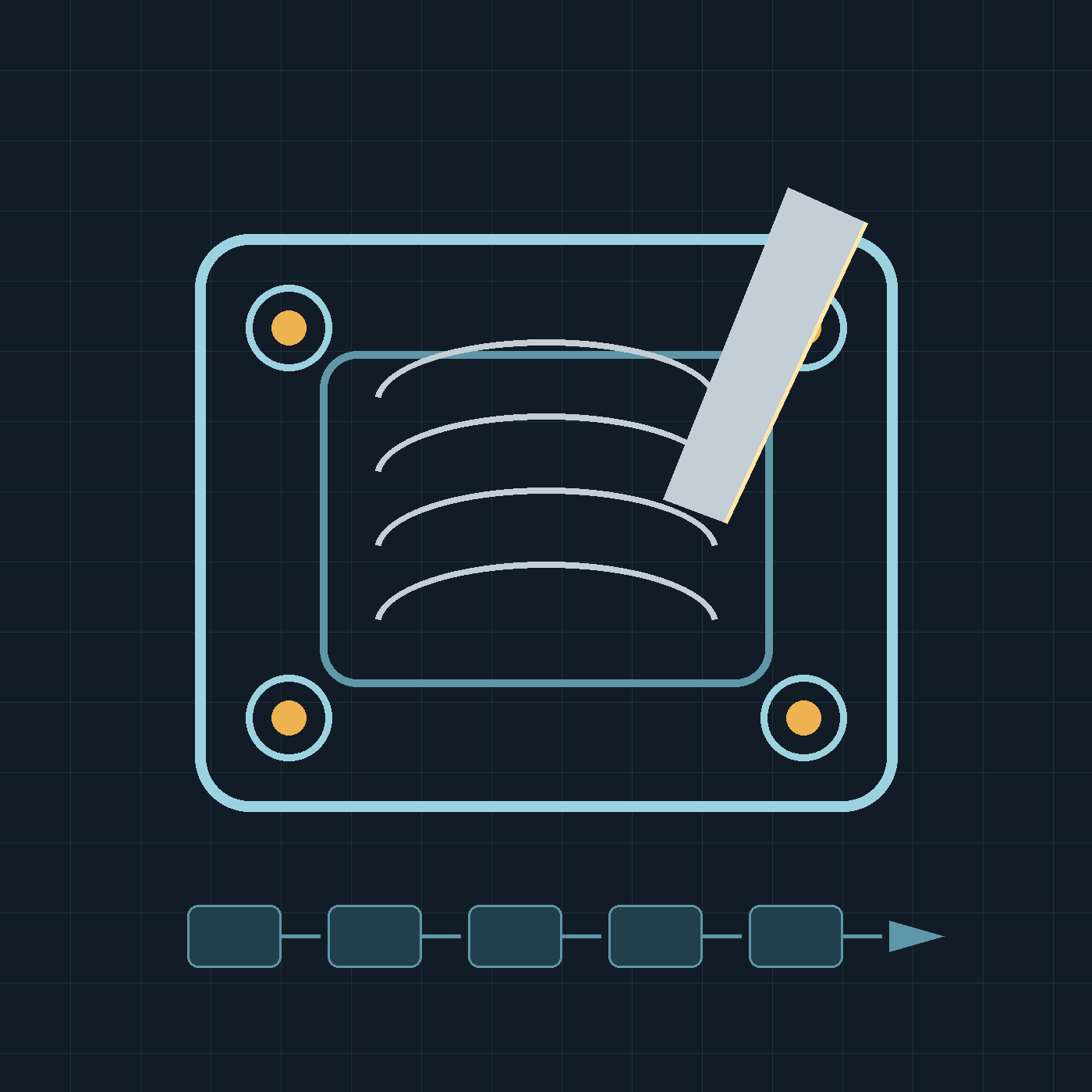
Case basis: This is a realistic hypothetical CNC tooling case for process-planning education, not a verified customer project.
English: 6061 Aluminum Thin-Wall Electronics Housing CNC Case: Pocket Roughing, Rib Support and Burr Control
How to read the housing drawing before choosing carbide tools
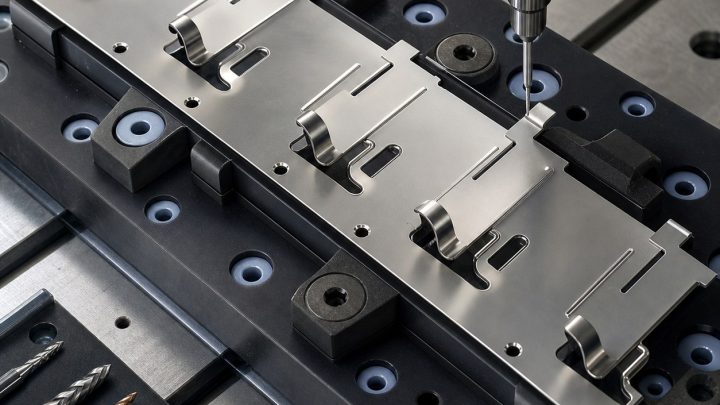
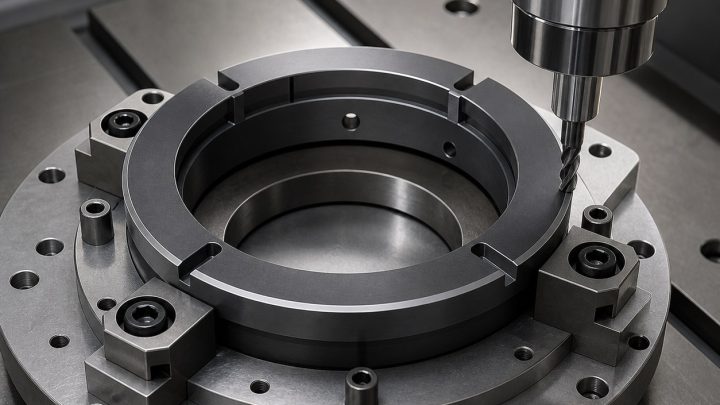
A thin-wall 6061 electronics housing looks simple until the drawing shows deep pockets, light ribs, small corner radii and cosmetic edge requirements on the same part. The tooling plan should protect wall stability first, then chase cycle time. A high-helix polished carbide end mill can remove aluminum efficiently, but only when engagement and workholding prevent the wall from ringing.
Drawing features that drive tool choice
- Deep open pocket with remaining wall sections that can deflect during side milling.
- Internal rib network that should remain supported until late in the process.
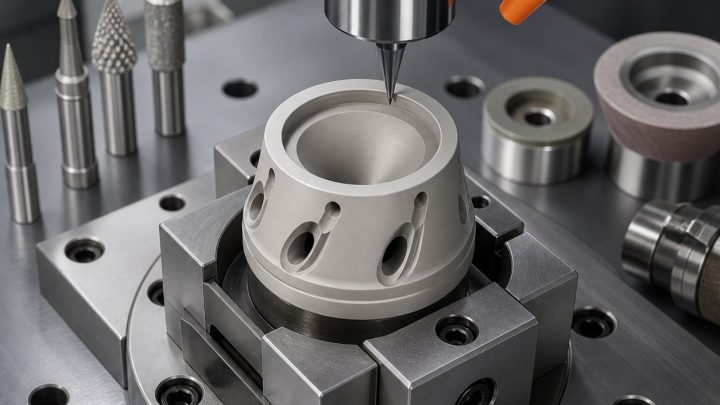
- Small inside corner radii that may require a secondary finishing end mill rather than forcing one tool to do everything.
- Cosmetic outside edges where burr control matters more than maximum material removal rate.
Tooling and process plan
- Use a 3-flute polished carbide end mill for adaptive pocket roughing, keeping radial engagement light and axial depth consistent.
- Leave a controlled finish allowance on thin walls, then finish with climb milling and reduced radial load.
- Machine ribs after the pocket floor is stabilized; avoid isolating narrow ribs too early.
- Use a small carbide chamfer mill after deburring-critical operations instead of relying on manual cleanup.
Risk controls before production
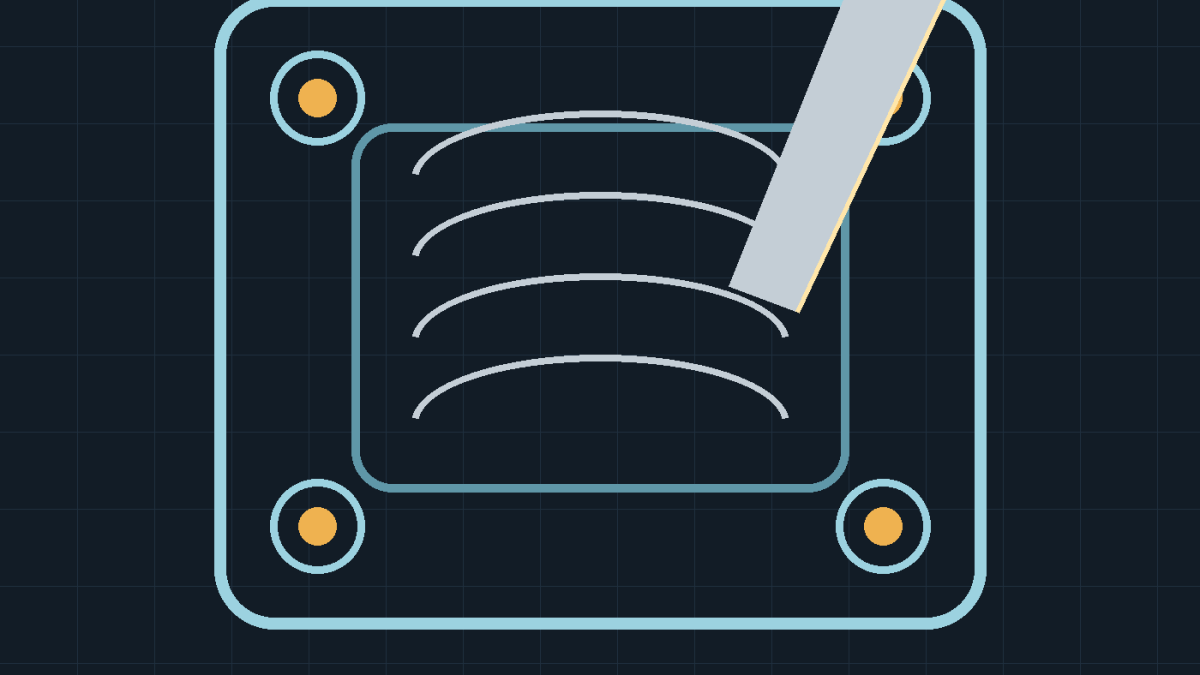
- Check fixture contact under the pocket floor before roughing.
- Avoid full-slotting at thin wall height unless the toolpath is specifically stabilized.
- Confirm corner radius tool reach before selecting a long-neck cutter.
- Inspect burr direction at cross holes and open edges before releasing the process.
FAQ
- Is a 2-flute or 3-flute tool better for 6061? A 3-flute polished carbide end mill is often a good balance for pocketing when chip evacuation is controlled.
- Should the wall be finished in one pass? Usually no; a light semi-finish pass reduces final deflection.
- Can one cutter machine the whole housing? It can be tempting, but a dedicated chamfer tool and a smaller corner tool usually produce a safer process.
中文: 6061 铝合金薄壁电子机箱 CNC 案例:型腔粗加工、加强筋支承与毛刺控制
从薄壁铝壳体图纸反推刀具方案
6061 铝合金电子壳体看起来加工性很好,但图纸里一旦同时出现深腔、薄壁、加强筋、小圆角和外观倒角,刀具方案就不能只看效率。第一目标是控制薄壁振动和变形,其次才是提高去除率。
图纸特征如何影响刀具选择
- 深腔加工后剩余壁厚较薄,侧铣时容易让刀和振纹。
- 内部加强筋需要保留支撑,不能过早孤立出来。
- 内角半径较小,通常需要小直径或长颈刀二次清角。
- 外观边缘要求干净,毛刺控制比单纯提速更重要。
刀具与工艺方案
- 粗加工采用 3 刃抛光槽硬质合金铝用立铣刀,轻径向、大轴向、稳定排屑。
- 薄壁留均匀余量,半精后再低负载顺铣精加工。
- 加强筋区域放到腔体稳定后加工,减少孤立细筋变形。
- 关键外边采用硬质合金倒角刀统一倒角,减少人工去毛刺不一致。
量产前的风险控制
- 确认夹具在腔底下方是否有足够支撑。
- 薄壁高度处避免长距离满槽切削。
- 小圆角刀具要提前校核有效刃长和避让。
- 批量前检查交叉孔、开口边的毛刺方向。
常见问题
- 6061 铝用 2 刃还是 3 刃?排屑允许时,3 刃铝用刀在效率和稳定性上更均衡。
- 薄壁能不能一次精到尺寸?通常不建议,半精余量能降低最终变形。
- 一把刀能不能做完整个壳体?可以减少换刀,但清角和倒角质量通常会受影响。
Français: Cas CNC d’un boîtier électronique à paroi mince en aluminium 6061 : ébauche des poches, soutien des nervures et maîtrise des bavures
Choisir les outils pour un boîtier mince en aluminium 6061
Un boîtier électronique en 6061 devient délicat lorsque le plan combine poches profondes, parois minces, nervures et arêtes visibles. Le choix des fraises doit d’abord limiter la vibration et la déformation, puis seulement optimiser le temps de cycle.
Éléments du plan qui guident le choix des outils
- Poches profondes avec parois susceptibles de fléchir.
- Nervures internes à garder supportées pendant l’ébauche.
- Petits rayons internes nécessitant un outil de reprise.
- Arêtes visibles où le contrôle des bavures est prioritaire.
Plan d’outillage et d’usinage
- Fraise carbure 3 dents polie pour l’ébauche adaptative de l’aluminium.
- Surépaisseur régulière sur parois minces avant une finition légère.
- Usinage des nervures après stabilisation du fond de poche.
- Chanfreinage carbure dédié pour réduire les retouches manuelles.
Points de maîtrise avant série
- Vérifier le support sous la poche.
- Éviter le rainurage plein sur hauteur de paroi.
- Contrôler la portée des outils longs.
- Observer la direction des bavures sur les ouvertures.
FAQ
- Pourquoi 3 dents ? Pour équilibrer débit matière et évacuation copeaux.
- Finition en une seule passe ? Rarement, une semi-finition est plus sûre.
- Un seul outil suffit-il ? Possible, mais moins robuste pour les angles et chanfreins.
Русский: Корпус из алюминия 6061: тонкие стенки, карманы и контроль заусенцев
Выбор инструмента для тонкостенного корпуса из алюминия 6061
Корпус из 6061 кажется простой деталью, но глубокие карманы, тонкие стенки, ребра и декоративные кромки требуют устойчивого плана обработки. Сначала нужно защитить стенки от вибрации, затем оптимизировать время цикла.
Какие элементы чертежа определяют выбор инструмента
- Глубокие карманы и тонкие остаточные стенки.
- Ребра, которые нельзя изолировать слишком рано.
- Малые внутренние радиусы для отдельной чистовой фрезы.
- Видимые кромки с высоким риском заусенцев.
План инструмента и обработки
- Полированная твердосплавная фреза 3 зуба для алюминия.
- Равномерный припуск и легкая чистовая обработка стенок.
- Обработка ребер после стабилизации кармана.
- Отдельная фасочная фреза для стабильного снятия заусенцев.
Контроль рисков перед серией
- Проверить опору в зоне дна кармана.
- Не применять полное пазование на тонкой стенке.
- Проверить вылет длинной фрезы.
- Оценить направление заусенцев на открытых кромках.
FAQ
- Почему 3 зуба? Это компромисс между съемом и эвакуацией стружки.
- Можно ли финишировать за один проход? Обычно безопаснее через получистовой проход.
- Нужен ли отдельный инструмент для фасок? Да, для стабильного качества кромки.