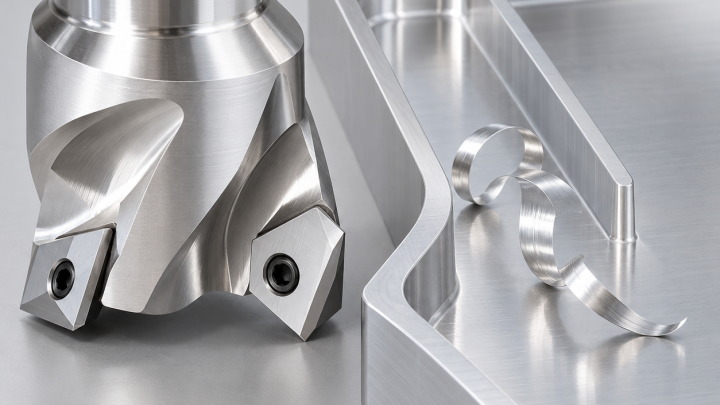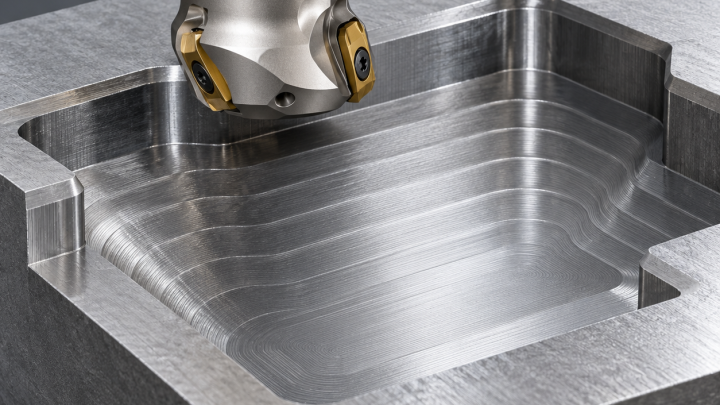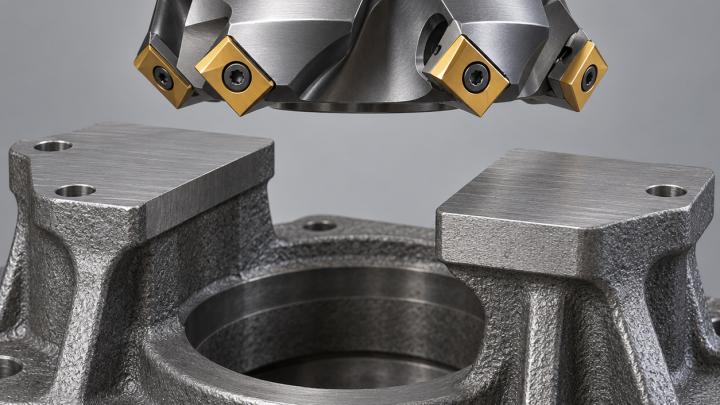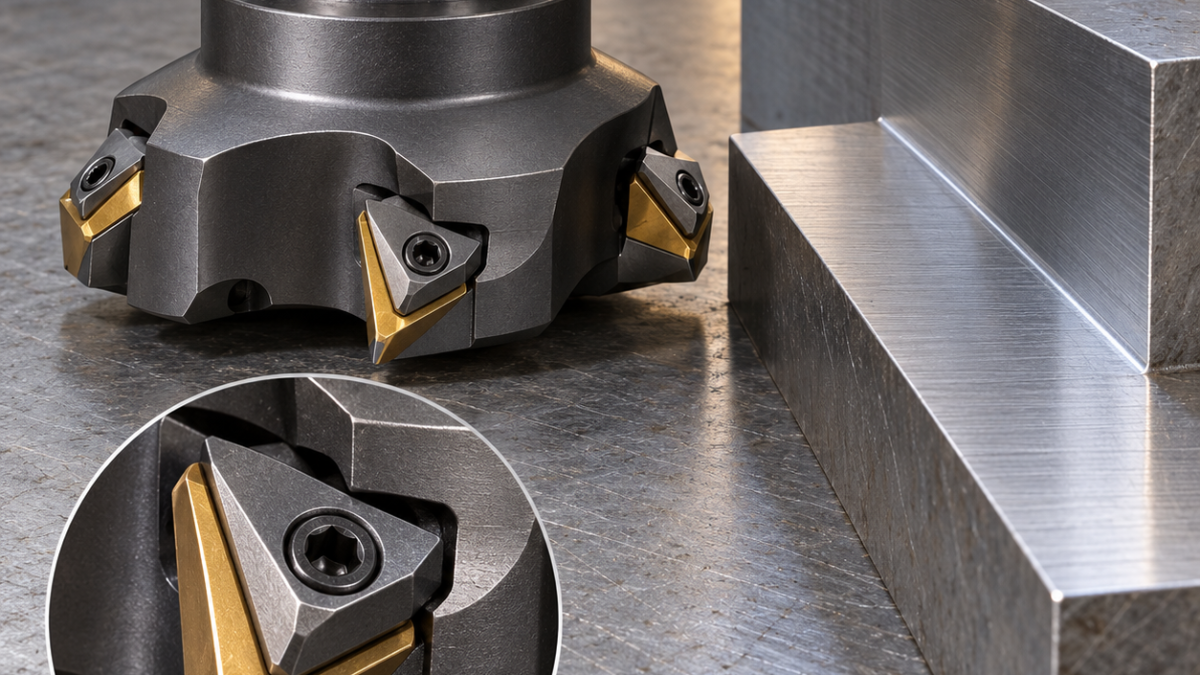
English: TPKN2204 Triangular Inserts: Match the Shoulder-Mill Body
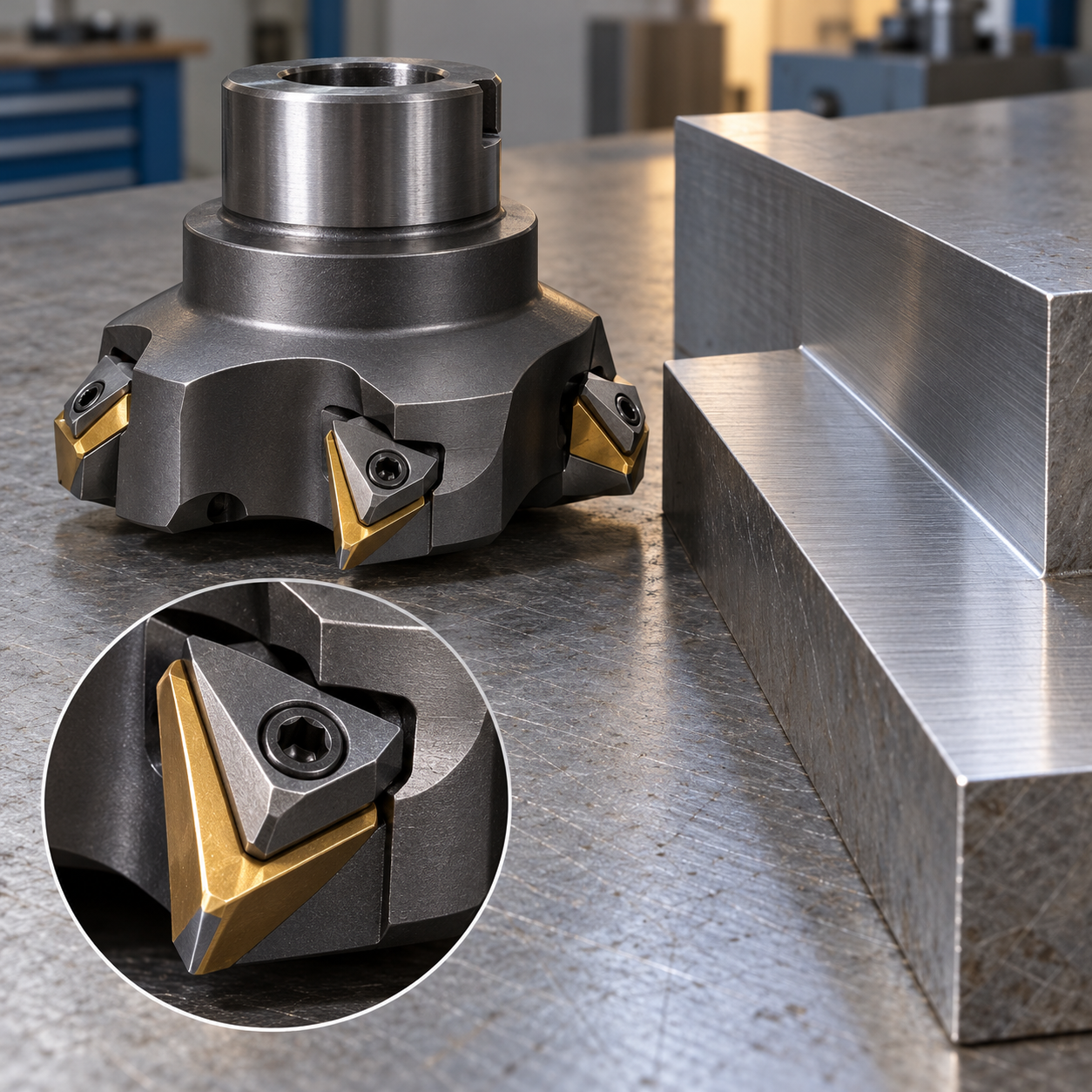
When an existing cutter uses TPKN2204 triangular inserts, identify the body and clamping system before ordering a cheaper box of similar triangles. The insert outline does not establish the cutter’s entering angle or approved operation. This hypothetical repair-shop job uses a documented 90-degree shoulder body to machine a wide shelf on a normalized steel guide plate. Keeping the existing cutter is reasonable only if its seats, clamps and assembly specification are still sound.
Recover the missing information at the tool crib
Read the body marking and obtain its insert list, clamp parts, screw specification and maximum speed. Inspect all supporting faces under magnification. Do not drill an insert, substitute a through-screw design or grind a clamp to make another triangle fit. Some TPKN systems use a top clamp; the correct clamp must press in the intended direction without covering the active edge. A worn seat can make even a new premium insert sit incorrectly.
Turn the shelf drawing into separate tool duties
| Drawing zone | Proposed assembly | Rejected assumption |
|---|---|---|
| Wide shelf and open shoulder | Documented Ø63 five-tooth 90° shell mill accepting the exact TPKN2204 variant; steel-grade carbide with supplier-approved coating and medium edge preparation; short rigid arbor. | A triangular shape does not mean all cutters use the same angle or clamp. |
| Final 10 mm-high wall | Sharp undamaged indexed edges in the same qualified body; axial capacity confirmed, small radial allowance. | Do not assume the nominal insert side length is usable cutting depth. |
| R4 end relief | Ø6 four-flute coated carbide end mill, short cutting length, precise collet holder. | The Ø63 body cannot produce the small end geometry. |
| 0.4 mm edge break | Ø8 three-flute 90° carbide chamfer mill. | Do not freehand grind the locating shoulder to remove a burr. |
Qualify the old body before testing the new grade
Mount the plate on supported parallels, with a side stop resisting the cutting direction. The assumed shelf width is 48 mm and shoulder height 10 mm. Set the cutter offset to avoid an unfavorable centered entry, verify clamp clearance and rough the shelf with a modest axial step. Reserve approximately 0.15 mm radial stock and 0.20 mm floor stock for the trial finishing sequence. These are planning allowances, not guaranteed production settings.
Check radial and axial edge positions after tightening to the manufacturer’s torque. If one seat repeats a high edge after several known-good inserts, investigate the body rather than repeatedly sorting inserts. Finish the wall with uniform stock and inspect floor witness marks separately. Use the supplier’s steel cutting range, body rpm limit and chip capacity; a larger triangular edge is not permission to double depth or feed.
Recognize when refurbishment is not enough
Cracked clamps, damaged threads, visibly displaced seat material or uncertain replacement hardware stop the trial. Replace or have the assembly assessed by a qualified tool service; do not improvise a structural repair at the machine. Keep chips from packing under the top clamps and use consistent coolant practice recommended for the grade. In normalized steel, exit burr growth and local built-up material are useful early warnings of a deteriorating edge.
The study targets shoulder height ±0.03 mm, wall straightness 0.04 mm over 120 mm and Ra 3.2 μm. Inspect after deburring and unclamping, including the R4 relief and clearance to the mating guide. Compare edge-damage diagnosis with assembly runout checks.
TPKN replacement FAQ
Can I use any TPKN2204 with the same outside dimensions? No. The complete geometry, support, clamp compatibility and approved cutter list still matter.
Is a modern insert always cheaper per part? Not necessarily. Compare qualified tool life, setup reliability and finish operations, not only the number of nominal corners or the box price.
Manufacturer reference: dimensions and system compatibility.