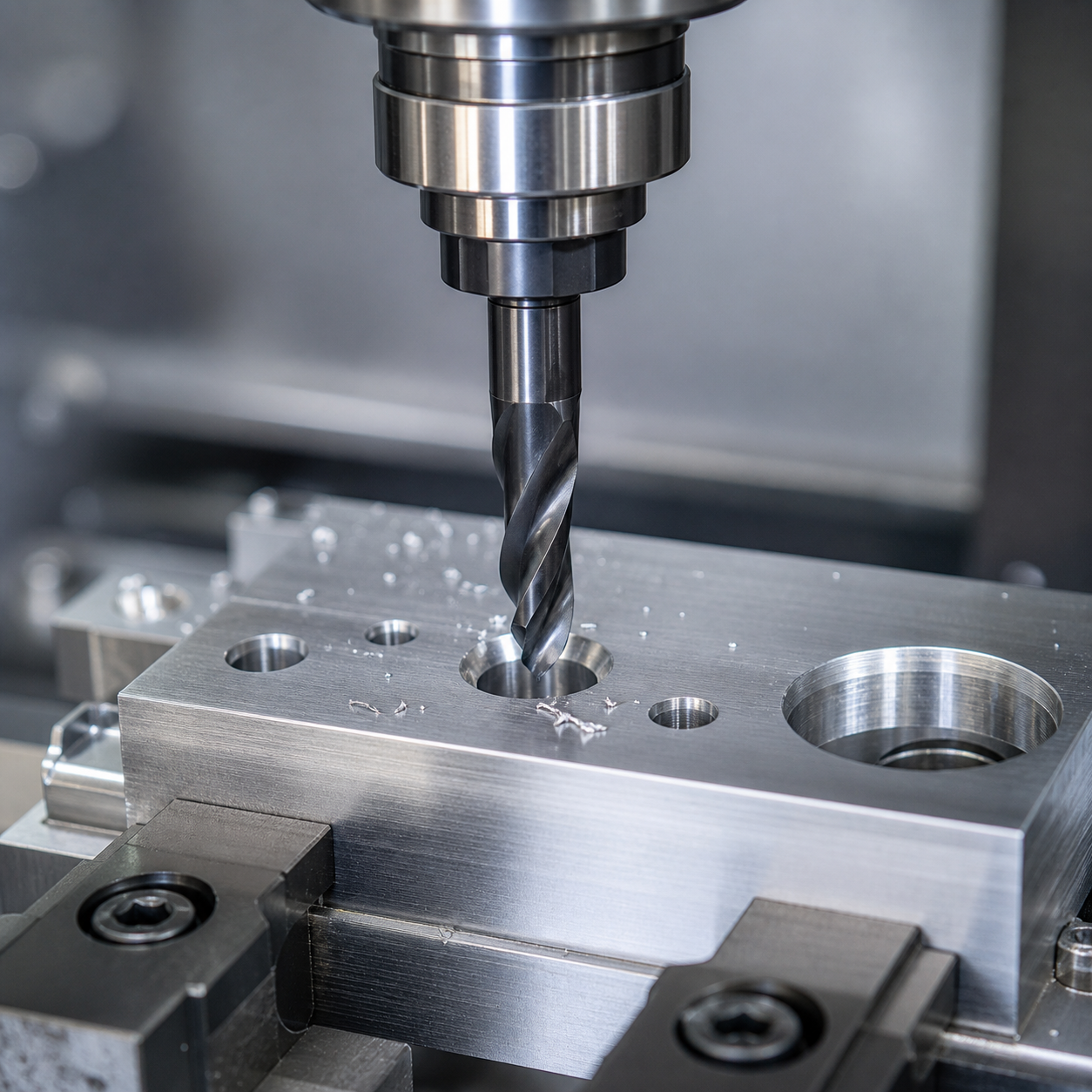
English: Drill Mill Selection for Spotting, Chamfering and Light Milling
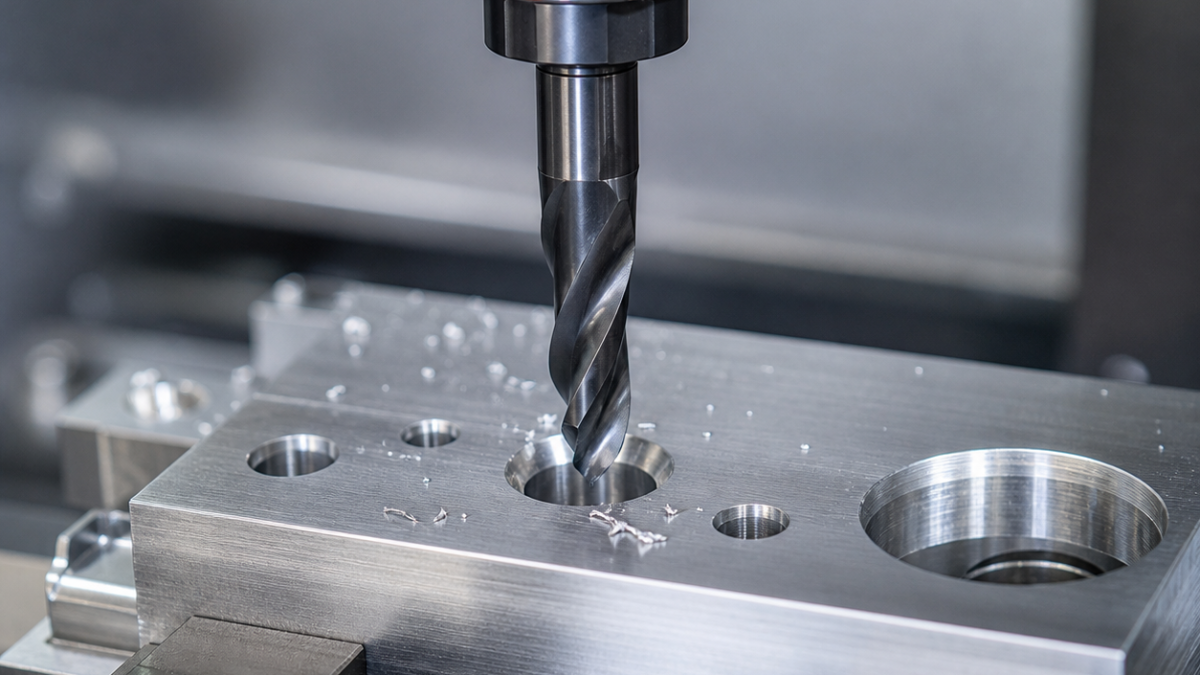
A drill mill is useful only when one geometry fits several low-load features. It can spot a drill, break an edge and make a short interpolation, but it is a compromise: the point is not a flat-bottom drill and the side flutes are not a full-length end mill.
Match point angle to the drawing
Check whether the callout defines chamfer angle per side, included countersink angle, diameter at the top, or only edge break. A 90-degree drill mill creates a 45-degree chamfer; it cannot replace a 100-degree countersink. Choose a diameter large enough to cover the chamfer without rubbing the shank and a flute length that supports only the required side cut.
| Feature / risk | Tool decision | Rejected alternative | Inspection |
|---|---|---|---|
| Spot before drilling | 90° or 120° center-cutting drill mill matched to drill point | Long side-cutting end mill | Spot diameter and position |
| Edge break | Tool angle matched to C callout | Wrong included-angle countersink | Chamfer width and runout |
| Short circular relief | Short rigid flutes, light radial engagement | Deep slot at full width | Taper and blend |
| Critical fastener seat | Dedicated countersink with pilot when required | General drill mill | Contact ring and angle |
Control runout, entry and verification
Use a short precision collet, hydraulic or shrink holder. Spot on center with a shallow dwell-free move, chamfer after hole size is stable, and use circular milling only at light radial load. Inspect chamfer diameter and runout, hole entry position, burr direction and side-wall taper. Reject the tool for deep drilling, critical countersink contact, long slots or a flat-bottom requirement.
Related decision paths: chamfer and deburring tool guide; thread milling guide; helical interpolation guide.
Drill-mill questions
Can it drill a full-depth hole? Only when the maker rates the exact tool for that depth; normally a drill is better. Can it replace a countersink? Not when angle or bearing contact is critical. Why chamfer last? Final hole size then locates the edge break consistently.