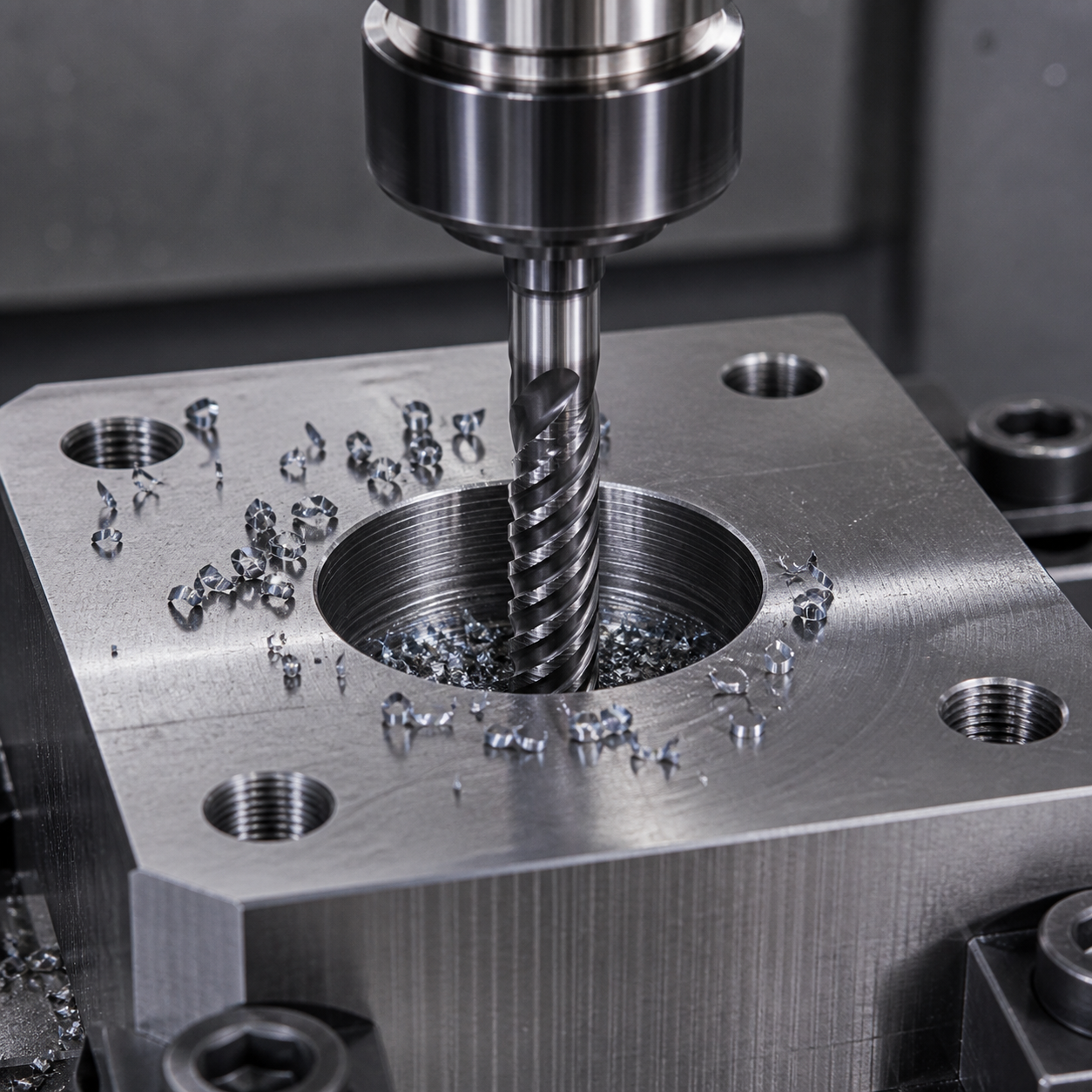
English: Helical Interpolation Turns an End Mill into a Flexible Hole-Making Tool
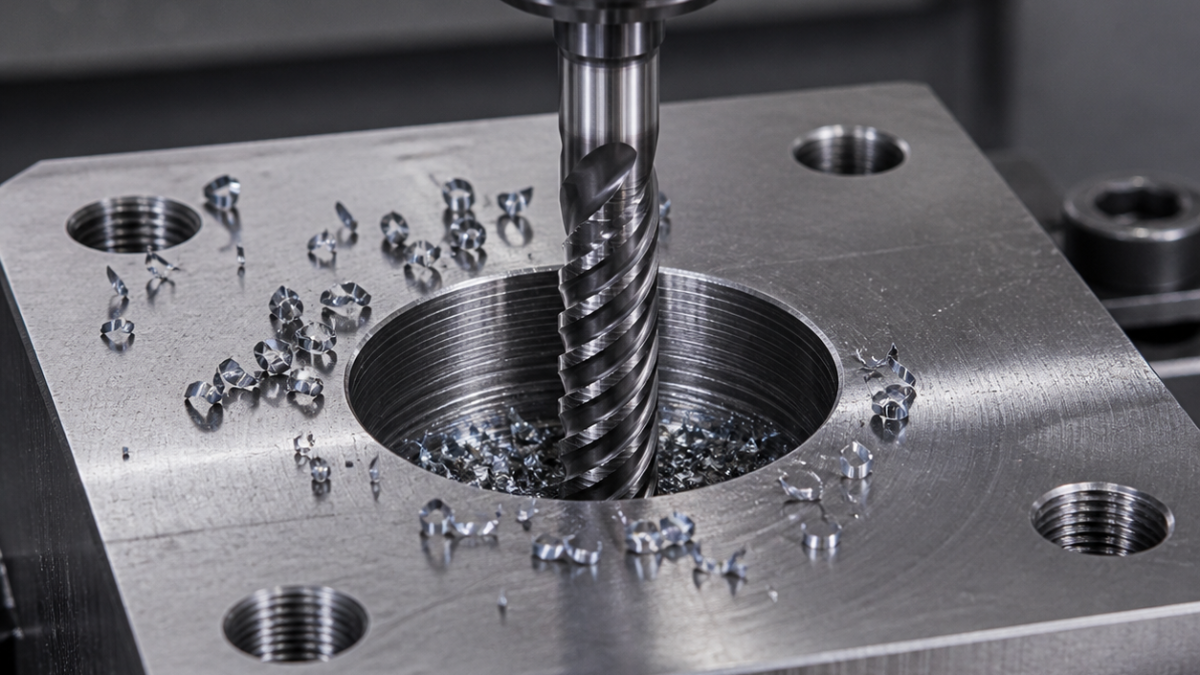
Helical interpolation allows a CNC machine to create holes by moving a carbide end mill in a circular path while feeding downward. Compared with drilling only, this method can produce different hole sizes with one tool and improve control over bore diameter. It is useful for prototype machining, small batches and parts where tool change time matters.
The process requires a rigid setup and a suitable end mill. Tool deflection, chip evacuation and entry angle all affect bore quality. A stable ramp angle helps the cutter enter the material without sudden overload. For tight tolerances, a light finishing circle can improve size accuracy and surface finish.
Best-practice checks
Measure the finished bore, inspect roundness and confirm that chips are leaving the cut. If the bore is tapered or oversized, review tool runout, radial engagement and compensation values. Helical interpolation works best when cutting pressure is predictable.