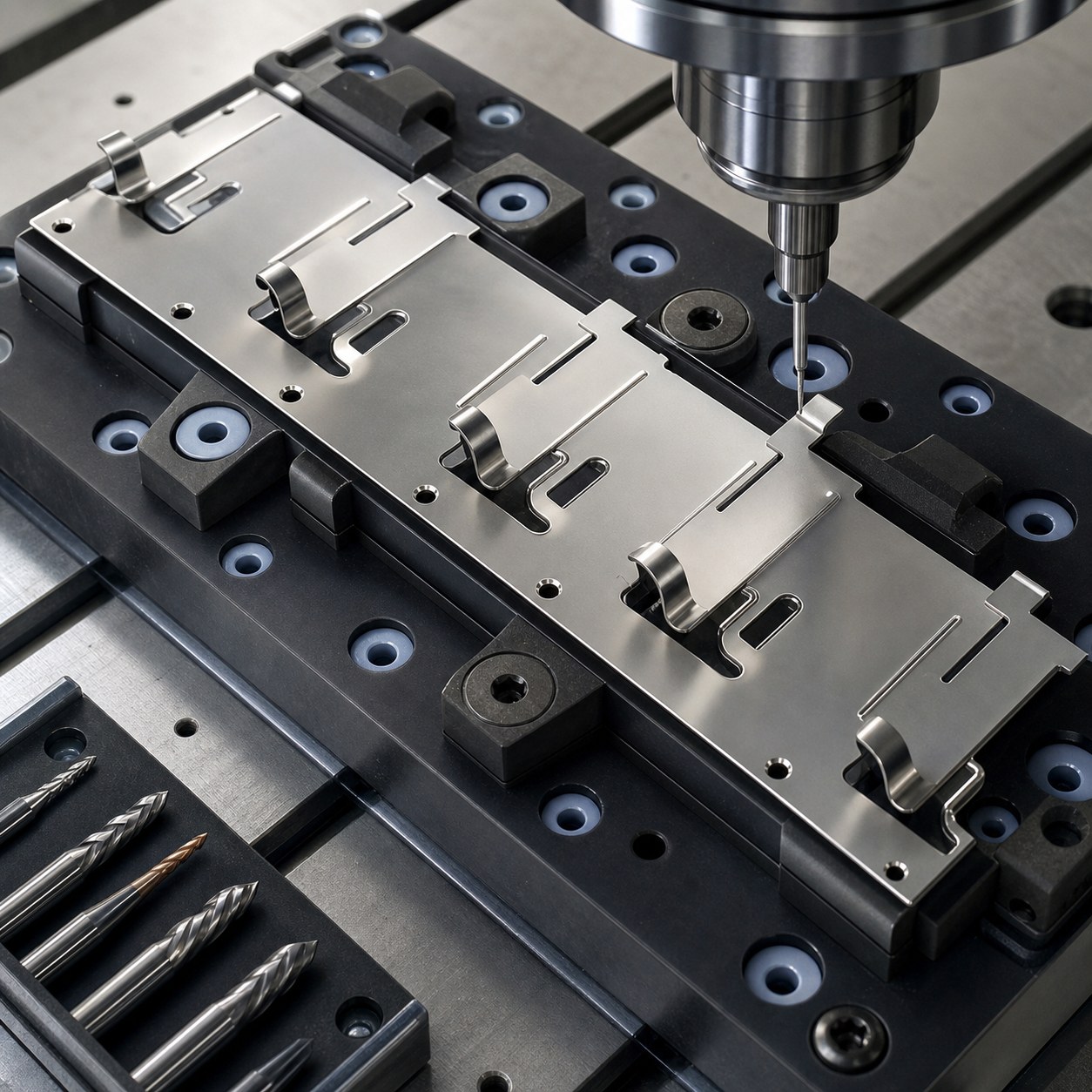
English: 17-7PH Spring Clip Strip CNC Tool Selection for Burr-Free Latch Tabs
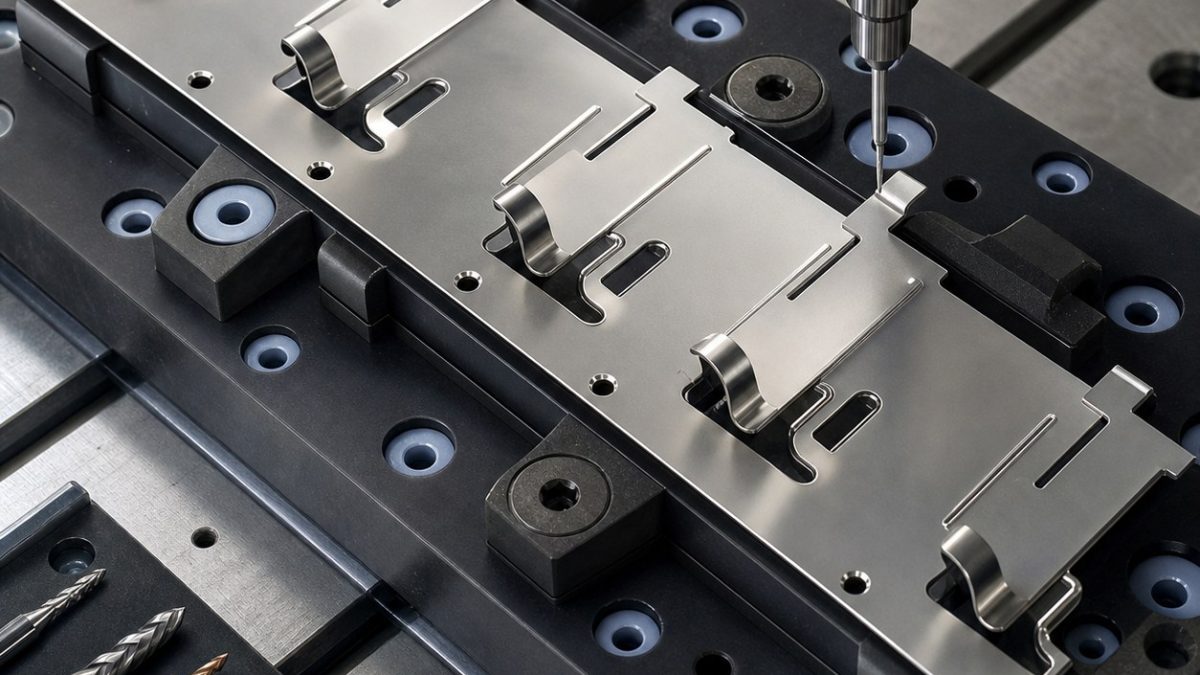
This hypothetical case targets a long-tail problem: how to select CNC tools for a 17-7PH spring clip strip when the drawing includes narrow relief slots, curled latch tabs, tiny countersunk holes and edges that must remain burr-free before forming. The part looks simple, but the process fails if the sheet lifts, the slot cutter rubs, or the tab edge work-hardens before bending.
Drawing interpretation
The functional features are not the outer rectangle; they are the slot ends, latch-tab roots, hole countersinks and burr direction. Unlike a thick 17-4PH bracket case such as cross-hole clevis machining, this strip must be held continuously and inspected after release.
Feature-to-tool selection table
| Drawing feature | Tool selection | Rejected option |
|---|---|---|
| Relief slots | 1.5 mm 3-flute sharp carbide end mill, TiAlN, minimum stickout | A 4-flute tool packs chips and smears the slot wall. |
| Latch-tab root radius | 2 mm corner-radius end mill, spring pass after unclamp sample | A square tool creates a crack starter. |
| Tiny countersunk holes | Carbide drill plus 90-degree micro chamfer mill | A single combined drill-chamfer tool is rejected until burr direction is proven. |
| Final edge break | Small polished carbide deburring mill, climb-only touch path | A brush alone folds burrs into the bend zone. |
Fixture, toolpaths and inspection
The strip is supported on a vacuum-assisted nest with mechanical edge stops and sacrificial underlay. Slotting uses shallow step-down, high air blast and short retracts to prevent heat. Finishing leaves the tab root until nearby slots are opened so the sheet does not flutter. Inspection checks slot width, burr direction, countersink depth and springback after a sample forming pass. The fixture logic connects to thin-sheet vacuum fixturing and the burr logic to thin-wall burr control.
FAQ
Why use a 3-flute micro end mill? It balances edge strength and chip space in stainless sheet.
When are tabs inspected? Before and after forming, because burrs can become cracks.
What limits tool life? Work hardening at slot exits and loss of edge sharpness.