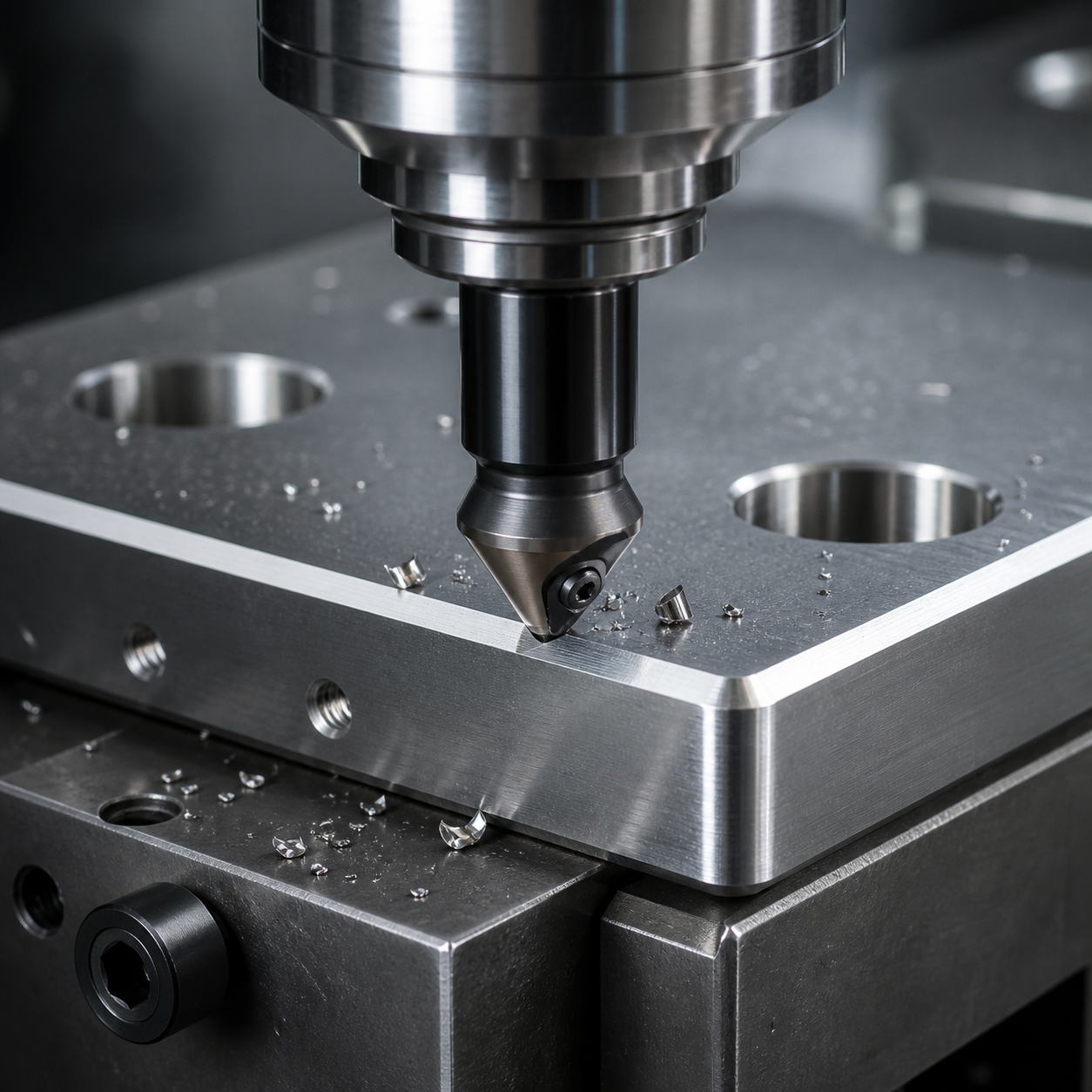
English: Edge Quality Is Part of Precision Machining
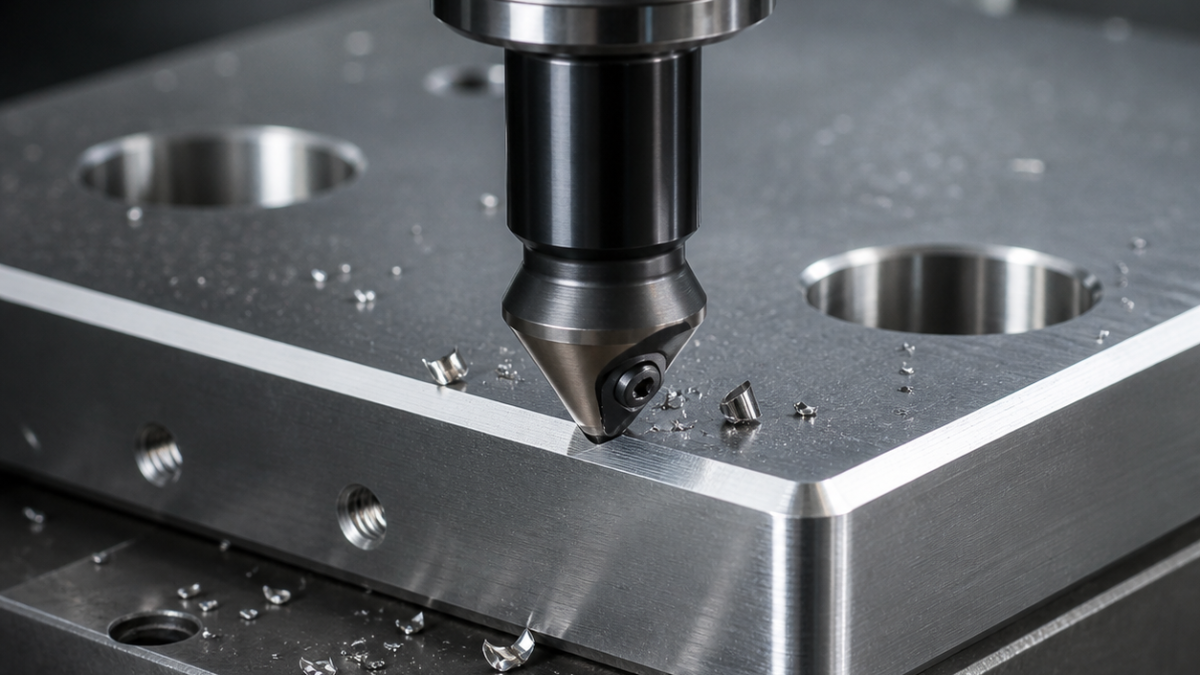
CNC chamfering and deburring are often treated as secondary operations, but edge quality affects assembly, safety and product appearance. A carbide chamfer mill can create controlled edge breaks, remove burrs and improve consistency from part to part. When the chamfer operation is programmed correctly, manual deburring time can be reduced.
Tool angle, toolpath direction and cutting depth all affect the final edge. A light and stable pass usually produces a cleaner chamfer than an aggressive cut. For aluminum, a sharp tool helps prevent smearing. For steel, coating and edge strength become more important.
Practical edge-control tips
Keep the tool centered on the intended edge, avoid excessive pressure on thin features and verify burr direction after machining. Consistent chamfers improve downstream assembly and reduce inspection problems.