English: AlTiN Coating for Aluminum? Choose ZrN, DLC, PCD or Polished Carbide
Direct answer: why AlTiN usually fails in aluminum
AlTiN is optimized for hot ferrous and heat-resistant cutting, where its aluminum-bearing oxide layer protects the edge. In aluminum workpieces, the coating does not solve adhesion: an insufficiently polished edge, small flute space, recut chips or weak lubrication can build a welded lump that changes rake and size. For 6061 or 7075 pockets, begin with polished uncoated carbide or ZrN; consider DLC for abrasive high-silicon aluminum and PCD for stable high-volume finishing. Reject “hardest coating wins” as a selection rule.
Built-up-edge check before changing coating
Stop and inspect the flute with magnification. Aluminum smeared behind the edge indicates adhesion; evenly worn clearance suggests abrasion; isolated corner chips point to entry, runout or stock variation. Check concentration and delivery of coolant/MQL, chip evacuation, flute count, holder runout and real chip thickness before ordering another coating. Connect this decision to the high-speed aluminum chip-control guide, the PCD finishing guide and the runout diagnostic.
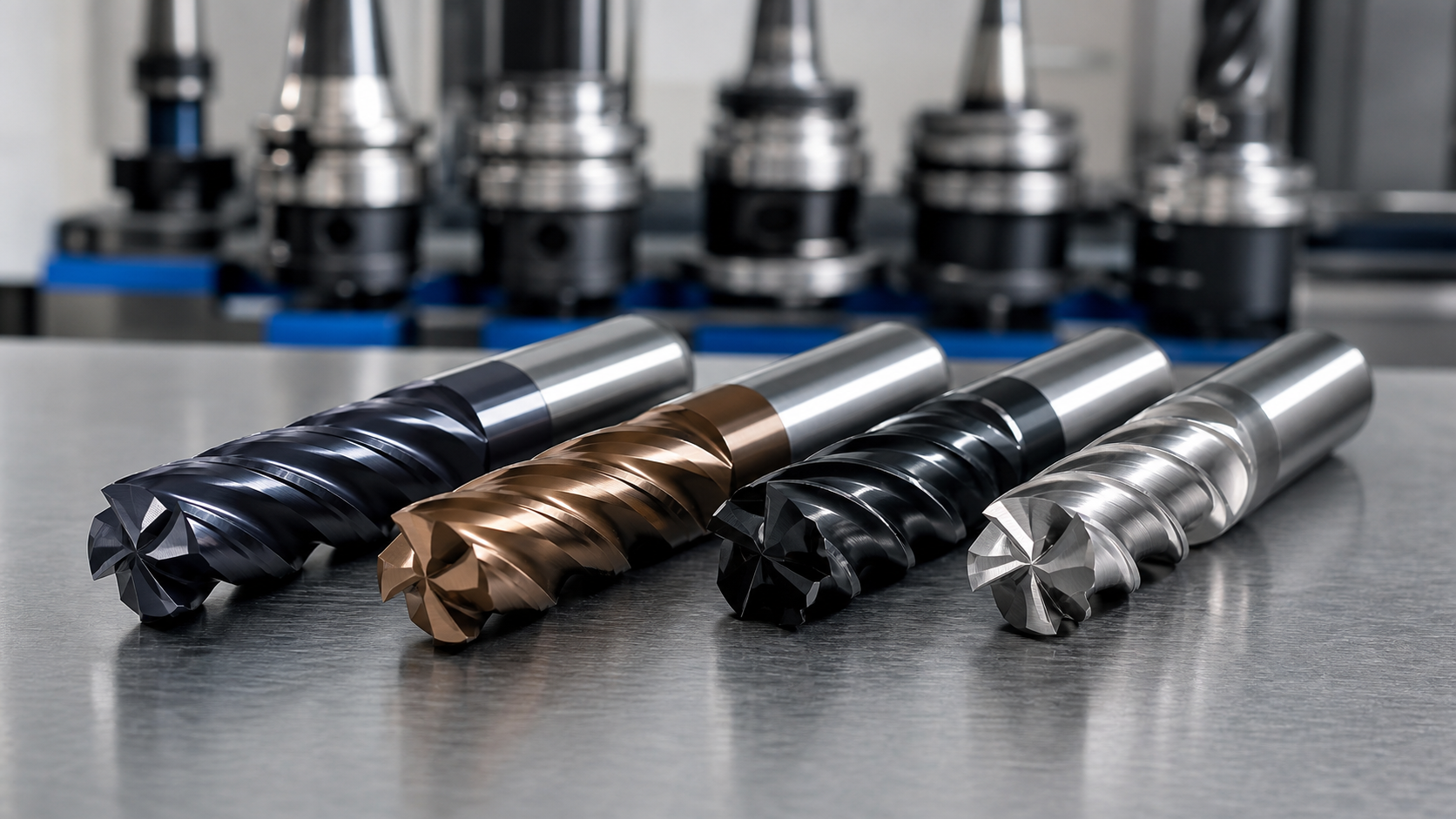
If the question is whether an AlTiN-coated end mill should cut aluminum, the practical answer is usually no for ordinary wrought aluminum. AlTiN is designed to retain hardness in hot steel cutting, but its aluminum-rich surface and commonly honed edge do not provide the low-adhesion, sharp geometry needed for gummy aluminum chips. Use a polished uncoated tool, ZrN, TiB2 or a qualified DLC tool unless an abrasive aluminum composite or a proven application demands something else.
Select coating after chip behavior, not by hardness alone
AlTiN and TiAlN form a heat-resistant oxide layer and work best when steel or stainless cutting generates enough temperature for the coating to help. They suit rigid machines, stable engagement and carbide substrates with an edge hone sized for the load. In aluminum, chemical affinity and a less polished surface encourage built-up edge; once aluminum welds to the flute, cutting diameter grows, finish tears and the next chip can break the edge.
Material and operation to end-mill decision table
| Material / operation | Recommended end mill and holder | Why / rejected alternative |
|---|---|---|
| 6061/7075 rough pockets | 2–3 flute polished uncoated or ZrN carbide; high positive rake; hydraulic or precision collet | Prioritize chip space and low adhesion; AlTiN and five-flute tools pack gummy chips. |
| Aluminum finish walls | 3 flute DLC or polished uncoated carbide; sharp edge; shrink-fit or low-runout collet | Low friction and runout protect finish; a heavy hone rubs and builds an edge. |
| Low-carbon/alloy steel | 4–6 flute AlTiN carbide with controlled edge hone | Hot hardness and oxidation resistance help; uncoated sharp aluminum geometry lacks edge strength. |
| Austenitic stainless | 4–5 flute AlTiN/TiAlN variable helix, tough carbide grade | Heat and notch resistance matter; excessive flute count still traps stringy chips. |
| High-silicon aluminum or MMC | PCD/diamond-coated tool after abrasion review | Abrasive particles dominate wear; AlTiN does not solve substrate abrasion. |
Match flute count, edge preparation and coolant to the coating
For 6061 and 7075 pockets, start with two or three polished flutes, a high positive rake, generous flute volume and minimum overhang. Uncoated carbide gives the sharpest economical edge; ZrN or TiB2 reduces adhesion in repeated production; DLC lowers friction for non-ferrous finishing when the grade, substrate and coolant are compatible. For high-silicon cast aluminum or metal-matrix composite, abrasion may justify diamond-based tooling, not a default AlTiN end mill.
Diagnose failure before changing the coating
Do not blame the coating before checking runout, flute loading, coolant direction, radial engagement and evacuation. A gray smear on the rake face indicates adhesion; corner polish and rising spindle load suggest recutting; a chipped honed edge can mean the tool was too blunt for the chip thickness. Record burr height, surface roughness and tool diameter trend at fixed intervals, then change one variable at a time.
Related machining guides: carbide end-mill geometry and cutting parameters; 7075 waveguide pocket tooling.
End-mill coating FAQ
Can AlTiN ever cut aluminum? It may cut briefly, but it is rarely the first choice for wrought aluminum and should be justified by a controlled trial. ZrN or DLC? ZrN is a robust general production option; DLC offers lower friction for clean non-ferrous finishing but needs compatible temperature and coolant. Two or three flutes? Two maximizes chip space; three can raise productivity when evacuation and rigidity are proven.
Coolant-path follow-up: When aluminum adhesion persists despite the right coating and polished edge, verify whether the tool can deliver fluid and evacuate chips with the coolant-through end-mill guide; coating cannot compensate for a flute packed with recut chips.