Case basis: This is a realistic hypothetical CNC tooling case for process-planning education, not a verified customer project.
English: 316L Sanitary Valve Body CNC Case: Hygienic Bore Finish, Thread Milling and Seal-Face Strategy
A sanitary valve body is won or lost at the bore and seal face
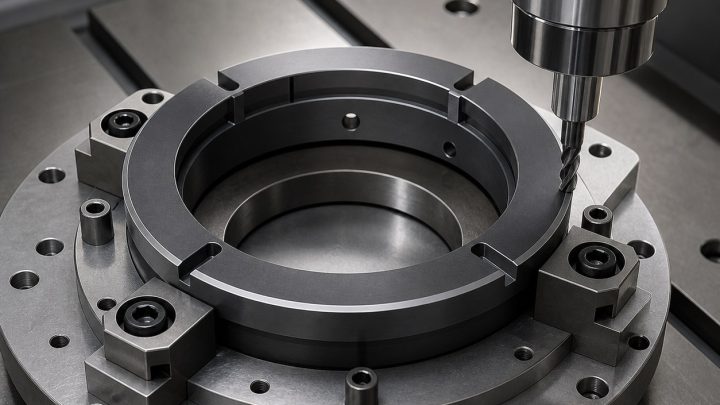
A 316L sanitary valve body may contain flange faces, internal bores, threaded ports and sealing surfaces. The drawing may call out smooth internal transitions and clean sealing faces. Tooling should reduce work hardening, prevent torn stainless edges and protect the final surface from secondary operations.
Drawing features that drive tool choice
- Hygienic bore with smooth transition expectations.
- Threaded side ports that can distort if drilled and tapped too aggressively.
- Seal face that must remain protected after finishing.
- Austenitic stainless chip control problem during deep boring.
Tooling and process plan
- Rough bores with a stable boring strategy and leave enough stock for a controlled finish pass.
- Use carbide end mills with stainless-appropriate coating for port interpolation and face preparation.
- Thread mill side ports to reduce tapping torque and improve control in 316L.
- Finish seal faces late, then protect them from chip dragging and clamp contact.
Risk controls before production
- Avoid dwell marks in the bore and at the seal face.
- Use chip breaking and coolant direction to prevent recutting stainless chips.
- Confirm thread gauge fit without forcing a tap through work-hardened material.
- Separate deburring tools from final sealing operations.
FAQ
- Why thread mill instead of tap? Thread milling lowers torque and gives better control in stainless ports.
- When should the seal face be finished? Late in the process, after heavy cutting is complete.
- What causes poor bore finish in 316L? Rubbing, recut chips and unstable boring are common causes.
中文: 316L 卫生级阀体 CNC 案例:洁净孔精加工、螺纹铣削与密封面策略
316L 卫生级阀体的孔、螺纹和密封面工艺
316L 卫生级阀体通常有内孔、侧向螺纹口、法兰面和密封面。图纸强调内孔过渡和密封表面时,刀具方案要避免加工硬化、撕裂毛刺和后续工序划伤。
图纸特征如何影响刀具选择
- 内孔需要平顺过渡,不能有明显振纹和停刀痕。
- 侧向螺纹口在 316L 上攻丝扭矩和断屑风险较高。
- 密封面完成后必须避免夹伤和切屑拖伤。
- 深孔镗削时不锈钢切屑容易二次切削。
刀具与工艺方案
- 内孔粗镗保留稳定精镗余量,最后用受控精镗保证表面。
- 端面和插补口采用适合不锈钢的涂层硬质合金刀具。
- 侧孔优先考虑螺纹铣削,降低扭矩并提高螺纹质量可控性。
- 密封面安排在重切削后完成,并在后续工序保护。
量产前的风险控制
- 避免内孔和密封面停留造成刀痕。
- 冷却方向要帮助排屑,减少不锈钢切屑二次切削。
- 螺纹检测不能依赖强拧通规掩盖加工硬化问题。
- 去毛刺工序不要破坏最终密封表面。
常见问题
- 为什么用螺纹铣而不是攻丝?316L 中螺纹铣削扭矩低,断刀风险更可控。
- 密封面什么时候加工?通常放在重切削完成之后。
- 316L 内孔表面差的原因是什么?摩擦、切屑二次切削和镗杆不稳定最常见。
Français: Cas CNC d’un corps de vanne sanitaire en 316L : finition hygiénique de l’alésage, fraisage des filetages et stratégie des faces d’étanchéité
Corps de vanne sanitaire 316L : alésage et face d’étanchéité
Un corps de vanne sanitaire en 316L demande une attention particulière aux alésages, filetages latéraux et faces d’étanchéité. Le plan d’outillage doit limiter l’écrouissage et protéger les surfaces finales.
Éléments du plan qui guident le choix des outils
- Alésage interne avec transition lisse.
- Ports filetés latéraux difficiles à tarauder.
- Face d’étanchéité à protéger après finition.
- Copeaux inox longs lors de l’alésage profond.
Plan d’outillage et d’usinage
- Ébauche d’alésage stable avec surépaisseur de finition.
- Fraises carbure adaptées à l’inox pour interpolation.
- Filetage par fraisage pour réduire le couple.
- Finition tardive des faces d’étanchéité.
Points de maîtrise avant série
- Éviter les marques d’arrêt.
- Diriger l’arrosage pour éviter la recoupe.
- Contrôler les filetages sans forçage.
- Séparer ébavurage et surfaces finales.
FAQ
- Pourquoi fraiser le filetage ? Pour réduire le couple et contrôler la qualité.
- Quand finir la face ? Après les opérations lourdes.
- Pourquoi l’alésage est mauvais ? Frottement, copeaux recoupés et instabilité.
Русский: Клапан 316L: чистовое отверстие, резьбофрезерование и уплотнительные торцы
Корпус санитарного клапана 316L: отверстие, резьба и уплотнение
Корпус клапана из 316L требует контроля внутренних отверстий, боковых резьб и уплотнительных поверхностей. План инструмента должен уменьшать наклеп и защищать чистовые поверхности.
Какие элементы чертежа определяют выбор инструмента
- Гигиеническое отверстие с плавным переходом.
- Боковые резьбовые порты с риском высокого момента.
- Уплотнительная поверхность после финиша.
- Длинная стружка при расточке нержавеющей стали.
План инструмента и обработки
- Стабильная черновая расточка с припуском на финиш.
- Твердосплавные фрезы для нержавеющей стали.
- Резьбофрезерование вместо тяжелого нарезания метчиком.
- Финиш уплотнения после тяжелой обработки.
Контроль рисков перед серией
- Не допускать следов остановки.
- Направлять СОЖ для удаления стружки.
- Проверять резьбу без силового прохода.
- Отделить снятие заусенцев от финальных поверхностей.
FAQ
- Почему резьбофрезерование? Ниже момент и выше управляемость.
- Когда финишировать уплотнение? После тяжелых операций.
- Почему плохая поверхность отверстия? Трение, повторное резание стружки и нестабильность.