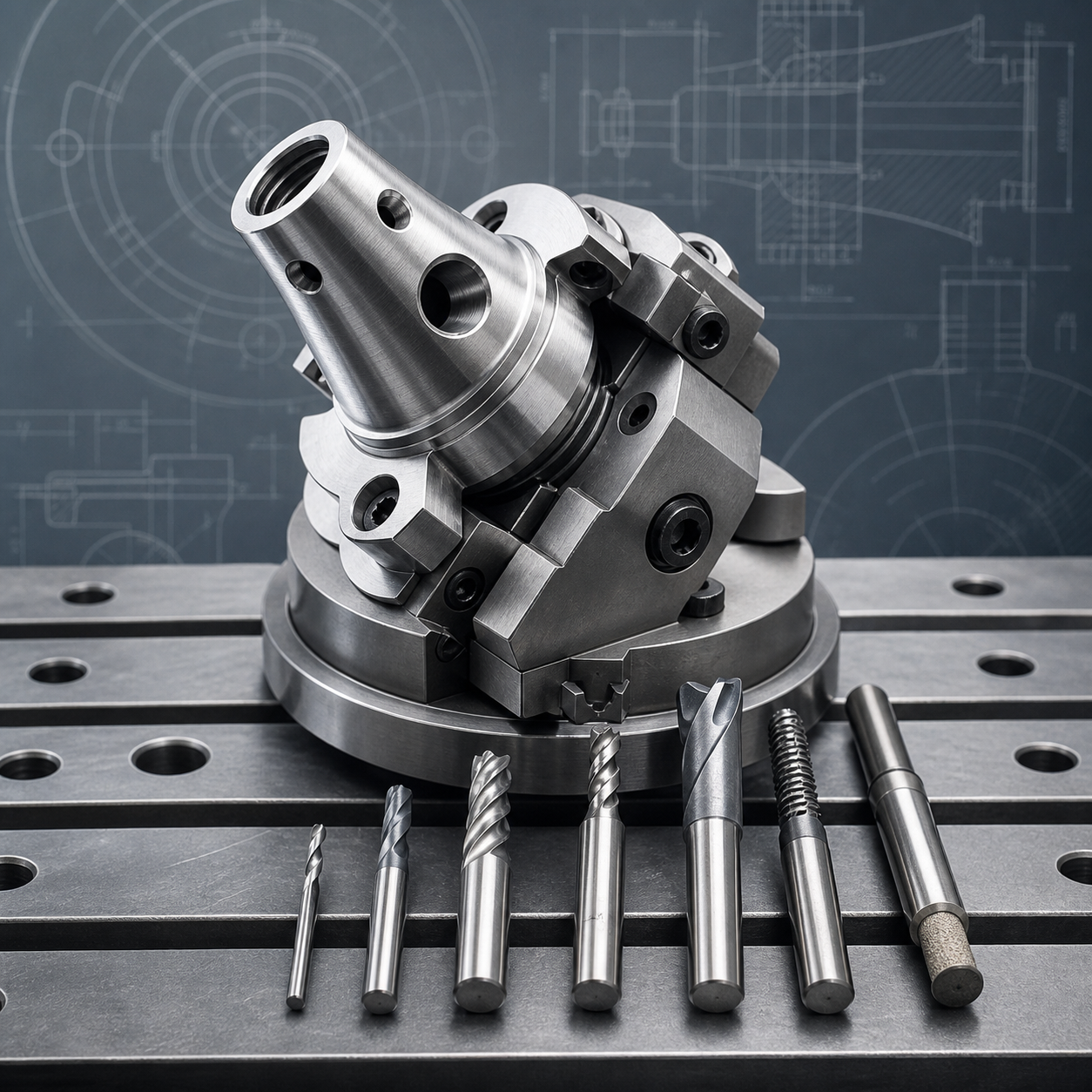
English: reading the mixing-nozzle drawing
This hypothetical Hastelloy C-276 nozzle combines a central flow bore, tapered exterior, sealing shoulder, threaded connection and several compound-angle ports that intersect the main passage. The drawing must be treated as a network of functional relationships: the sealing shoulder locates the assembly, the bore controls flow, and the port axes must meet the bore without leaving loose burrs. C-276 work-hardens quickly, so every tool must cut positively instead of rubbing.
Datum and five-axis fixture plan
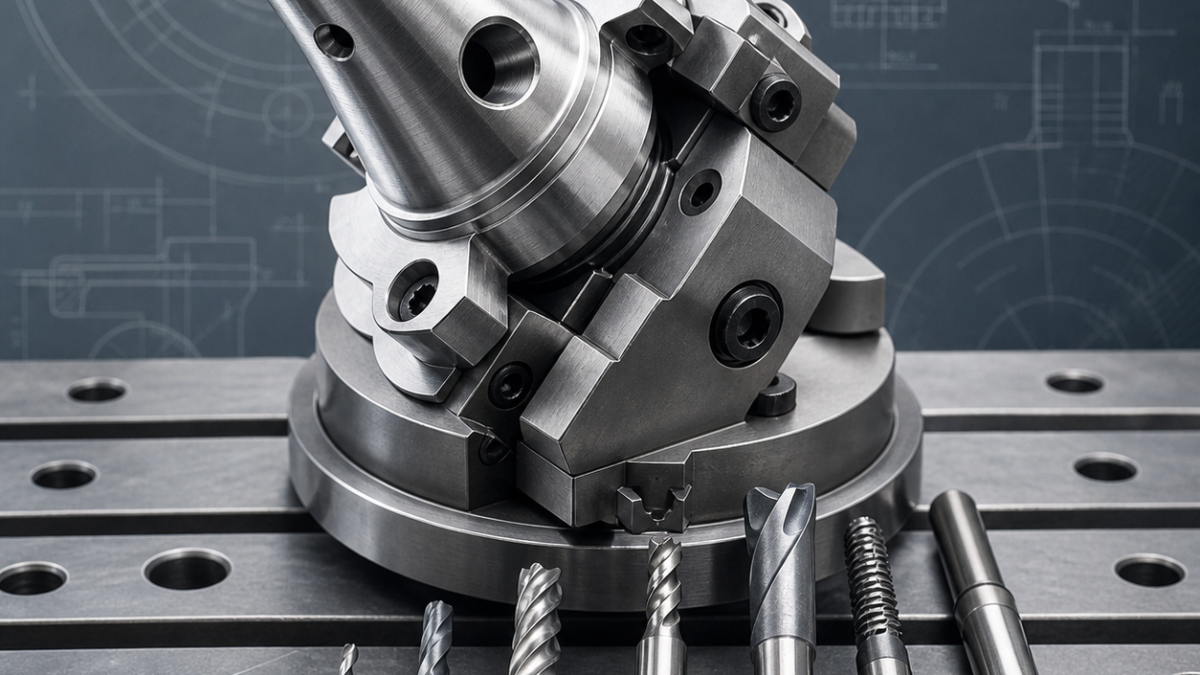
Turn the connection, reference shoulder and central bore in one setup. Locate the second operation on the finished pilot and shoulder using a rigid collet or dedicated nest. A five-axis trunnion lets each angled port be presented close to normal to the drill, reducing wander and long-tool deflection. Verify fixture clearance for the drill tip and back-deburring tool before releasing the program.
Tool package and sequence
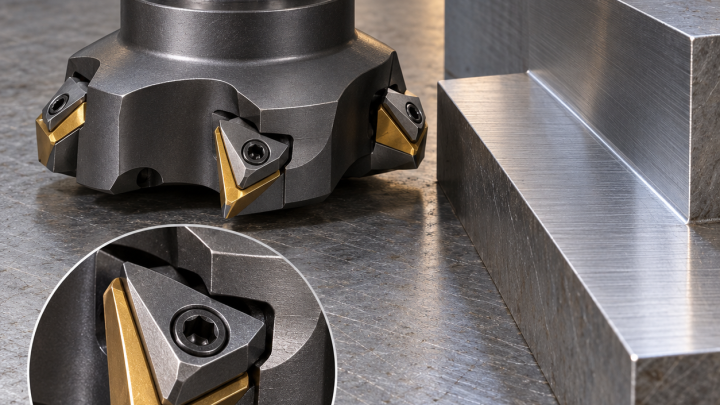
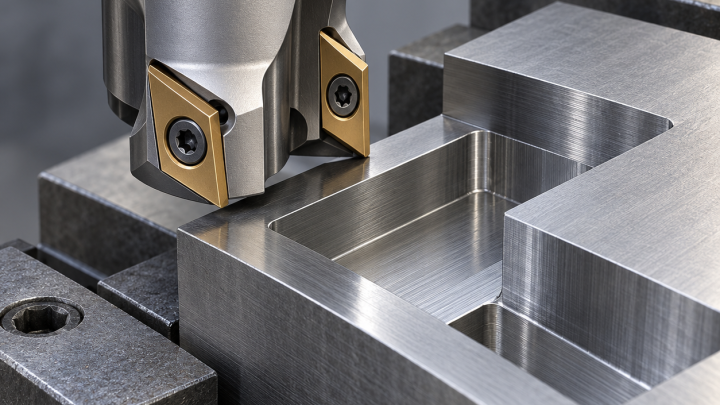
- A sharp positive-rake carbide insert turns the taper and shoulder with uninterrupted feed.
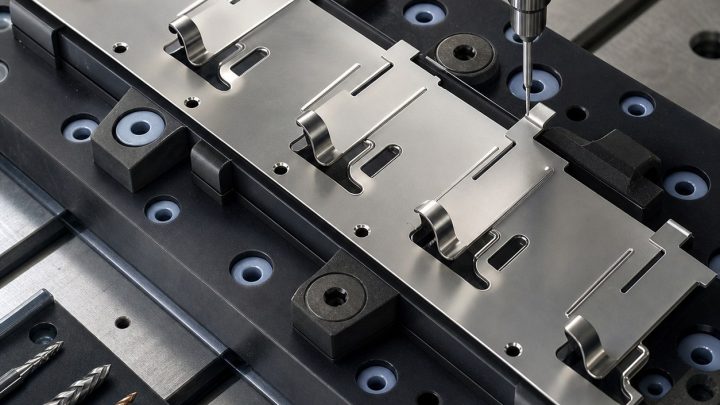
- A short pilot drill creates a stable entry surface for each compound-angle port.
- Through-coolant carbide drills use conservative speed, meaningful chip load and peck distances chosen for chip evacuation.
- A carbide thread mill produces the connection thread with adjustable size and lower breakage risk.
- A small ball-nose or lollipop-style tool blends internal intersections where access permits.
Burr, heat and tool-life control
Drill from the most rigid direction and avoid repeated dwell at the breakthrough. Sequence intersecting holes so the less-supported cut is made last. Use high-pressure filtered coolant, monitor spindle load and replace tools by condition before edge wear turns into rubbing. Inspect port angle and position, sealing-face runout, thread gauge, bore cleanliness and every intersection with a borescope. Flush the passage only after mechanical burr removal is confirmed.
Related reading: cross-port drilling and deburring planning and nickel-alloy tooling and heat control.