This is a hypothetical drawing-based tooling guide, not a claim about a customer project.
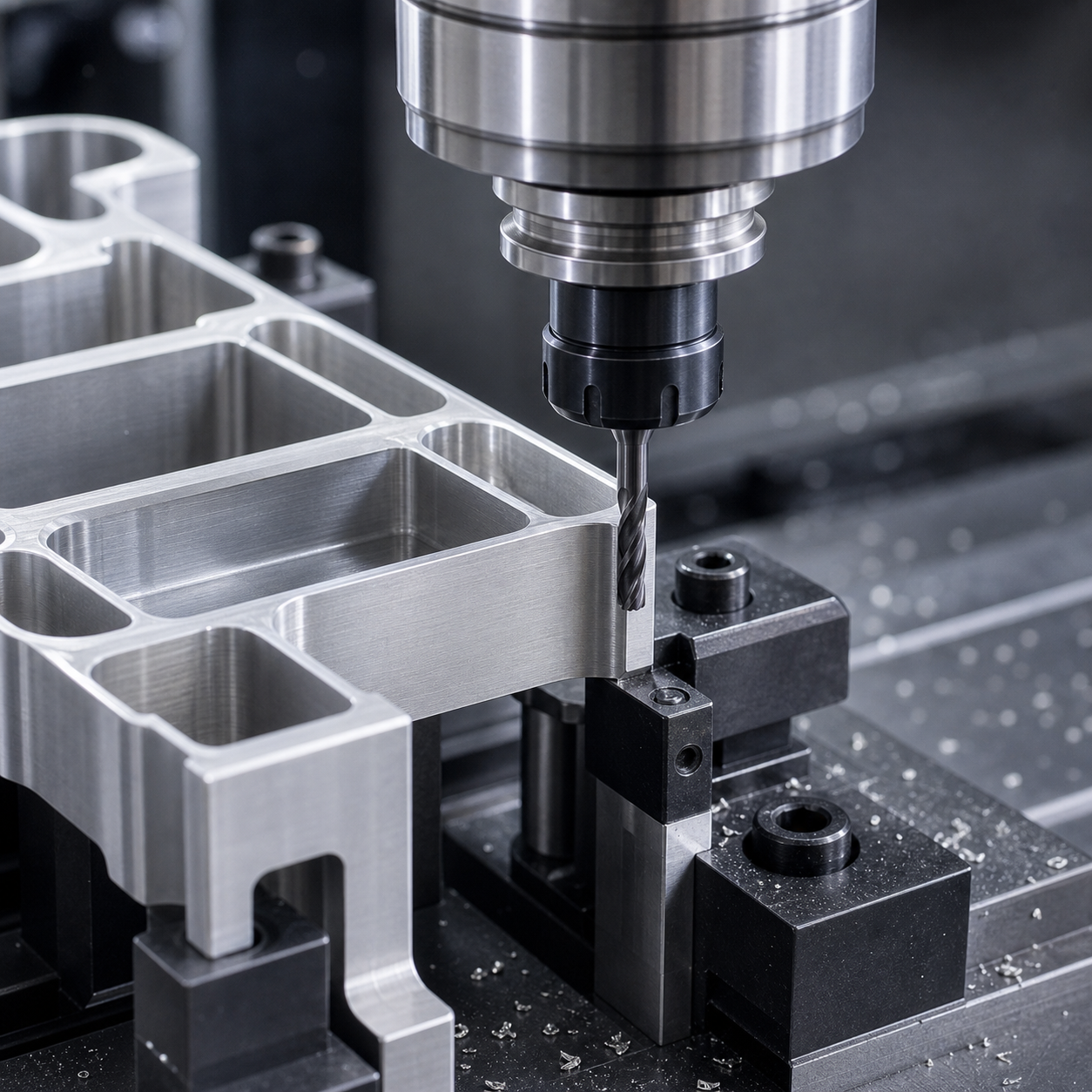
Español: Control de rebabas en paredes finas CNC: herramienta, apoyo y secuencia
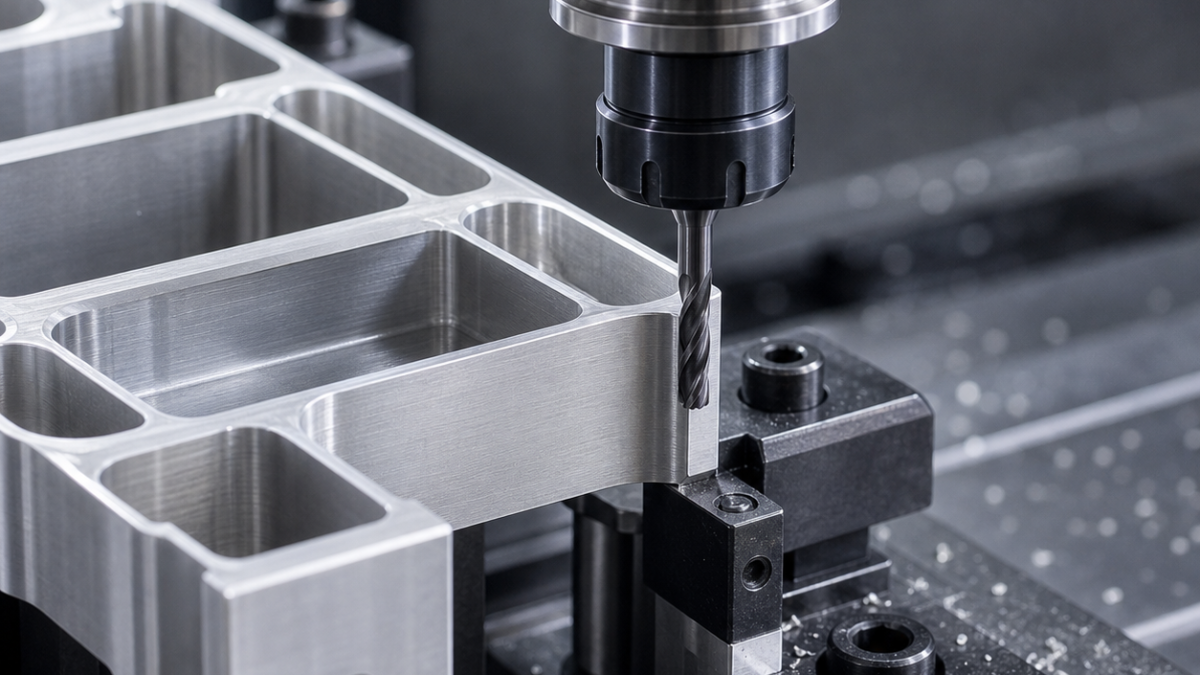
La rebaba de pared fina nace de rigidez y dirección. Lea espesor, longitud libre, raíz, salida y rotura permitida.
Mapa de apoyo
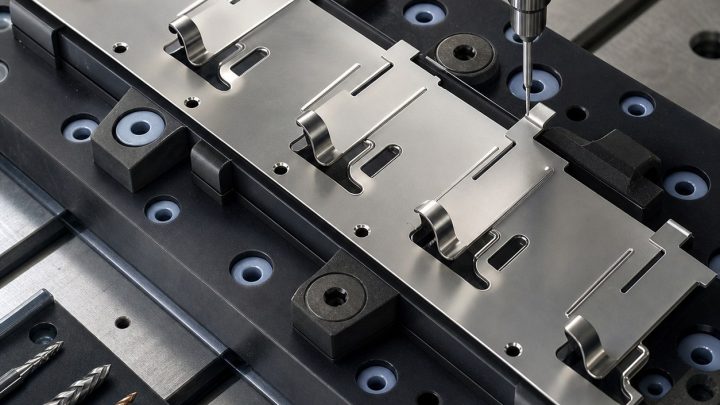
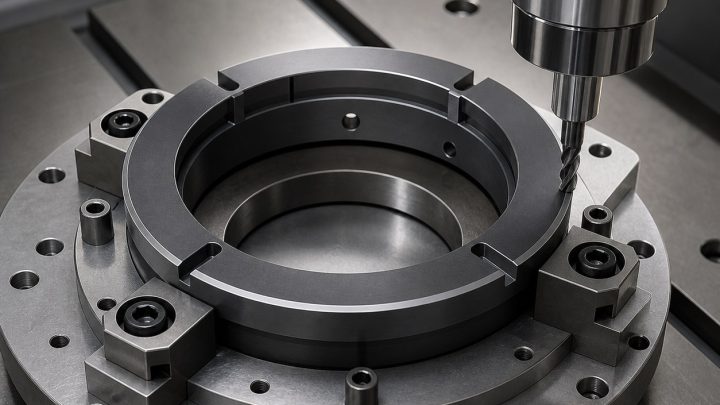
Mantenga pestañas y nervios durante el desbaste; el vacío soporta chapa, no una pared alta.
Filos separados
Desbaste con 10 mm tres labios pulidos; semiacabado con 6 mm y cuello; acabado con filo nuevo 4–6 mm.
Liberación equilibrada
Alterne lados y niveles, deje stock uniforme, termine raíz antes del borde y retire pestañas con baja fuerza.
Salidas controladas
Use corte concordante, chaflán posterior y fresa 45°; tres labios dejan espacio de viruta.
Inspección libre
Mida espesor y perfil tras soltar; una rebaba no debe ocultar deflexión.
| Rasgo | Herramienta | Decisión |
|---|---|---|
| Pocket roughing | 10 mm 3-flute polished carbide radius end mill; short holder | Large gullets and low adhesion; reject dense flutes |
| Wall semifinish | 6 mm 3-flute relieved-neck carbide; only required reach | Leave uniform stock without global overhang |
| Final wall | 4–6 mm dedicated sharp carbide finisher; low-runout holder | Low edge radius; reject worn rougher |
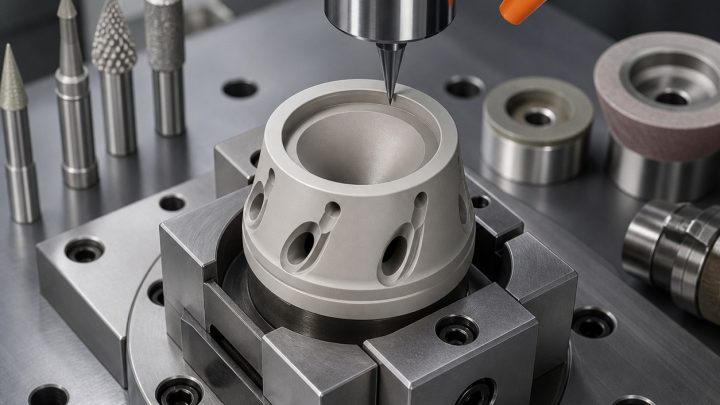
| Hidden exit | Small carbide back-chamfer tool | Controlled internal edge; reject hand picking |
| Specified edge break | 45° carbide chamfer mill | Measured break, not freehand rounding |
Related cases: thin-wall aluminum frame; 6061 electronics housing; vacuum fixturing.
FAQ
Why is support important? It prevents the wall from following the cutter.
When to inspect? After unclamping, when elastic recovery is visible.