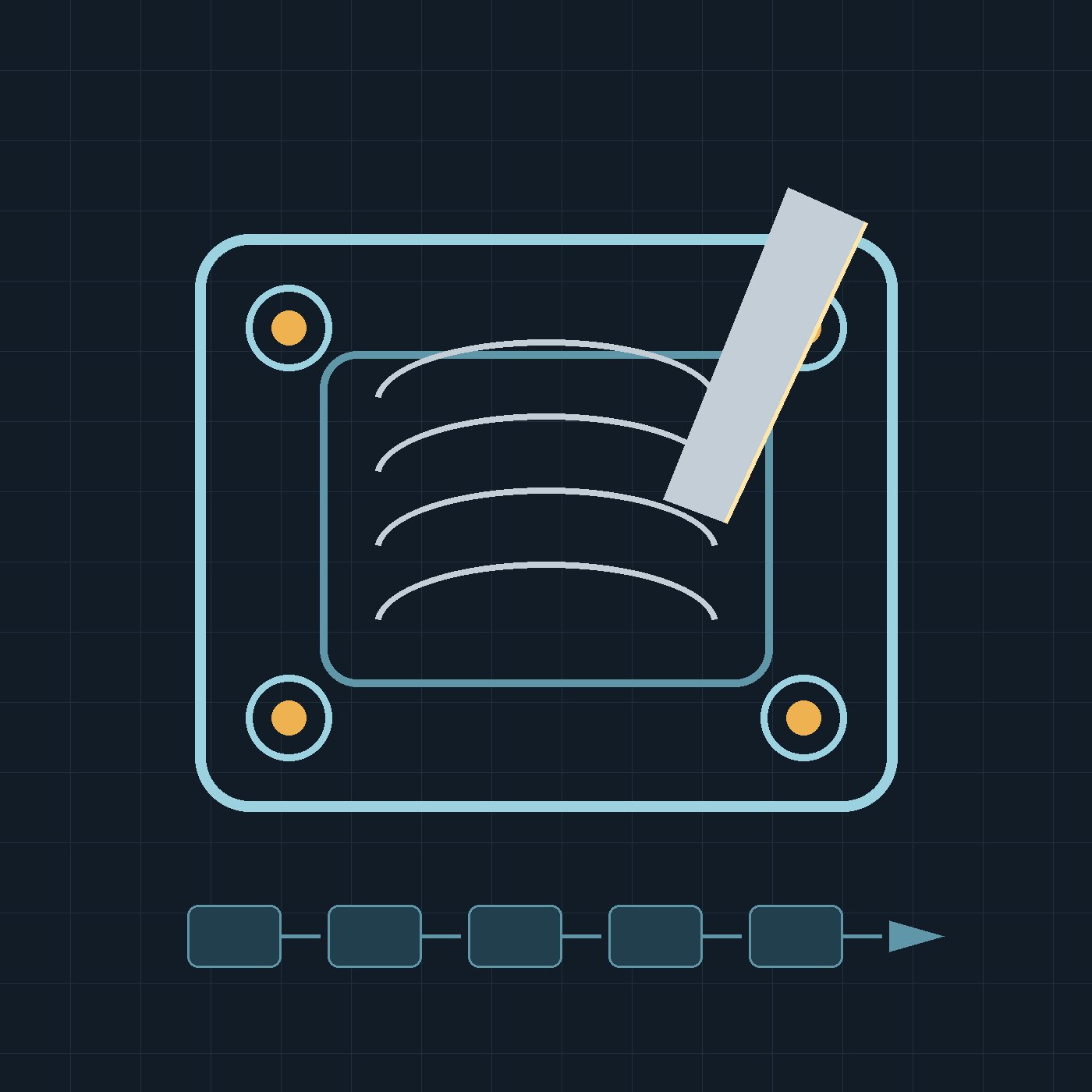
Case basis: This is a realistic hypothetical CNC tooling case for process-planning education, not a verified customer project.
English: 6061 Aluminum Thin-Wall Electronics Housing CNC Case: Pocket Roughing, Rib Support and Burr Control
How to read the housing drawing before choosing carbide tools
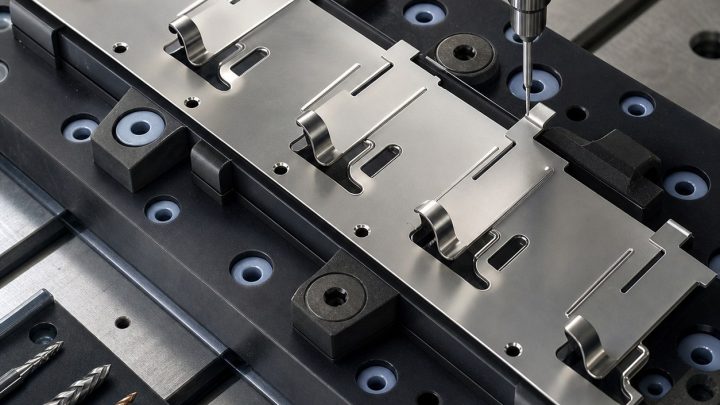
A thin-wall 6061 electronics housing looks simple until the drawing shows deep pockets, light ribs, small corner radii and cosmetic edge requirements on the same part. The tooling plan should protect wall stability first, then chase cycle time. A high-helix polished carbide end mill can remove aluminum efficiently, but only when engagement and workholding prevent the wall from ringing.
Drawing features that drive tool choice
- Deep open pocket with remaining wall sections that can deflect during side milling.
- Internal rib network that should remain supported until late in the process.
- Small inside corner radii that may require a secondary finishing end mill rather than forcing one tool to do everything.
- Cosmetic outside edges where burr control matters more than maximum material removal rate.
Tooling and process plan
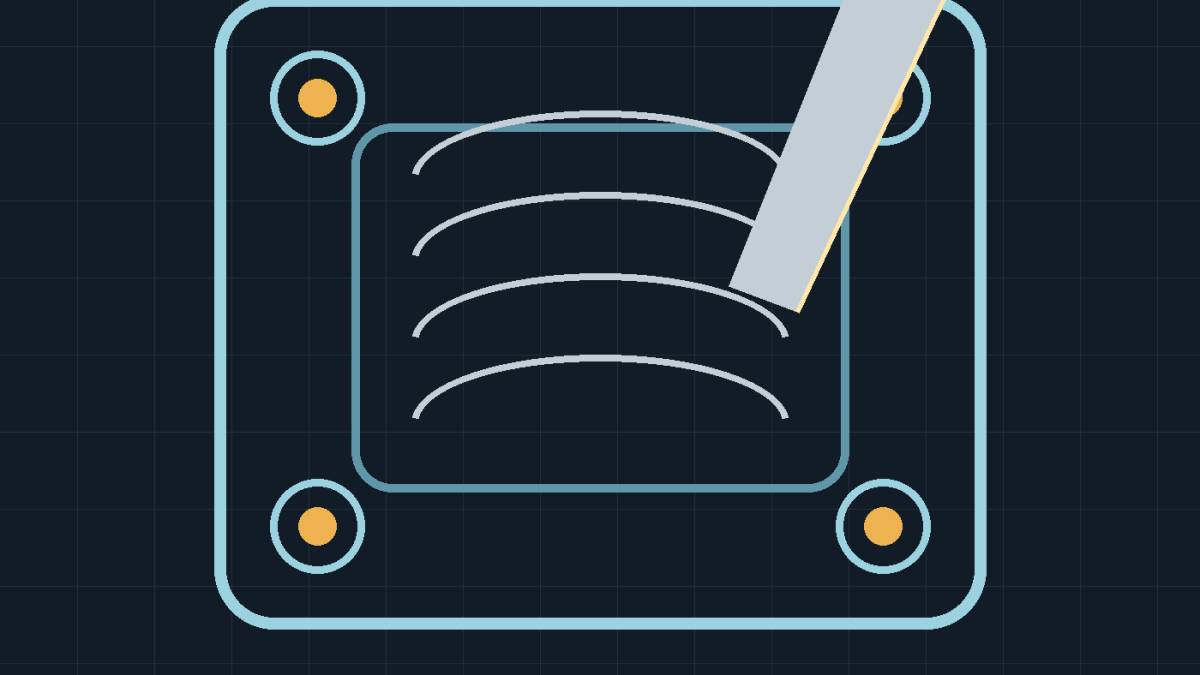
- Use a 3-flute polished carbide end mill for adaptive pocket roughing, keeping radial engagement light and axial depth consistent.
- Leave a controlled finish allowance on thin walls, then finish with climb milling and reduced radial load.
- Machine ribs after the pocket floor is stabilized; avoid isolating narrow ribs too early.
- Use a small carbide chamfer mill after deburring-critical operations instead of relying on manual cleanup.
Risk controls before production
- Check fixture contact under the pocket floor before roughing.
- Avoid full-slotting at thin wall height unless the toolpath is specifically stabilized.
- Confirm corner radius tool reach before selecting a long-neck cutter.
- Inspect burr direction at cross holes and open edges before releasing the process.
FAQ
- Is a 2-flute or 3-flute tool better for 6061? A 3-flute polished carbide end mill is often a good balance for pocketing when chip evacuation is controlled.
- Should the wall be finished in one pass? Usually no; a light semi-finish pass reduces final deflection.
- Can one cutter machine the whole housing? It can be tempting, but a dedicated chamfer tool and a smaller corner tool usually produce a safer process.