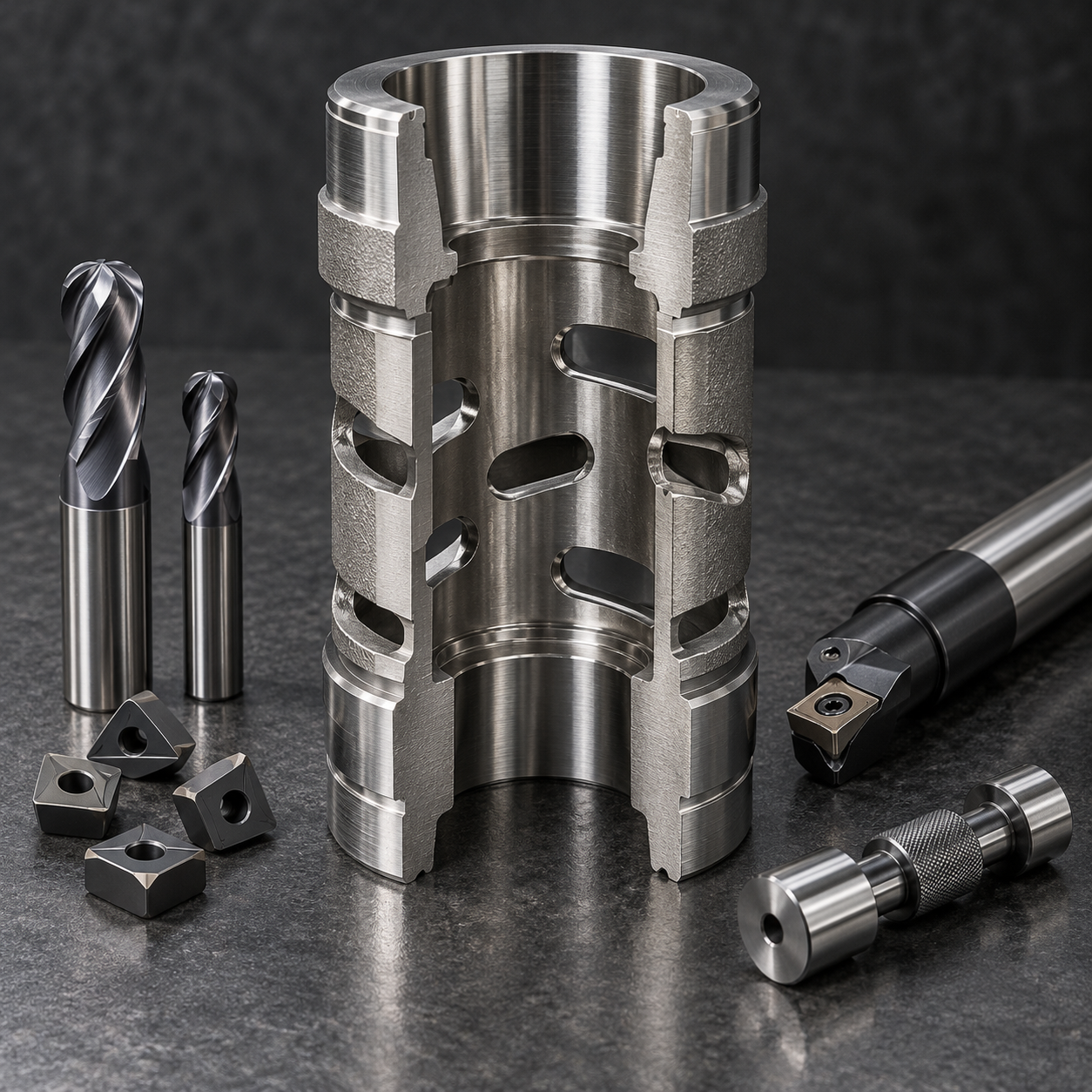
English: Stellite 21 Choke Cage Tooling for Staggered Windows and a Lapped Diameter
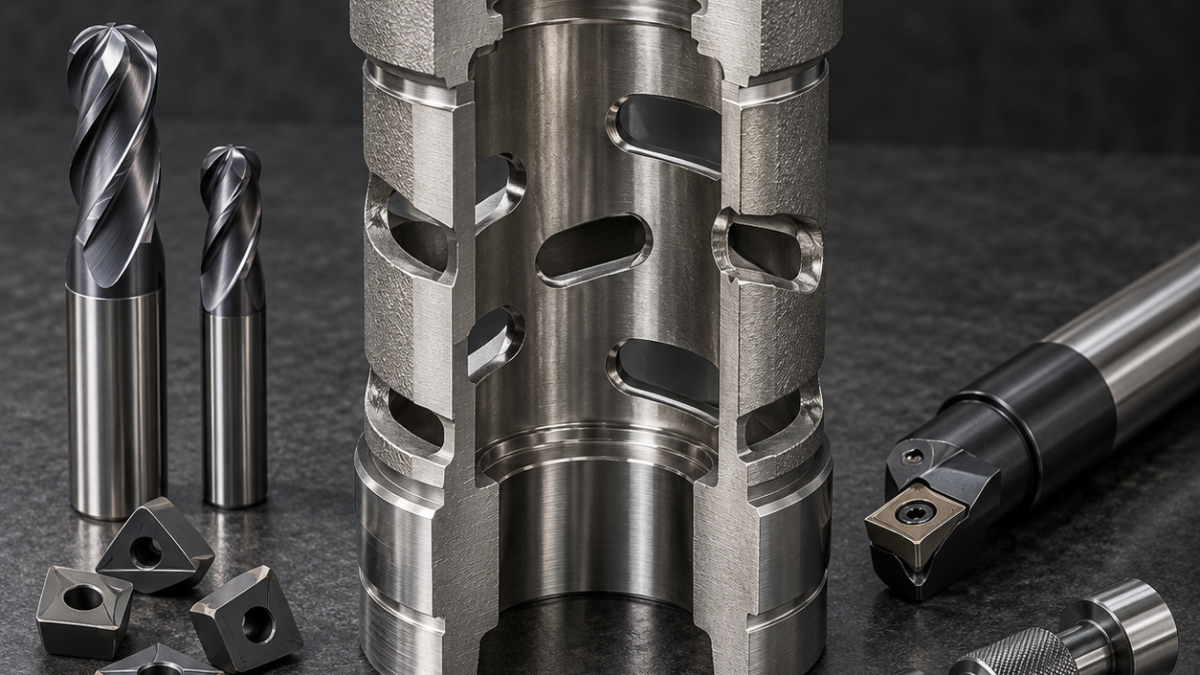
The long-tail intent is tool selection for a Stellite 21 choke cage whose staggered windows meter area while the outer guide diameter must remain concentric after interrupted cutting. The drawing makes window profile, land width and lapping stock one functional system.
Reserve the lapping cylinder before opening the windows
Rough-turn the heat-treated blank with a whisker-reinforced ceramic insert at stable engagement, leaving 0.20 mm on the guide diameter and bore. Finish the bore using a damped fine-boring bar with a tough PVD carbide insert; ceramic is rejected for the final bore because the interrupted window breakthrough can chip it. Establish both seal lands in the same chucking.
Tool map for the cobalt-alloy cage
| Drawing feature | Carbide tool and holder | Selection logic / rejected alternative |
|---|---|---|
| Rough OD and bore | Whisker ceramic insert, rigid short holder | Resists hot cobalt alloy in continuous cuts; carbide wears too quickly. |
| Finish guide bore | Damped fine-boring bar with tough PVD carbide | Survives interrupted breakthroughs; ceramic edge can chip. |
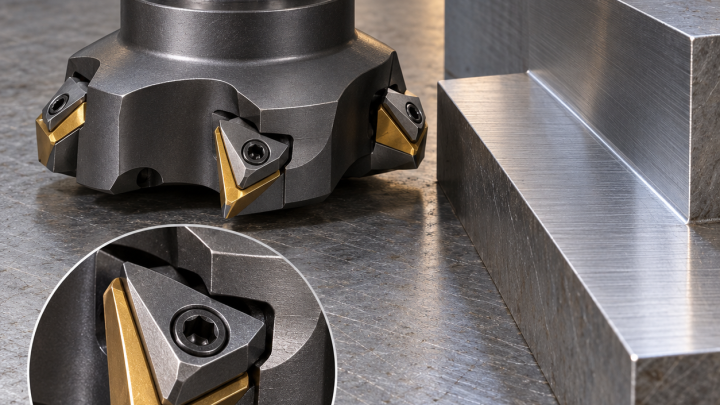
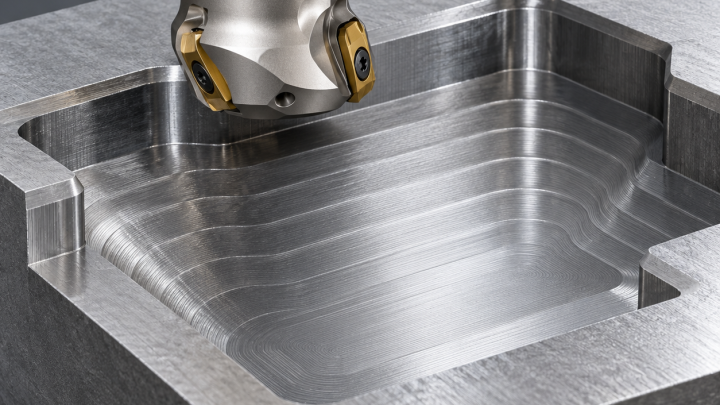
| Window roughing | 6 mm 4-flute AlTiN radius mill, hydraulic chuck | Trochoidal load limits notch wear; high flute count traps chips. |
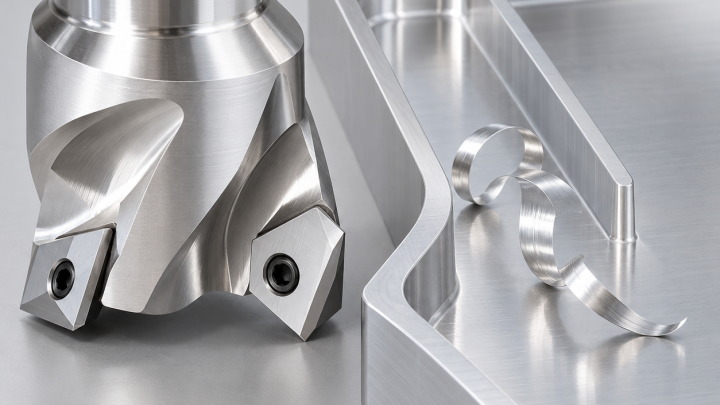
| Metering-wall finish | 4 mm 5-flute variable-helix mill, shrink-fit holder | Stable side cutting preserves straight edges; a ball mill rounds them. |
| Edge break and guide finish | 2 mm carbide chamfer mill plus controlled OD lap | Preserves port area; hand blending and aggressive lapping destroy geometry. |
Alternate windows to balance interrupted forces
On a rigid rotary fixture, rough each window with a 6 mm four-flute AlTiN radius mill using trochoidal entry, then finish the metering walls with a 4 mm five-flute variable-helix tool in shrink fit. Alternate diametrically opposed windows. A long ball mill is rejected because center contact rounds the straight metering edge and amplifies deflection.
Protect port edges without rounding metering area
Leave 0.05 mm cylindrical stock and lap the outer guide only after all windows are complete. Deburr with programmed 0.15 mm edge breaks using a 2 mm carbide chamfer mill; hand blending would alter port area. CMM scans window profiles from the bore datum, an air gauge checks the guide diameter, and roundness is measured after lapping. Corner notch wear or edge-break growth ends tool life.
Related tooling comparisons: Stellite 6 valve-seat tooling; Alloy 20 valve-body tooling.
Stellite cage FAQ
Why ceramic only for rough turning? Continuous stock supports its edge; window interruptions threaten the finish insert. Why alternate ports? It balances heat and residual hoop stress. Can lapping correct lobing? No; it refines size and texture but cannot rescue a distorted cylinder.