This is a realistic hypothetical process-planning example, not a claim about a specific customer drawing or production result.
Related: See the 304 stainless groove-tooling case and our variable-helix end-mill guide.
English: reading the actuator guide-block drawing
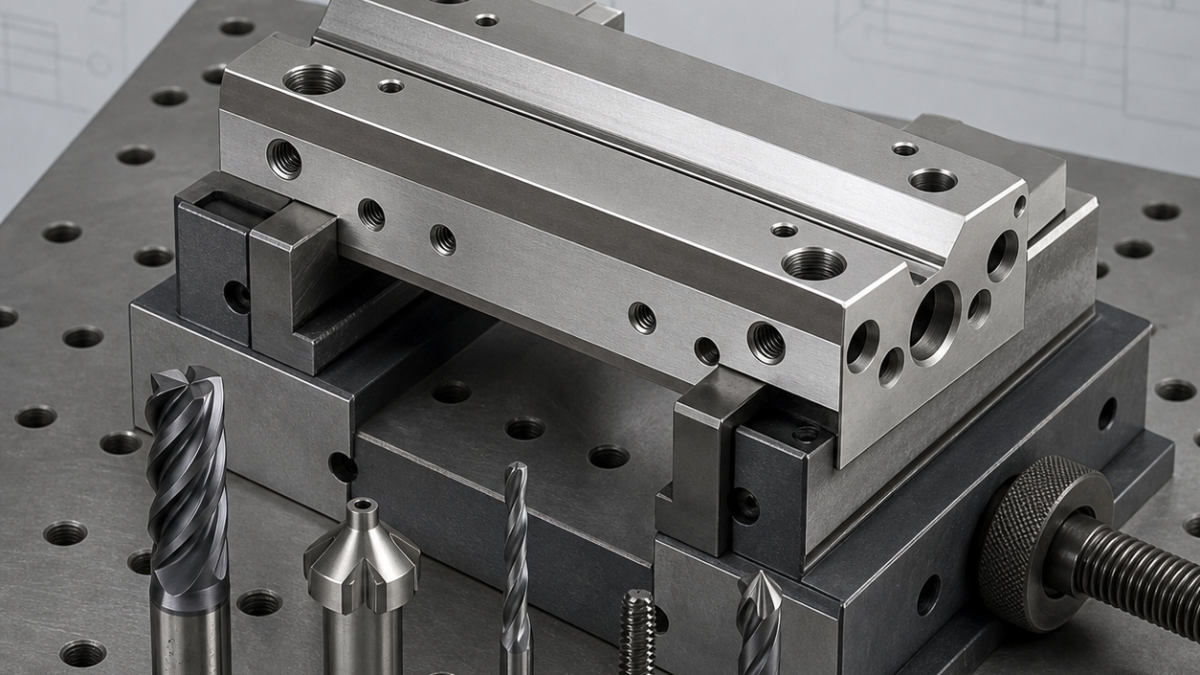
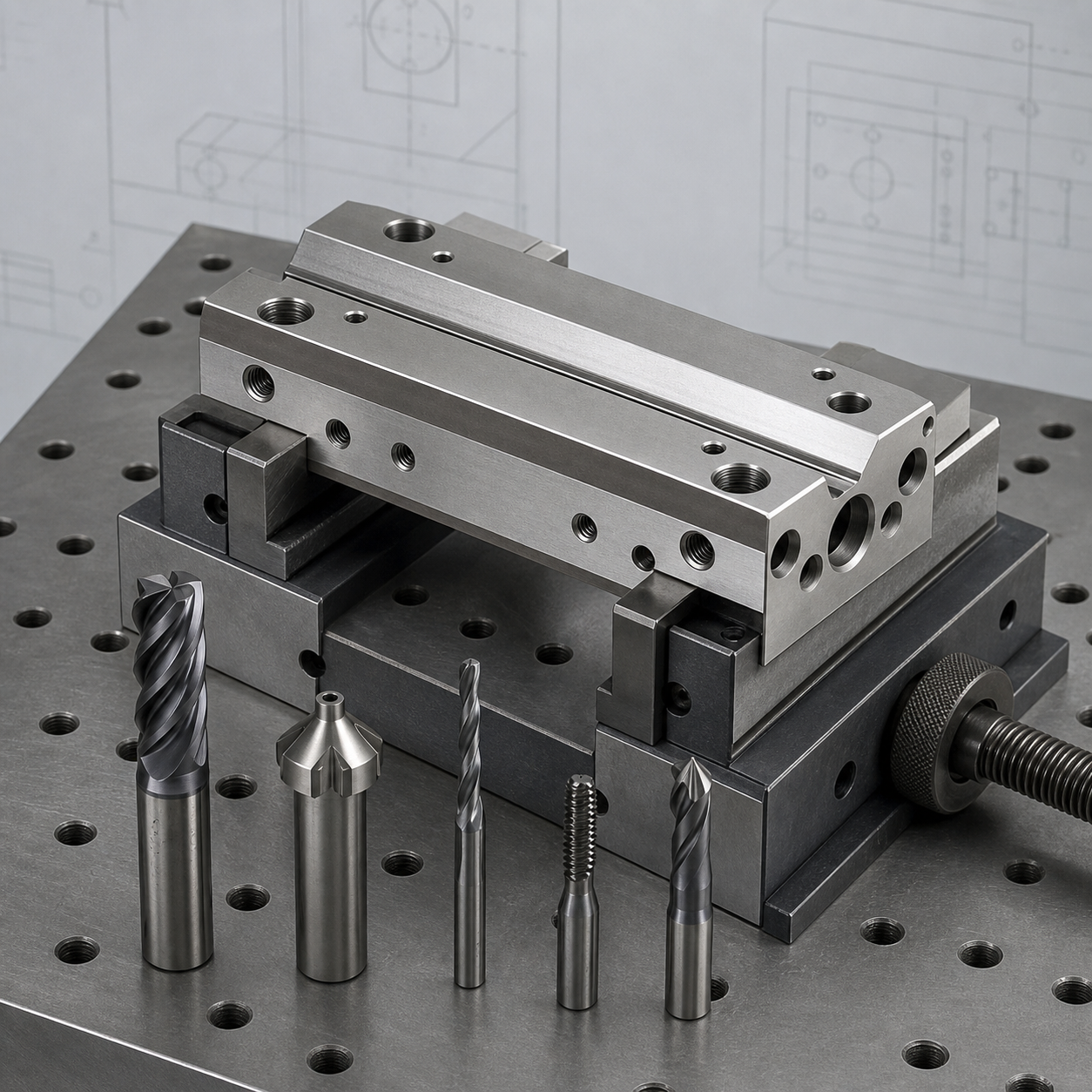
This hypothetical Nitronic 60 block uses an angled dovetail as the working guide, intersecting lubrication grooves, precision mounting bores and tapped cross ports. The drawing links rail angle, rail width and mounting datum parallelism; these must be controlled as a system while avoiding heat and galling.
Translate drawing features into controls
Establish the mounting bottom as datum A, one long side as B and a dowel bore as C. Measure the dovetail by functional rollers or a matched master rather than relying only on the sharp virtual corners. Identify groove intersections as burr-critical features and specify which port must break through first.
End mills, dovetail cutter and hole tools
Use a variable-helix carbide end mill for roughing, leaving equal stock on both rail faces. Semi-finish with a rigid necked end mill, then use a dedicated carbide dovetail cutter for the final angle. Carbide drills, a thread mill and a small ball or lollipop cutter address cross ports and lubrication channels without high tapping torque.
Fixture and toolpath strategy
Face the datum set in a rigid vise, rough the upper geometry with constant radial engagement, and finish the mounting bores before the final rail cut. Refixture on hardened pads using the bores, then machine the dovetail in alternating passes so one side does not heat disproportionately. Open oil grooves last with supported entry and exit moves.
Tolerance, surface finish and galling risk
Nitronic 60 resists galling in service but still work-hardens in machining. Keep chip thickness above rubbing level, use strong coolant delivery and avoid dwelling at dovetail ends. Inspect rail width after thermal equalization. A worn dovetail cutter changes both angle and finish, so monitor cutting load and retire it before flank wear becomes a geometry error.
FAQ
Why not cut the dovetail to size in one pass?
A full-width cut creates high heat, deflection and asymmetric tool wear; staged balanced passes are easier to control.
Are taps suitable for the cross ports?
They can be, but thread milling lowers torque and makes chip evacuation and size correction safer.