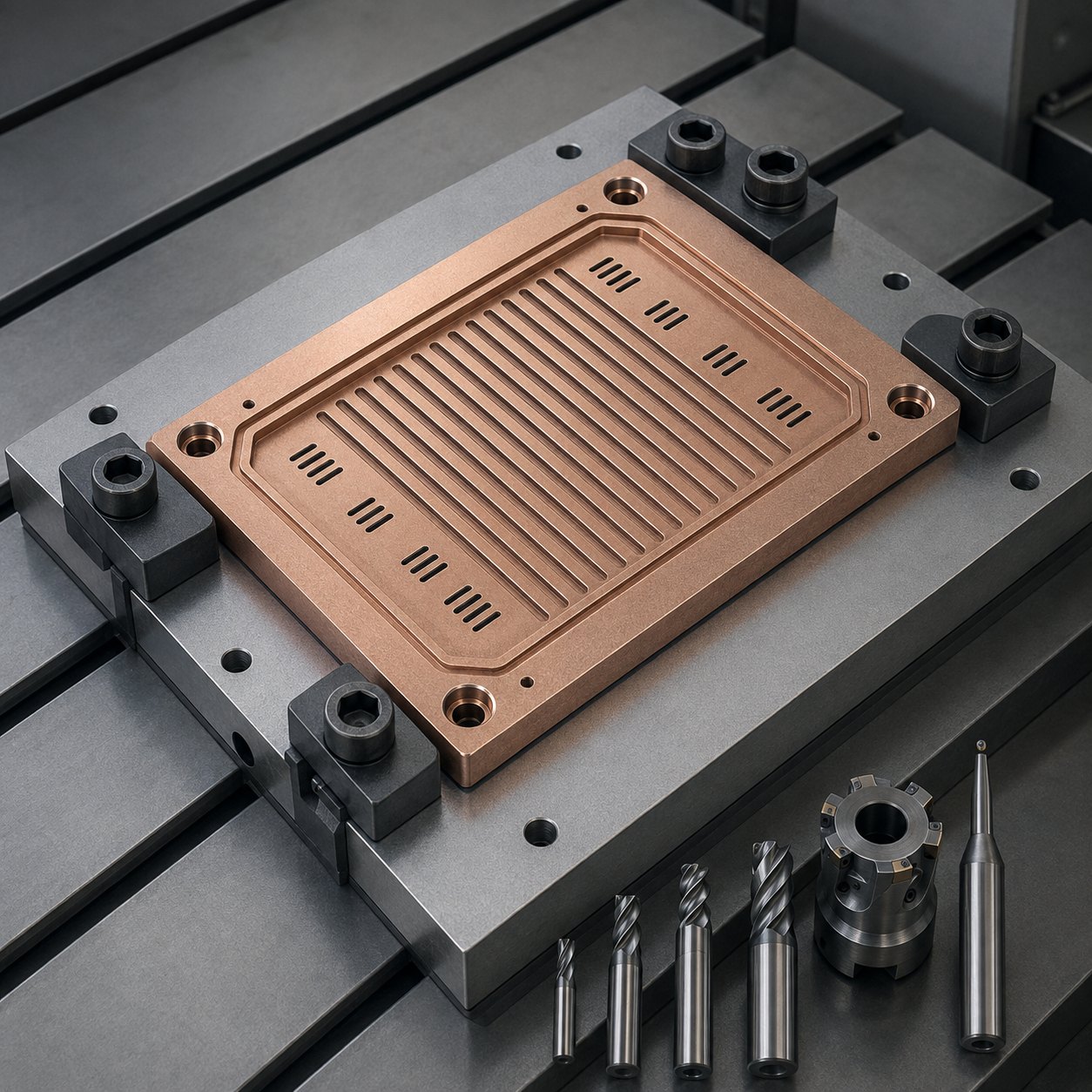
English: Molybdenum-Copper RF Heat Spreader Lid CNC Tool Selection for Gasket Moat and Vent Slots
This hypothetical case targets a long-tail problem: choosing CNC tools for a molybdenum-copper RF heat spreader lid with a shallow gasket moat, thin thermal ribs and narrow vent slots. The part is not a simple copper plate; the composite has a copper-rich smear tendency and a hard molybdenum skeleton that punishes weak edges.
Drawing logic
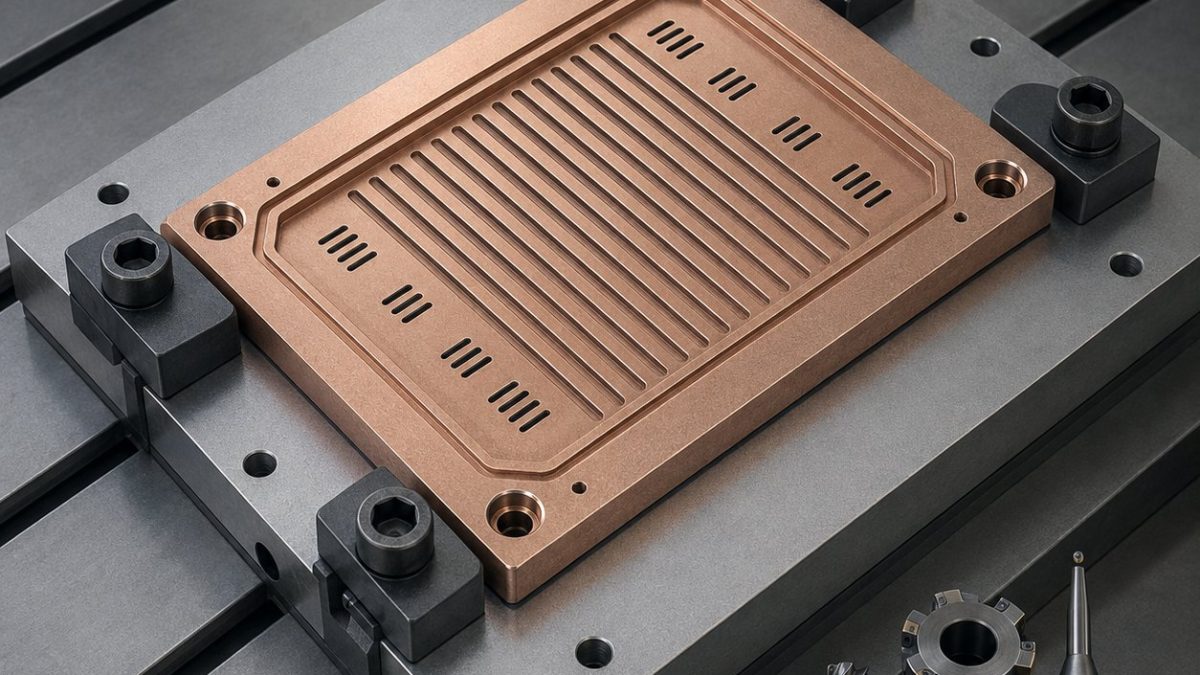
The gasket moat sets compression, the rib field sets thermal contact, the vent slots prevent trapped gas and the counterbores define assembly height. Unlike the broader thermal flatness machining logic, this lid has many shallow interrupted features where floor finish and burr height matter more than bulk stock removal.
Feature-to-tool map
| Feature | Tool and holder | Decision tradeoff |
|---|---|---|
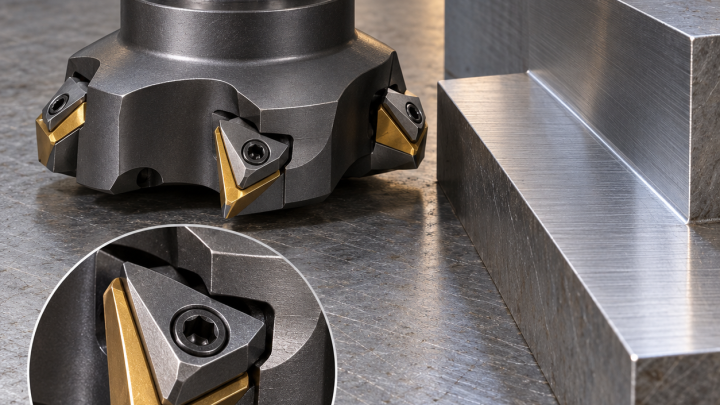
| Datum face | PCD-tipped face mill with fine runout setting | Controls copper smearing; coated carbide alone leaves a higher burr on the moat edge. |
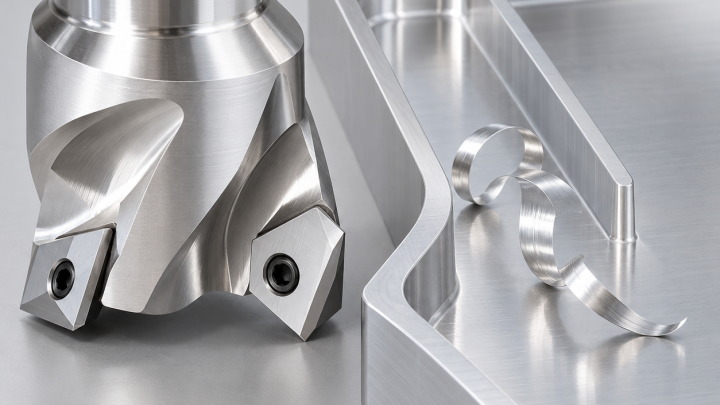
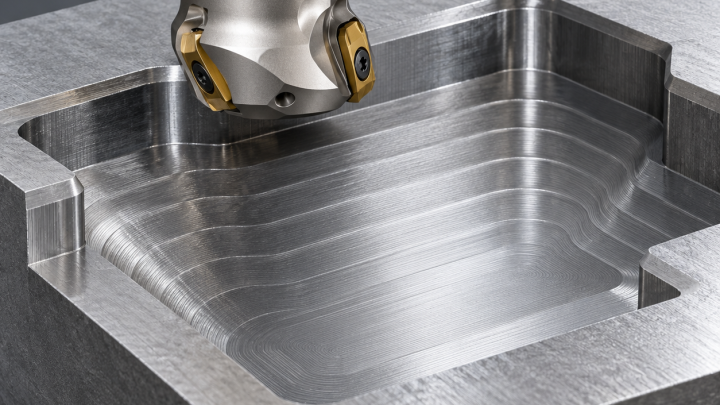
| Shallow gasket moat | Ø4 mm 3-flute polished carbide end mill, TiB2 or diamond-like coating | Balances sharpness and wear; a large insert cutter cannot hold the moat corner radius. |
| Thin thermal ribs | Ø2.5 mm necked carbide finisher, 5xD reach, hydraulic holder | Reach without chatter; a longer general end mill is rejected for rib-side waviness. |
| Narrow vent slots | Ø0.8-1.0 mm 2-flute micro end mill, sharp edge, short flute | Reduces slot burr; wire EDM is rejected for this hypothetical low-depth lid because recast and cleaning add risk. |
| Counterbores | Carbide drill, circular interpolation, flat-bottom finishing end mill | Keeps screw seating flat; standard counterbore tools smear the composite edge. |
Machining and inspection plan
Use a flat vacuum-assisted fixture with hard edge stops, rough the moat before final rib finishing and leave the lid clamped during slot deburring. Toolpaths avoid slot plunging and use ramp entry with air blast. Inspection checks free-state flatness, gasket moat width/depth, slot burr under magnification, screw counterbore height and thermal-rib contact pattern. For burr-sensitive slot thinking, compare small-slot burr control.