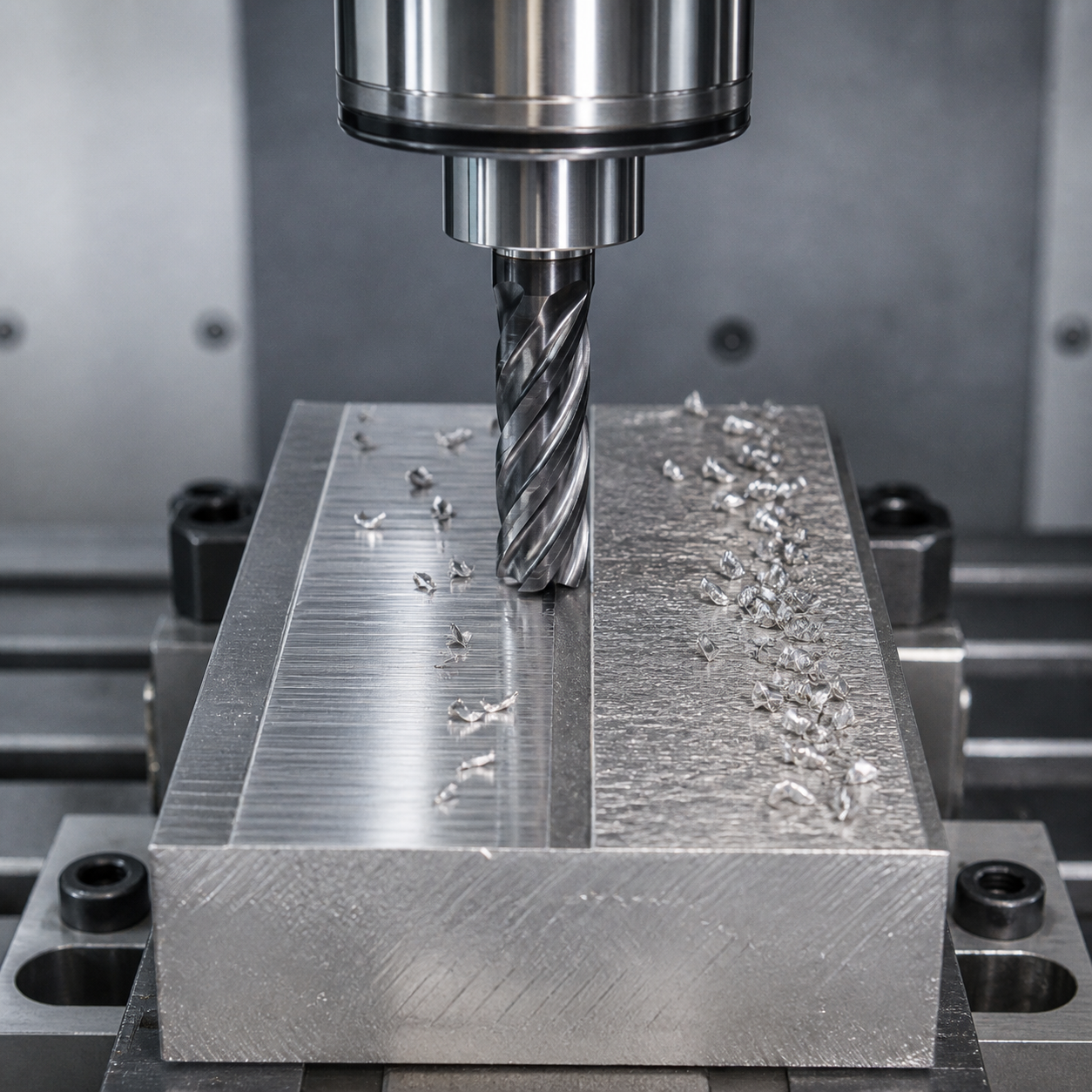
English: Toolpath Direction Changes Cutting Force
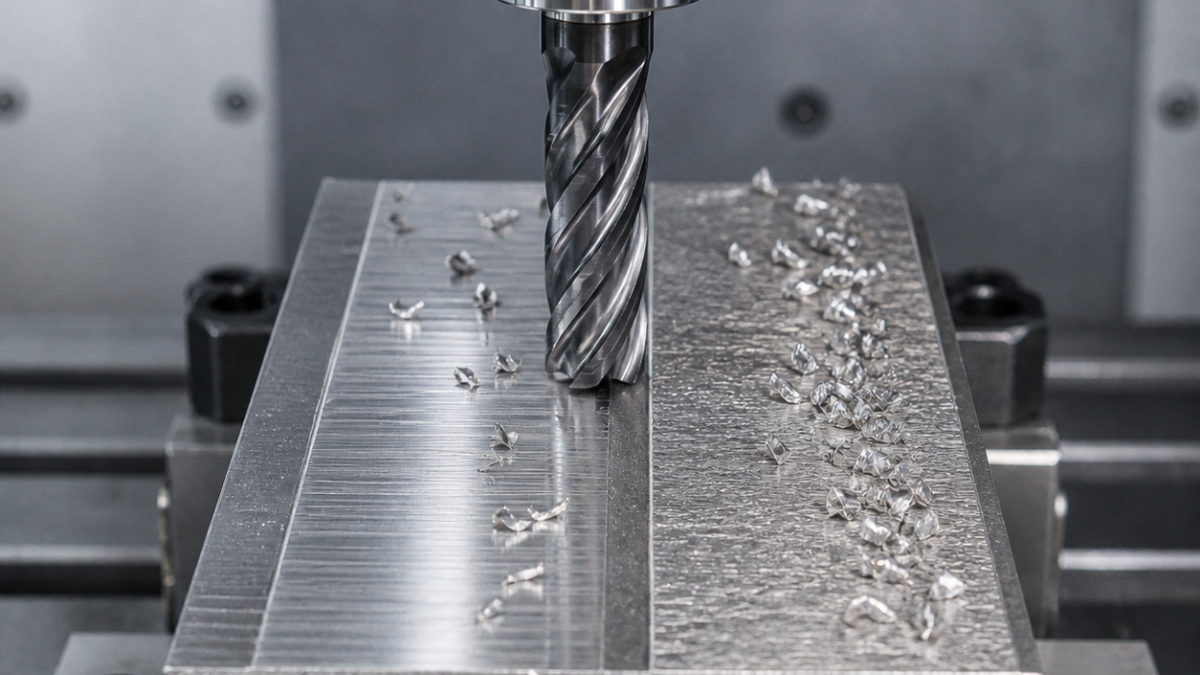
Climb milling and conventional milling describe how the cutter rotation relates to feed direction. In climb milling, the chip starts thick and becomes thinner. This often improves surface finish and tool life when the CNC machine is rigid and backlash is controlled. In conventional milling, the chip starts thin and becomes thicker, which can be useful in some unstable setups or rough surfaces.
Modern CNC machining usually favors climb milling for finishing because it reduces rubbing and can produce a cleaner surface. However, the best choice depends on workholding, machine condition, material, tool geometry and feature shape. Thin walls, interrupted cuts and older machines may require more careful decisions.
SEO machining takeaway
Toolpath direction should be chosen as part of the whole process. If surface finish is poor or burrs appear on one edge, compare climb and conventional milling before changing tools.
中文:顺铣和逆铣如何影响 CNC 加工效果
顺铣和逆铣描述的是刀具旋转方向与进给方向的关系。顺铣中切屑由厚变薄,在机床刚性和反向间隙控制良好的情况下,通常有利于表面质量和刀具寿命。逆铣中切屑由薄变厚,在某些不稳定装夹或粗糙表面加工中也有应用价值。
现代 CNC 加工中,精加工通常更偏向顺铣,因为它可以减少摩擦并获得更干净的表面。但最终选择仍取决于装夹、机床状态、材料、刀具几何和零件结构。
Français : Fraisage en avalant ou en opposition
Le sens de fraisage influence les efforts de coupe, l’état de surface et la durée de vie de la fraise carbure. Le fraisage en avalant est souvent préféré sur les CNC rigides, mais l’état du montage et de la machine reste déterminant.
Русский: Попутное и встречное фрезерование
Направление фрезерования влияет на силу резания, качество поверхности и срок службы инструмента. Попутное фрезерование часто дает лучшую поверхность на жестких CNC-станках, но выбор зависит от крепления и состояния станка.
FAQ
Which direction gives better finish? Climb milling often improves finish on rigid CNC machines, but unstable setups need testing.
Can milling direction affect burrs? Yes. Burr location and edge quality often change when toolpath direction changes.
Related reading: Burr Control in Thin-Wall CNC Milling and CNC Milling Chatter Control.