English: APKT1604 vs APMT1604 for Interrupted Shoulder Milling
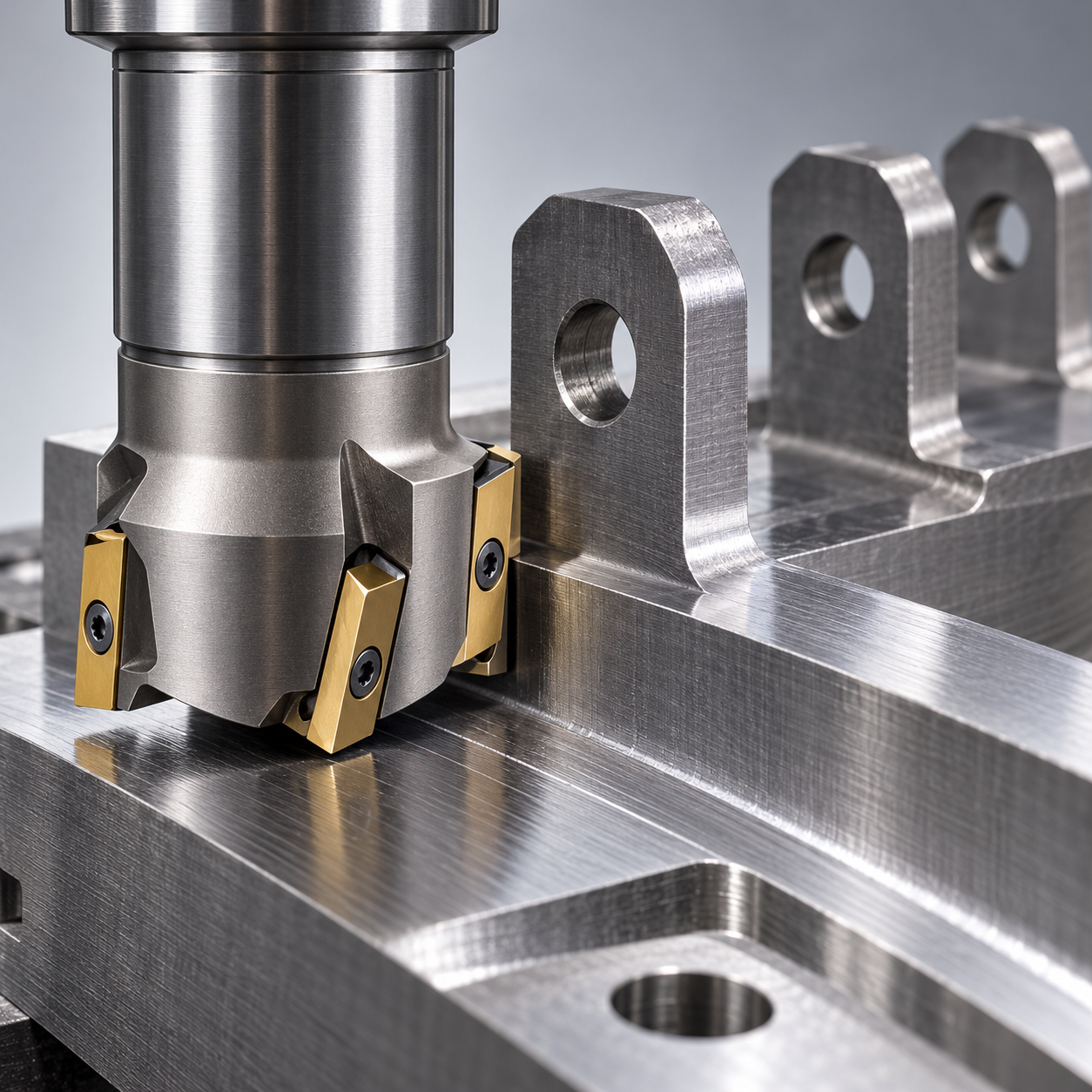
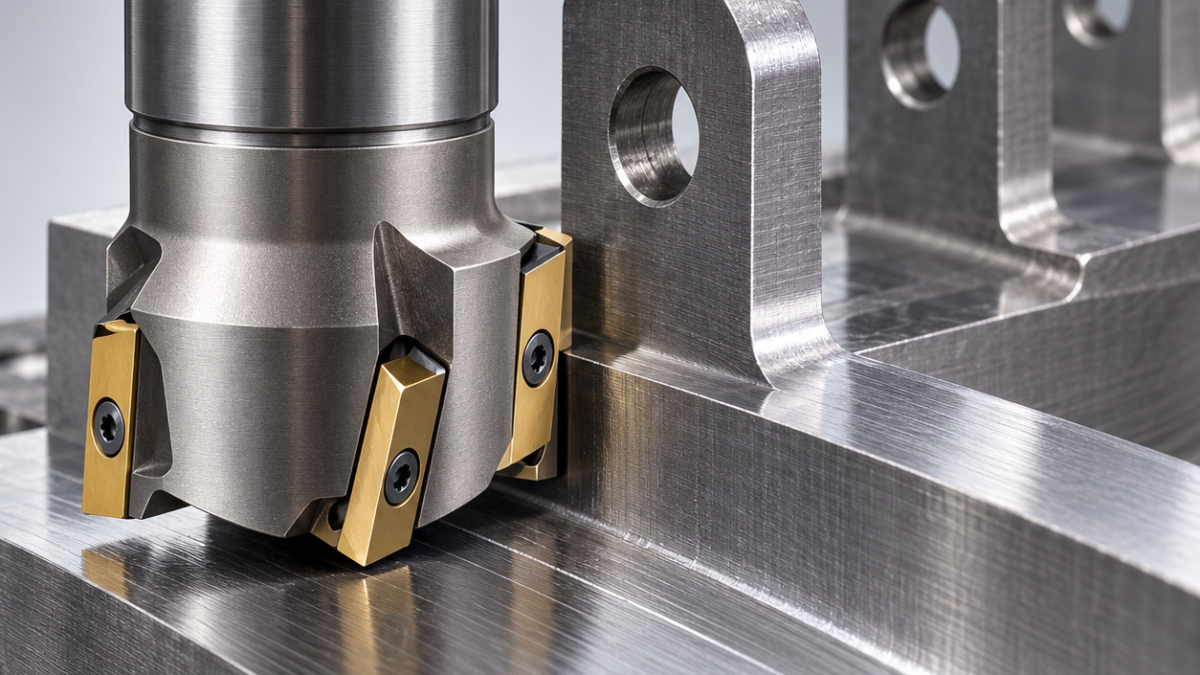
APKT1604 and APMT1604 are not interchangeable simply because both contain “1604.” The third letter refers to a tolerance classification, not a steel grade or a guarantee of stronger cutting. For interrupted shoulder milling, the correct purchase is the complete insert geometry and grade approved for the body. Consider a hypothetical 4140 bracket at 28–32 HRC with three separated lugs and a 7 mm-high locating ledge. Each gap makes the edge leave and re-enter the cut.
A substitution request that needs three checks
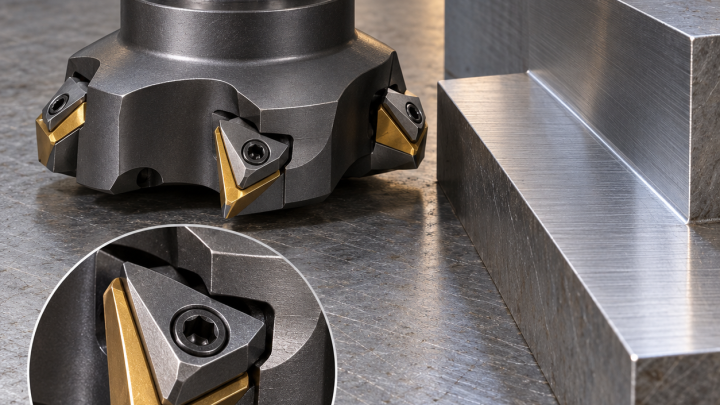
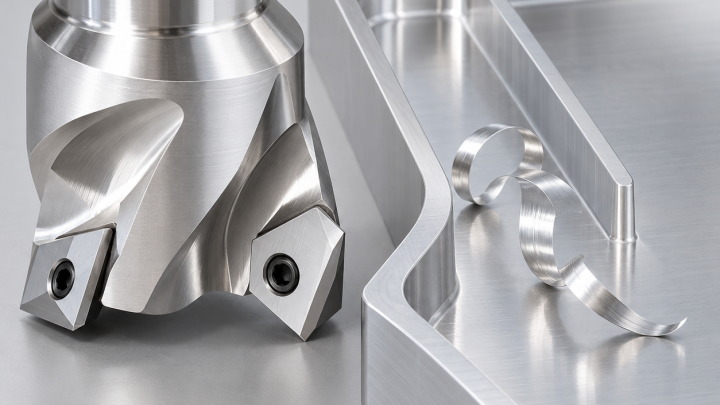
First compare the seating dimensions, hole and screw, thickness, edge profile and handedness against the cutter drawing. Second check the full chipbreaker suffix: two inserts sharing a short designation can have different rake and edge preparation. Third select a substrate/coating for the interrupted material condition. A sharp aluminum-style edge is not the economical substitute here; a very wear-resistant but brittle grade can also lose corners before ordinary flank wear becomes relevant.
Allocate impact duty and dimensional duty
| Drawing demand | Proposed tooling | Alternative rejected |
|---|---|---|
| Three interrupted ledges | Ø25, three-tooth APKT1604-compatible shoulder body; tough PVD steel-grade carbide, medium positive geometry and controlled hone; short side-lock shank. | Dense pitch and a razor edge increase sensitivity to the lug-entry impacts. |
| 7 mm wall, R0.8 maximum root | Approved insert radius at or below R0.8, verified usable edge longer than the actual axial engagement; reduced radial finishing stock. | A larger radius may strengthen the edge but violates the mating-part clearance. |
| Two small relief pockets | Ø8, four-flute coated fine-grain carbide end mill, corner radius allowed by the relief drawing. | The Ø25 body cannot follow the reliefs without gouging adjacent lugs. |
| Exposed exit edges | Ø8, three-flute carbide chamfer tool, 90°, light 0.2 mm break after inspection. | Do not round the locating ledge with abrasive hand blending. |
Protect the re-entry, not just the average load
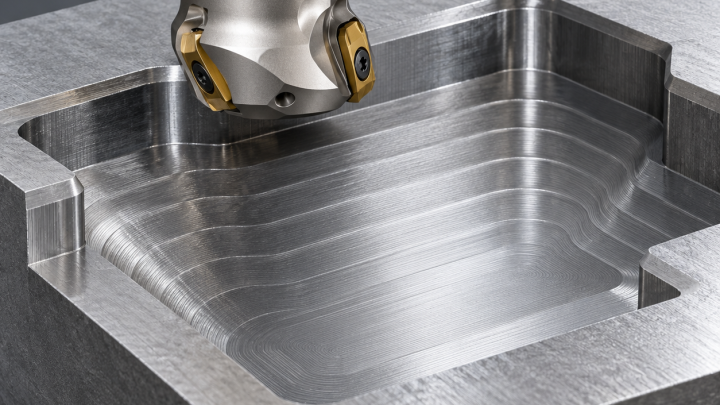
Locate on the bracket underside and support directly below the lugs. Rough the ledge with a smooth approach from outside, leaving a trial 0.15 mm radial allowance. Use the CAM engagement view to slow the local re-entry rather than imposing a full-width hit after every gap. Finish all three lands with a consistent direction and stock; do not dwell on a lug end. Keep the nominal 7 mm shoulder pass within the catalog axial limit of the actual assembly.
Obtain speed, tooth feed and coolant guidance from the selected grade. Switching from dry to occasional coolant mid-test can obscure the real cause of cracks. Photograph the same corner after each short trial: local fractures at re-entry suggest impact, whereas uniform flank wear suggests a different adjustment. A damaged seat invalidates a grade comparison. Clean and torque fasteners to the toolmaker’s specification, never by a generic torque value.
What makes the trial pass
The hypothetical acceptance criteria are ledge height ±0.02 mm, three-land coplanarity 0.03 mm and Ra 1.6 μm on contact strips. Measure after unclamping and check the root radius with the intended mating clearance. A good-looking middle lug does not validate the two end lugs. Consult wear-pattern diagnosis and fixture and chatter checks when interpreting results.
Replacement questions
Does K mean better than M? Not as a blanket performance ranking. The tolerance class is only one element; compare the whole ordered product.
Can I mix APKT and APMT in one cutter? Avoid an unapproved mixed set. Different edge heights and profiles may shift most of the load to one tooth, even when every screw tightens.
Manufacturer reference: dimensions and system compatibility.