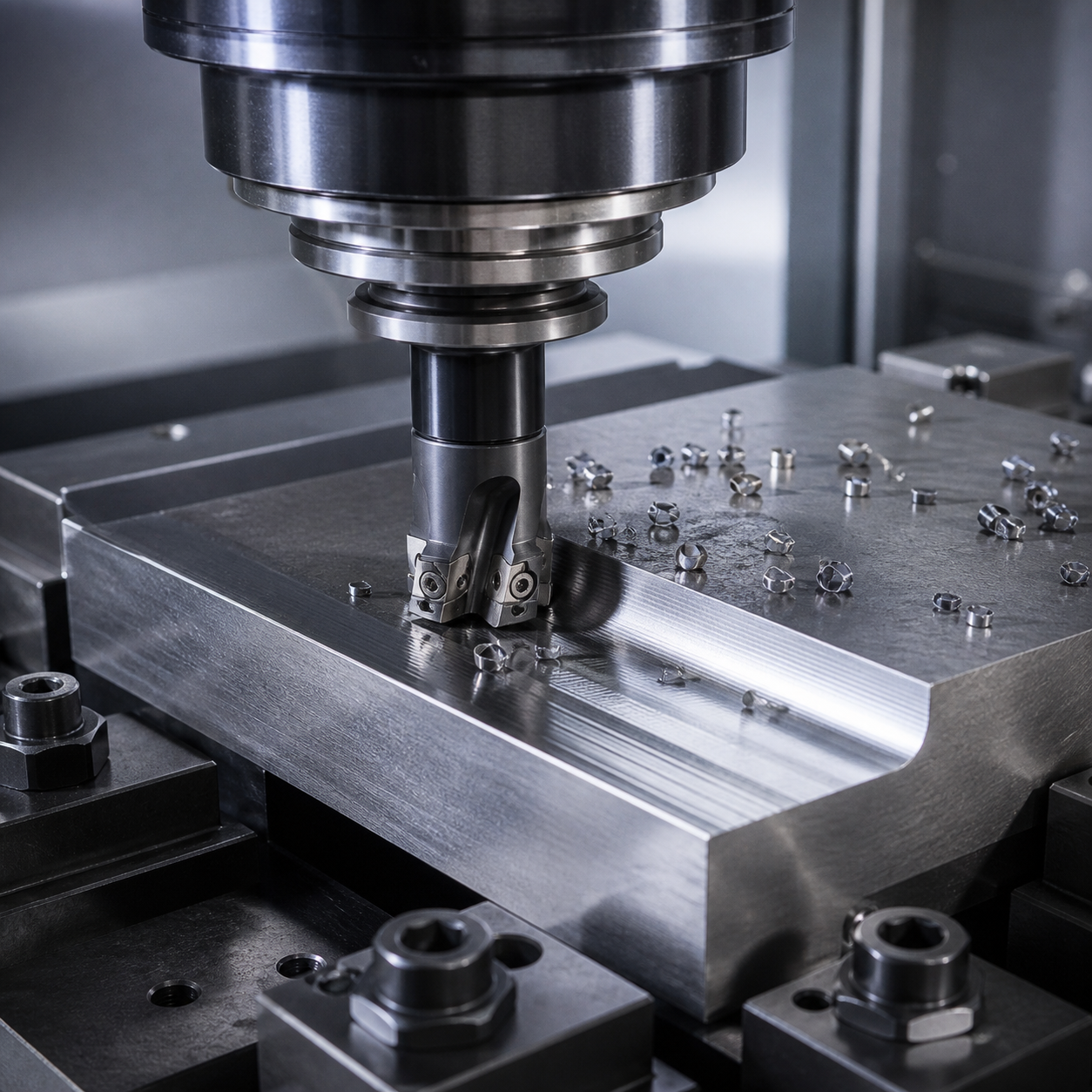
English: High-Feed Milling Tool Selection for Shallow Roughing and Deep Cavities
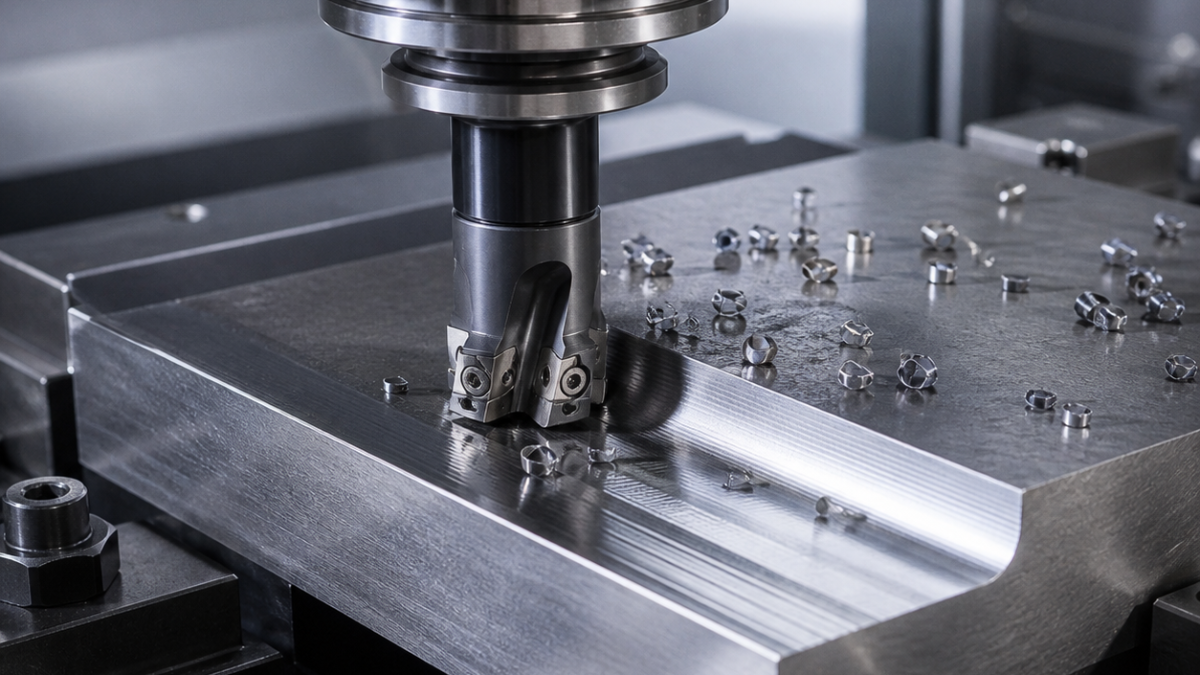
High-feed milling works when a low lead angle turns a thin axial slice into a thicker programmed feed without overloading the insert. It is not a universal fast roughing mode. The drawing must provide room for the cutter body, a later tool for corners, and enough floor allowance to remove the scalloped high-feed surface.
Map the drawing before selecting the cutter
Mark cavity opening, minimum corner radius, wall draft, floor stock, interruptions and reach from the holder nose. Select the largest body that enters without rubbing the wall, then confirm that its insert sweep leaves reachable stock. A 32 mm indexable high-feed cutter is productive in an open mold pocket; a 12 mm solid-carbide high-feed end mill may be safer through a narrow window. Neither should be forced to finish a vertical wall it was designed to unload axially.
| Drawing condition | Tool and holder | Path and stock rule | Reject or inspect |
|---|---|---|---|
| Open cavity, depth below 2D | Ø25–40 indexable high-feed, tough PVD insert, short face-mill arbor | Shallow ap, constant arc engagement, leave wall and floor finish stock | Reject if body clearance disappears; inspect floor scallop |
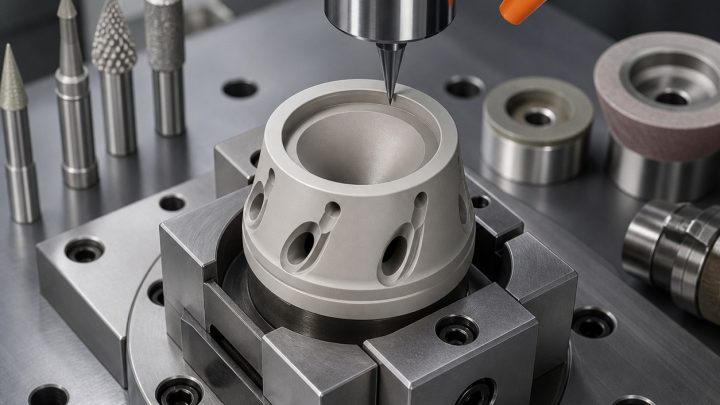
| Narrow pocket entrance | Ø8–16 solid-carbide high-feed, 4–6 flutes, AlTiN/AlCrN, shrink or hydraulic holder | Helical entry only if center-cutting; rest-rough from large to small | Check neck clearance and flute packing |
| Interrupted scale or hard skin | Strong edge prep and tough grade; air/coolant chosen for material | First pass below the skin when geometry permits; avoid dwelling at entry | Inspect microchipping at the depth line |
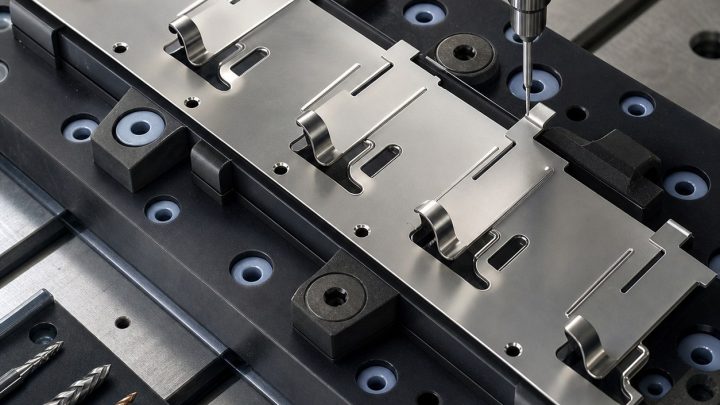
| Thin rib beside cavity | Smaller low-force cutter, minimum overhang | Alternate sides and stop before rib release; separate finisher | Measure rib after unclamping, not only in fixture |
Lead angle changes chip thickness and force direction
Use the tool maker’s data for the exact insert, material and lead angle. Programmed feed per tooth can be higher because the axial chip is thinned, but the real limit is insert corner load, spindle acceleration and path curvature. Keep radial engagement predictable; protect sharp internal turns with smoothing or a smaller rest tool. Do not copy a high feed from a 15-degree cutter to a different geometry.
Split roughing, rest machining and finishing
High-feed roughing leaves cusps and corner stock. Probe or simulate the remaining material, rest-rough with a smaller radius tool, then semifinish walls to a uniform allowance. Finish floors with a wiper-style face tool or appropriate end mill and walls with a separate sharp finisher. This prevents a worn roughing edge and changing radial load from deciding size and Ra.
For a concrete stock-model check, use the LNMU0303 CAM-envelope and finishing-allowance case. It distinguishes the actual swept insert profile from a convenient CAM radius, then checks whether wall and floor allowance still survives for the next tool. Reusing a familiar corner-radius value without the maker’s geometry can leave an unexpected remnant or remove intended finish stock.
Related decision paths: chip load and feed per tooth; carbide cutting-parameter decisions; deep-pocket tooling hub.
High-feed milling questions
Can a high-feed cutter finish a vertical wall? Usually no; its lead angle and body clearance favor shallow roughing. Why is floor stock required? The insert sweep leaves a characteristic cusp that the finishing tool must remove. Is maximum feed the objective? No. Stable material removal, predictable stock and insert-seat protection are the release criteria.