Related tooling references: Polycarbonate Optical Light Pipe CNC Tool Selection for Polished V-Grooves and Snap Tabs and Monel K-500 Marine Clevis CNC Tool Selection for Fork Slot, Pin Bore and Fillet Relief.
English: C360 Brass Valve Seat Tooling for Conical Seal and Tiny Cross Holes
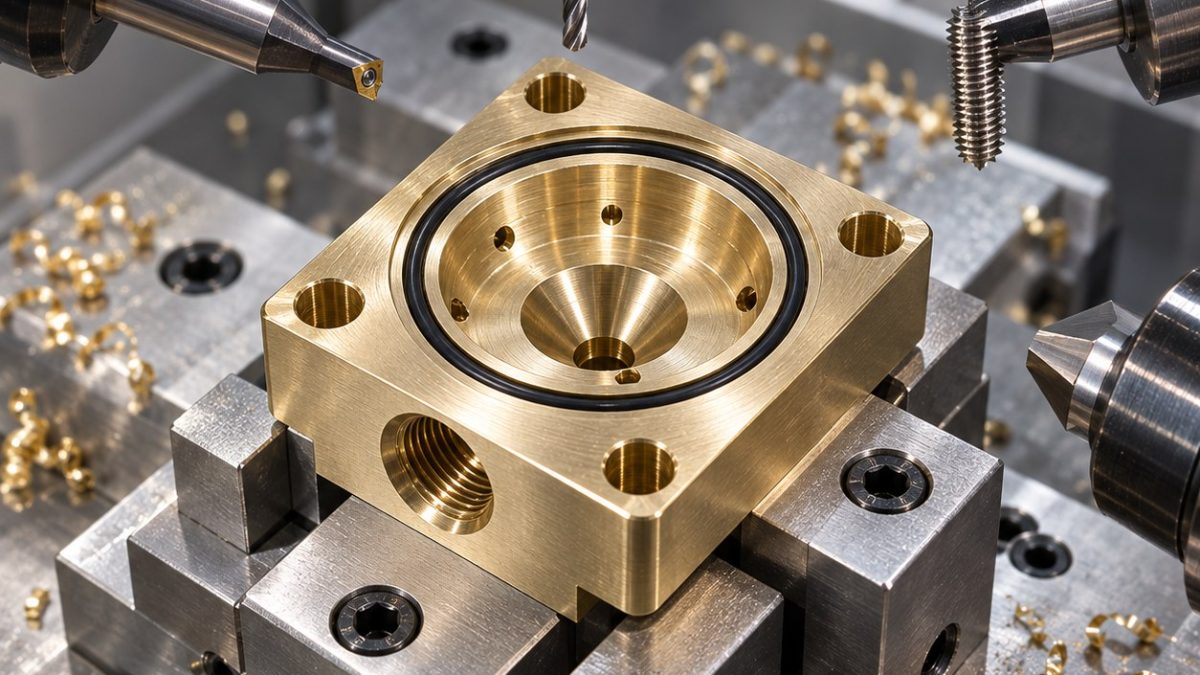
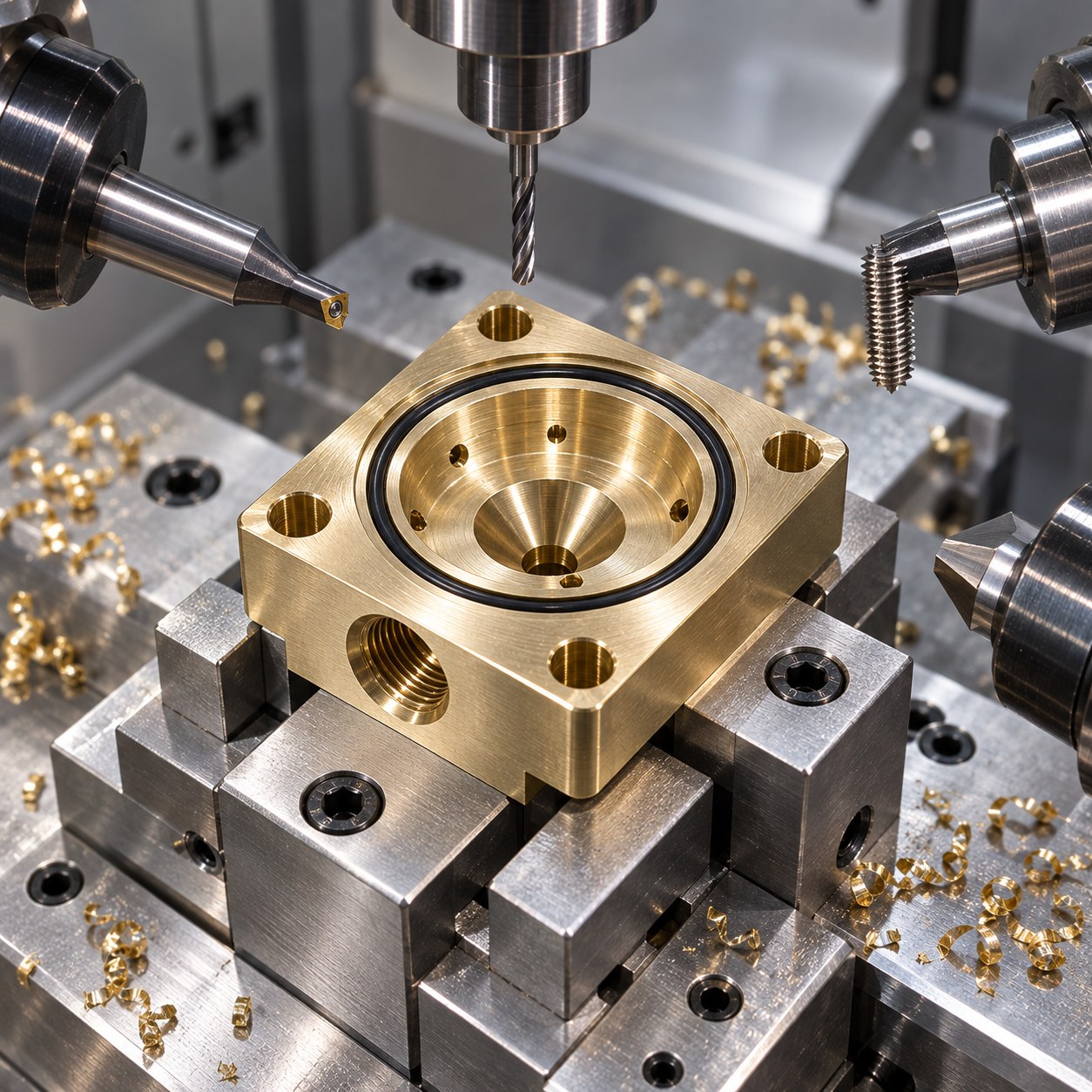
The C360 case answers how to tool a microfluidic valve seat when the drawing combines a conical seal, tiny cross holes, O-ring groove and a thread port in one small brass body. The risk is not hardness; it is burrs crossing into a leak path.
Micro seat features and small-tool selection
| Valve-seat feature | Specific tool | Control reason |
|---|---|---|
| Conical seal seat | Custom 90° micro form tool, polished carbide, low runout | A ball-milled cone would leave spiral leak paths. |
| Tiny cross holes | 0.6 mm carbide micro drill with peck schedule | Keeps breakthrough predictable; laser drilling would add recast cleanup. |
| O-ring groove | 1.2 mm carbide grooving tool with polished rake | Controls floor width without rolling brass into the corner. |
| Threaded port | Single-point carbide thread mill | Avoids tap chip packing in the small cavity. |
| Seat edge break | Micro back-chamfer cutter | Removes burrs without touching the sealing cone. |
Seat-first process with protected cross holes
The cone seat is form-cut before the cross holes are opened. Holes are drilled from the least visible burr direction, then the O-ring groove and thread are cut with the seat covered. Final back-chamfering is separated from cosmetic edge breaking.
Brass chip curl and micro-burr control
C360 makes free chips, but at this scale curled brass can plug the seat. Peck length, air direction and tool polish are monitored. Any tool that pushes a rollover into the cone is removed even if it still cuts diameter.
Leak-focused inspection
Inspection uses optical review of the cone, pin checks on cross holes, thread gauge, O-ring groove width and a simple low-pressure leak check. The seat is accepted only when deburring leaves no witness mark on the cone.
Seat tooling FAQ
Why use a form tool for the brass cone?
It creates one continuous sealing surface instead of a stepped spiral interpolation mark.
Which burr is most dangerous?
The cross-hole burr that folds into the conical seat.
Can tapping replace thread milling?
Not safely in this tiny cavity, because tap chips can pack behind the seat.
For the drill, holder, exit-support and burr-control decision behind this feature, use the Micro-hole decision hub.