Related tooling references: Polycarbonate Optical Light Pipe CNC Tool Selection for Polished V-Grooves and Snap Tabs and Monel K-500 Marine Clevis CNC Tool Selection for Fork Slot, Pin Bore and Fillet Relief.
English: Maraging 300 Latch Hook Tooling for Thin Profile and Pivot Bore
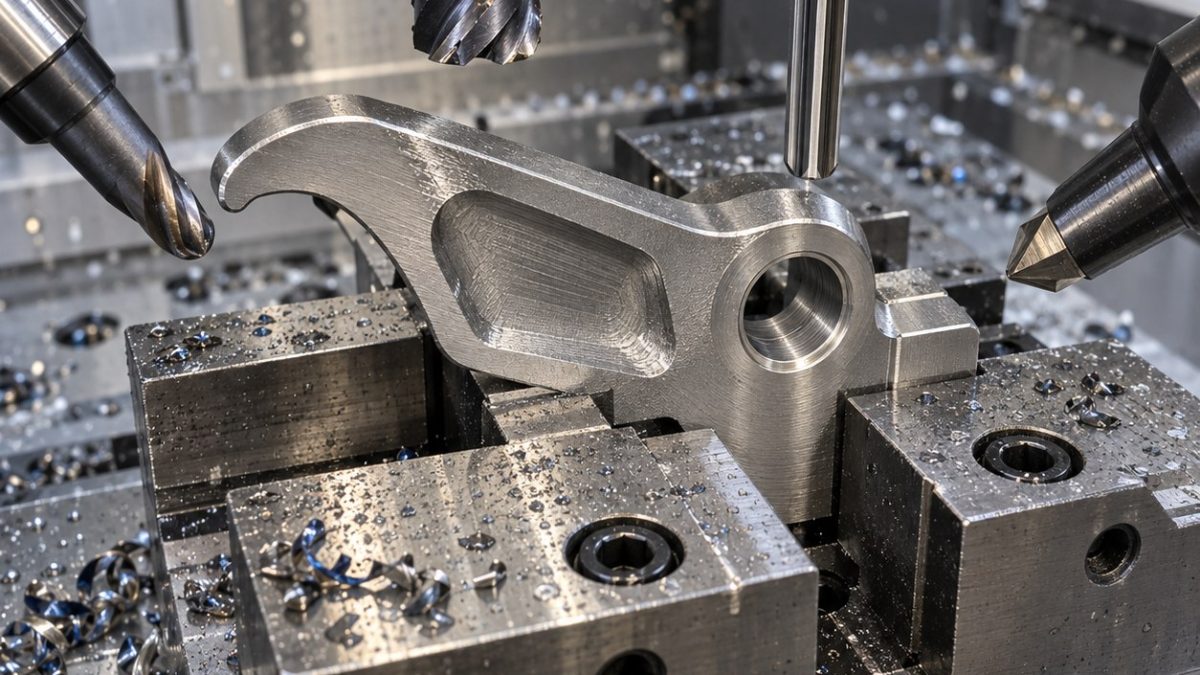
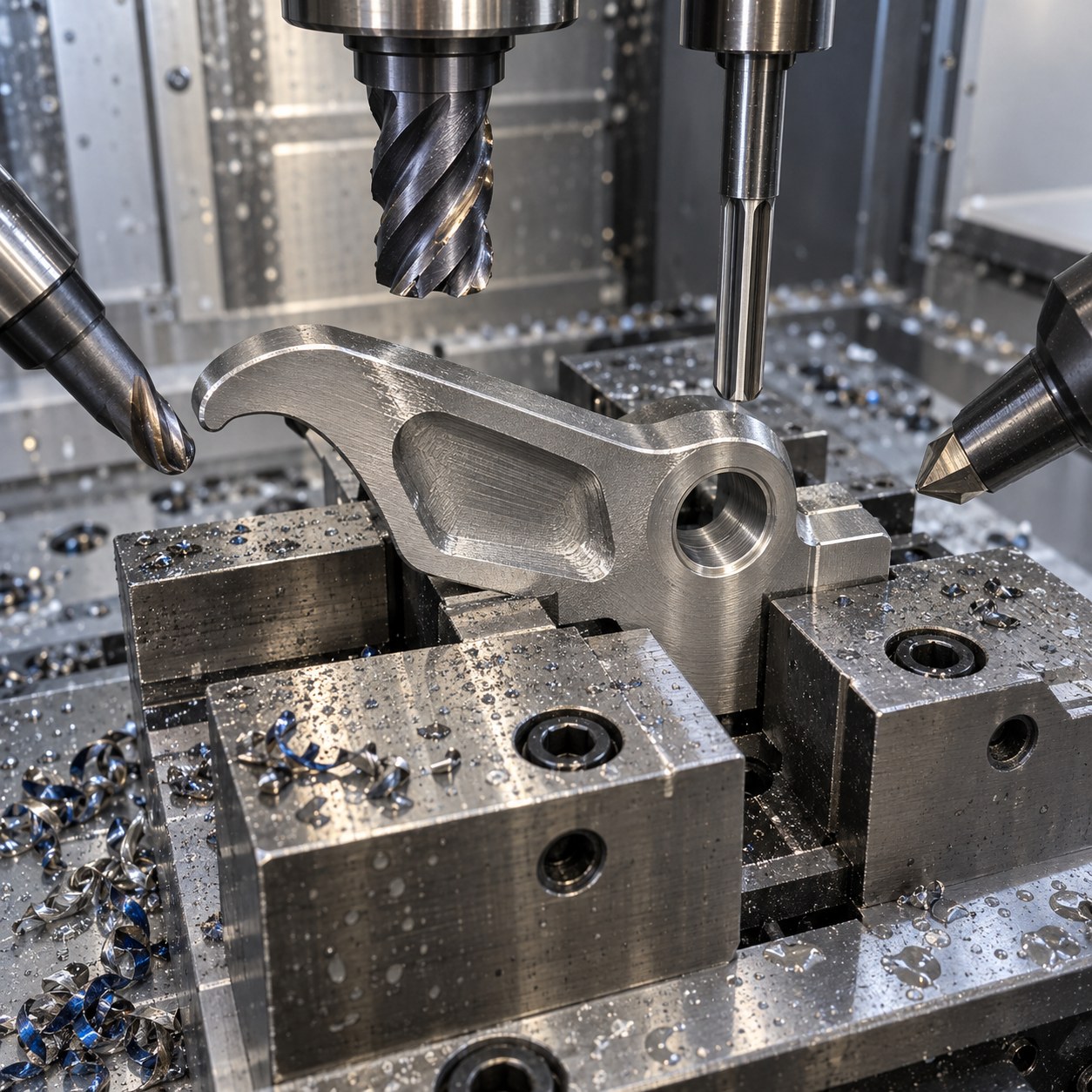
This latch-hook case is about Maraging 300 tool selection where a thin load hook, pivot bore and stop face all move differently through aging. The drawing is read around latch timing, not around the largest stock-removal feature.
Latch-hook geometry converted to tools
| Functional area | Chosen cutter or hole tool | Why another path is avoided |
|---|---|---|
| Thin hook nose | 6 mm high-feed carbide rougher then 3 mm finishing end mill | Leaves stock until pivot bore is stable; full-depth profile finishing is rejected. |
| Pivot bore | Carbide drill, semi-bore, machine reamer, then hone allowance check | Reaming works only after location is corrected by boring. |
| Stop face | 10 mm sharp corner carbide end mill in rigid collet | Holds latch contact geometry; hand fitting changes release timing. |
| Root radius | 4 mm ball end mill with small stepdown | Protects fatigue strength and avoids EDM recast. |
| Heat-treat datum pads | Face mill witness pads before aging | Gives repeatable comparison after dimensional movement. |
Machine stock before aging distortion
Machine witness datums, rough the hook with a safety stock band, semi-finish the pivot bore, then finish contact areas in a setup that supports the hook throat. After aging, only light bore and stop-face corrections are planned.
Radius finish, bore heat and edge control
Maraging steel rewards sharp carbide before aging but still builds heat at the hook root. Ball finishing uses small stepdown, no dwell at the nose and stable coolant. Reaming is rejected until a boring pass confirms the pivot axis.
Inspection before and after aging
Inspection records the pre-aging datum map, hook profile, stop-face angle and pivot bore size. Final acceptance compares aged movement against the allowed latch engagement window.
Manufacturing FAQ
Why not ream the pivot bore directly?
A reamer follows the existing axis; boring first corrects position before size finishing.
Where is heat-treatment allowance left?
At contact faces and bore stock that can be corrected without changing the hook profile.
Why avoid EDM for the hook root?
The case assumes a machined fatigue radius; EDM recast would need a separate removal allowance.