Related tooling references: 410 Stainless Pump Impeller CNC Tool Selection for Thin Blades, Shroud Lip and Balance Pads and G10 Epoxy Glass Manifold Plate CNC Tool Selection for Sealed Channels and Counterbored Holes.
English: AM 316L Valve Block Tooling for Printed Datum Cleanup and Deep O-Ring Ports
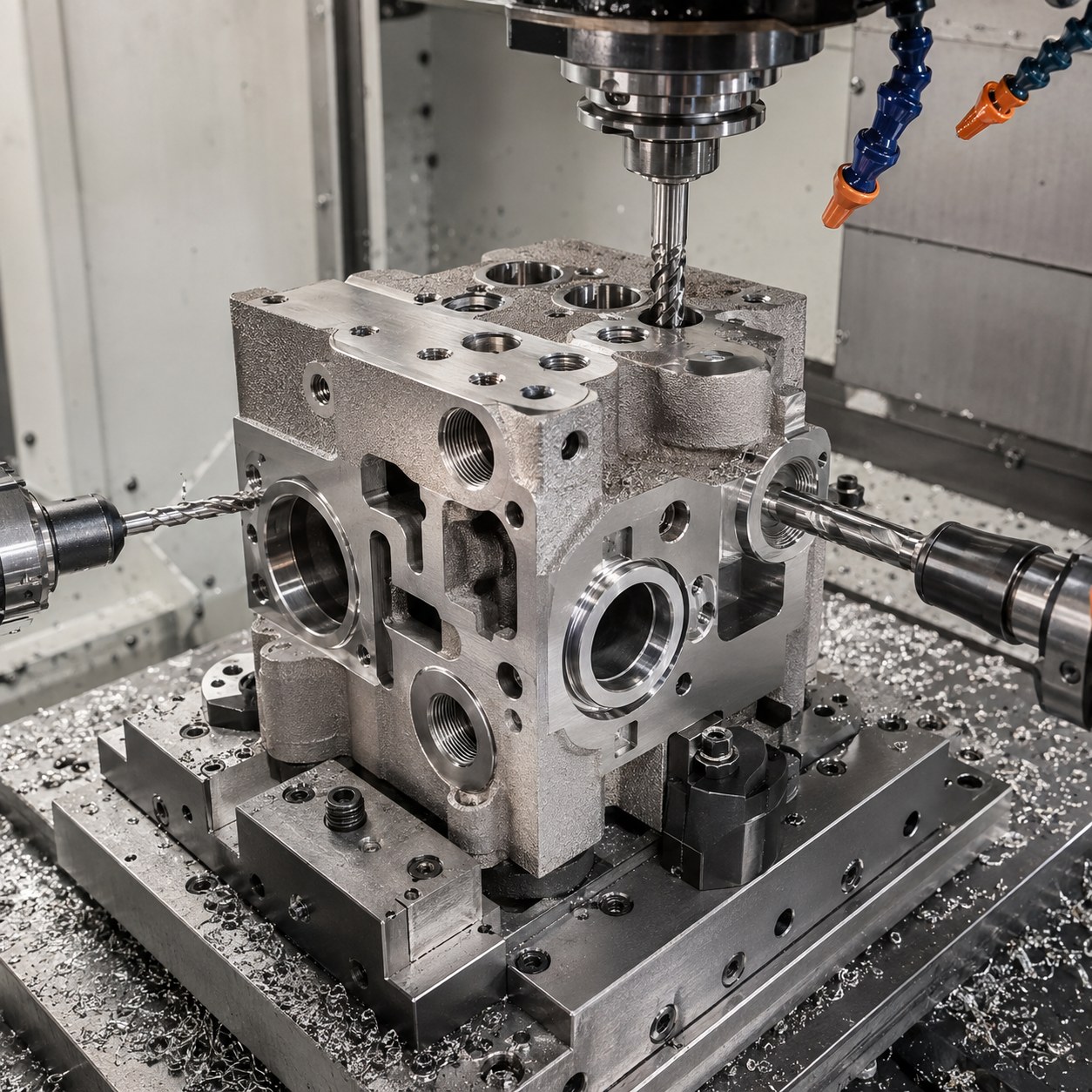
This AM 316L valve-block case focuses on printed stock cleanup and deep port tooling. The drawing has normal hydraulic dimensions, but the manufacturing risk comes from uneven printed skin, trapped powder, port intersections and O-ring groove finish.
Drawing zones and tool decisions
| Feature on the drawing | Selected tool package | Reason and rejected alternative |
|---|---|---|
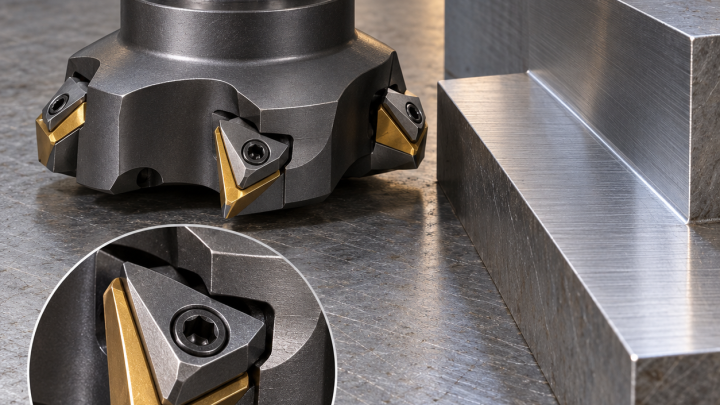
| Printed datum cleanup | 32 mm variable-pitch carbide face mill, light skin pass, flood coolant | Cuts uneven AM skin without loading one corner; heavy surfacing is rejected. |
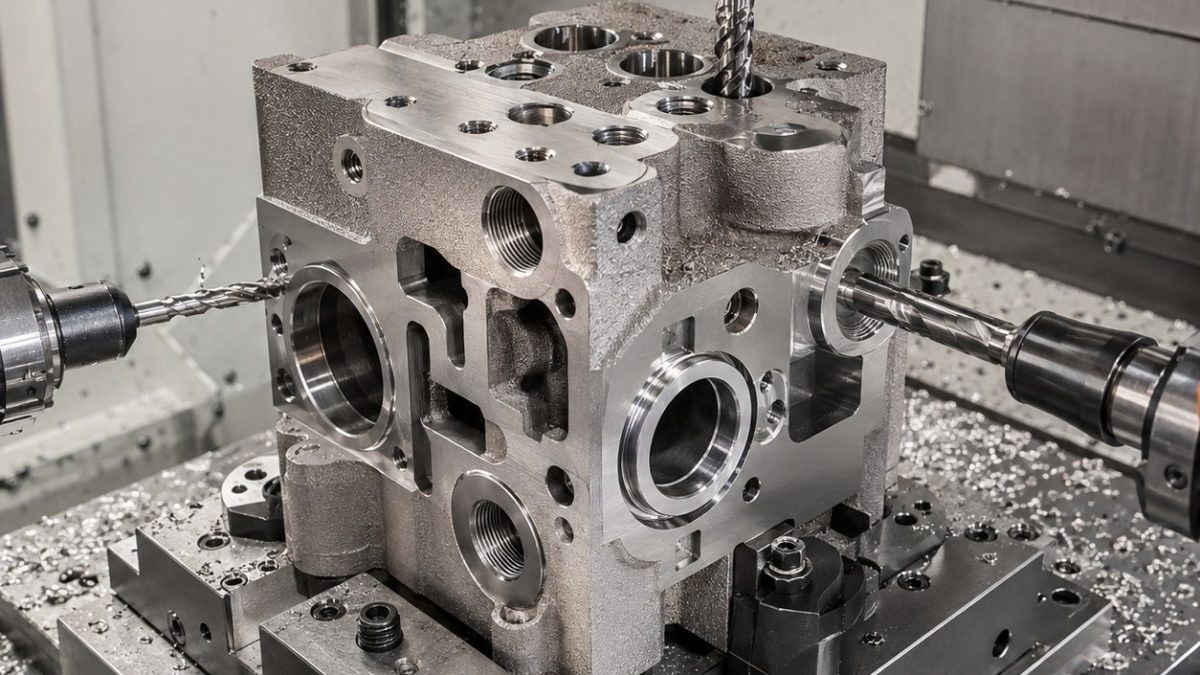
| Deep valve ports | Through-coolant carbide drill, then guided boring bar | Controls wander through printed density variation. |
| O-ring grooves | Internal carbide grooving tool with wiper corner and anti-vibration shank | Holds groove floor finish and width; plunging with an end mill is rejected. |
| Plug threads | TiAlN carbide thread mill with short relieved neck | Avoids tap seizure and handles interrupted AM surface. |
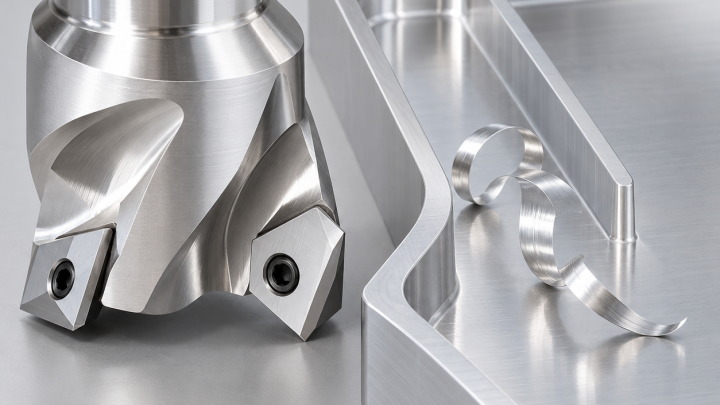
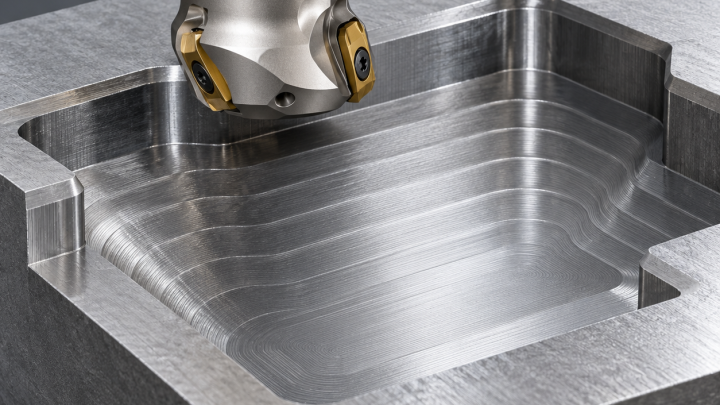
| Gasket pads | 12 mm high-feed semifinish then 8 mm wiper finish mill | Separates stock cleanup from final sealing flatness. |
Machining sequence and fixture logic
Probe the printed casting-like stock, skim datum pads, then re-probe before deep drilling. Machine the largest ports before O-ring grooves, thread mill plug features after port cleanup, and finish gasket pads last with light passes from stable datums.
Material-specific chip, burr and tool-life controls
AM 316L can contain local hard spots and residual stress. Use through-coolant carbide drills, avoid dwell at port intersections and track tool life by thrust change. Internal burrs are removed with programmed reverse chamfers and verified before washing.
Inspection plan tied to the tolerance stack
Borescope every intersection, CMM the datum-to-port relation, gauge O-ring groove width and floor finish, verify thread pitch with go/no-go gauges and pressure-test the cleaned block at low pressure before final release.
FAQ
Why thread mill instead of tap AM 316L?
Thread milling lowers seizure risk and tolerates interrupted printed skin better.
How are internal burrs confirmed?
By borescope before washing so loose chips are not hidden in the hydraulic circuit.
When are gasket pads finished?
After port cleanup and re-probing, using the stable datum chain.