English: Drawing Review and Tooling Plan
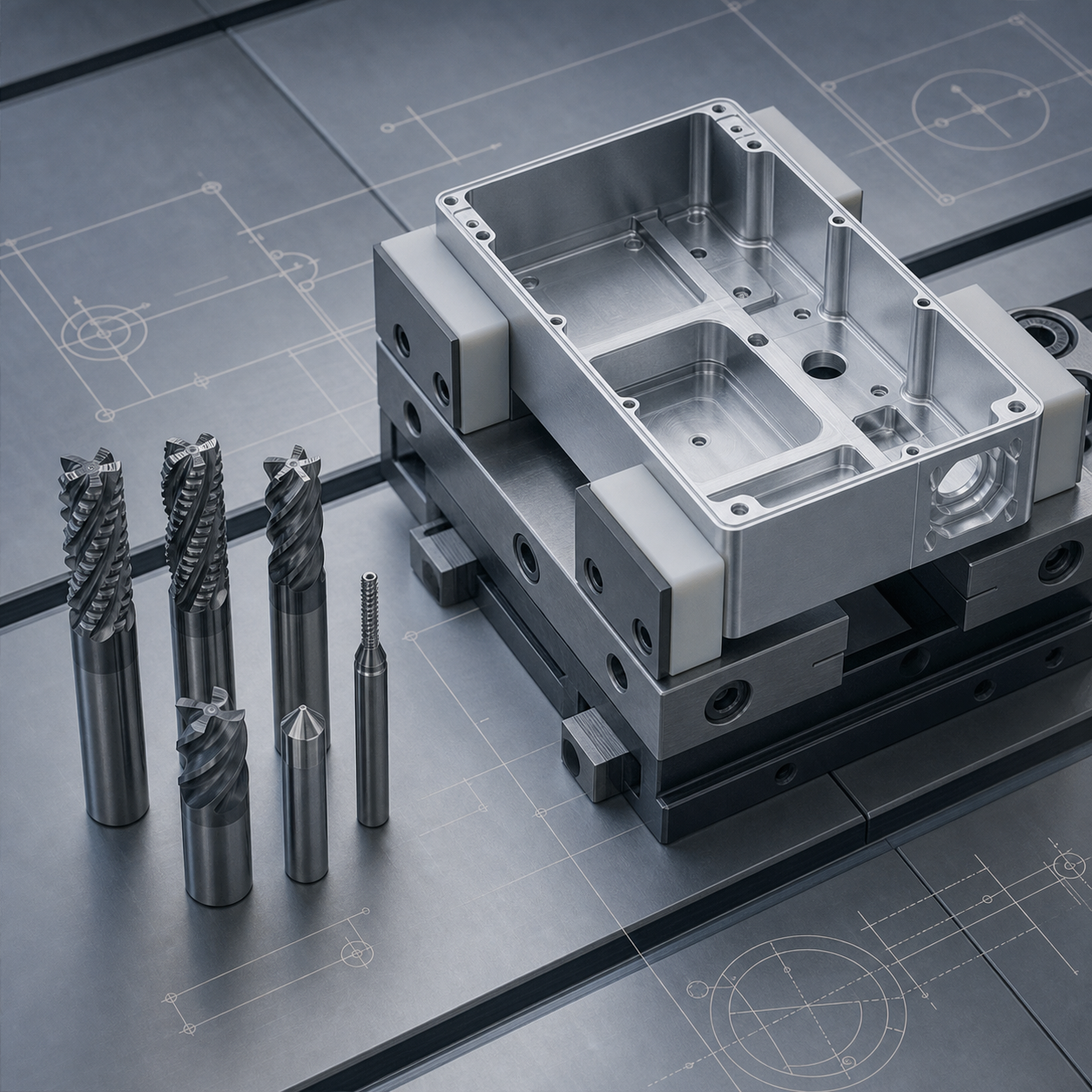
This practical planning article focuses on 6061-T6 thin-wall instrument enclosure CNC datum pocket thread milling. The part drawing combines thin walls, a deep electronics pocket, a gasket land, corner radii, countersunk mounting holes and small threaded bosses. The process goal is to convert drawing requirements into a stable fixture, a short tool list, controlled cutting conditions and measurable inspection gates.
Drawing and datum review
The first step is to identify the true functional datums. For this part, the process should treat the machined datum face, gasket land and protected locating holes as the main reference. Nonfunctional stock should stay in place until the critical geometry is stable. This reduces the risk of chasing dimensions that move after unclamping.
Fixture and tool selection
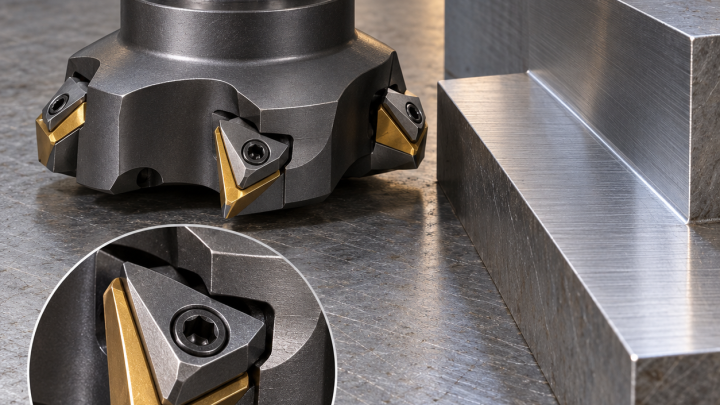
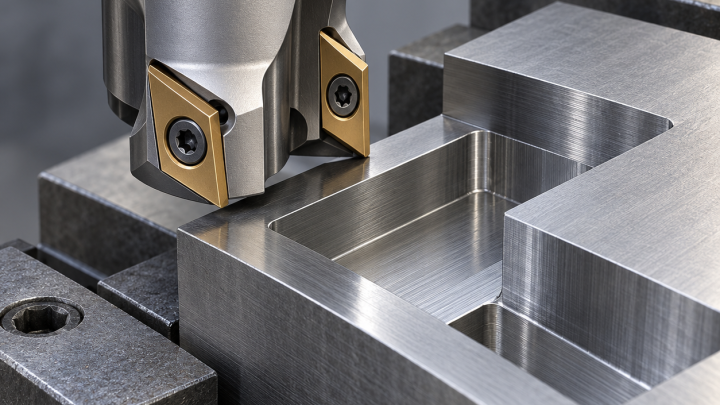
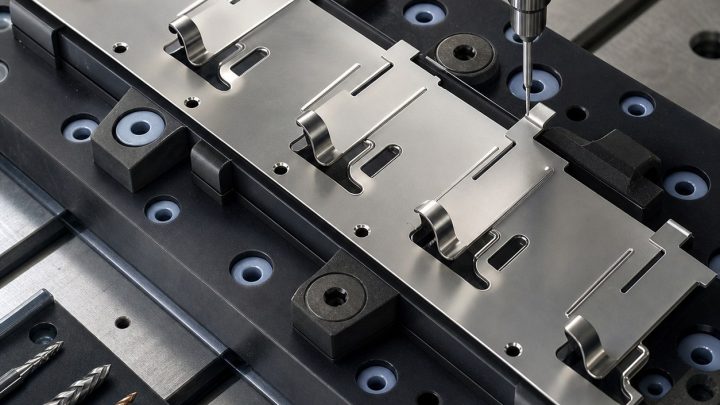
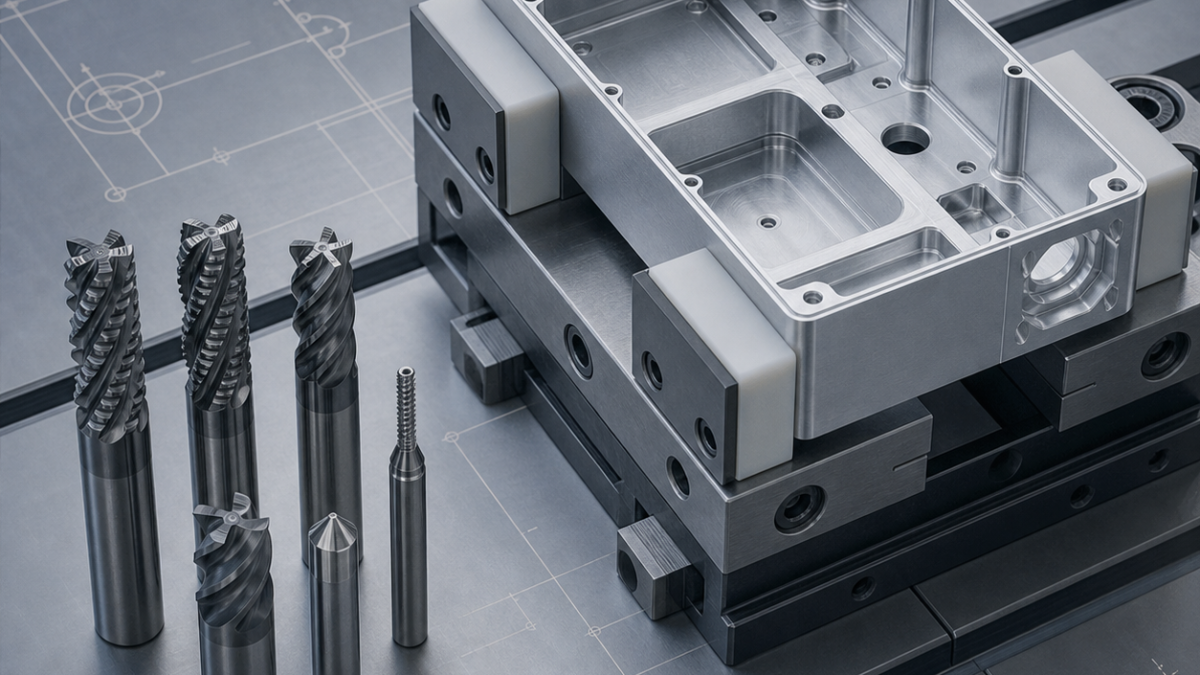
The fixture plan is to machine the datum face first, then locate the part in contour-matched aluminum soft jaws with broad support beneath the floor. The recommended tooling is a 10 mm three-flute polished carbide end mill, a 6 mm reduced-neck finisher, a corner-radius tool, a chamfer mill and a carbide thread mill. Keep tool reach short, verify holder runout and separate roughing tools from finishing tools. That separation protects the final surface from roughing wear and heat.
Starting parameters and sequence
Initial parameters should be conservative and based on the tool supplier’s grade data. Start with light radial engagement, steady chip evacuation and a documented tool-life limit. A reliable sequence is datum preparation, supported roughing, semi-finishing, critical holes or grooves, final surface finishing, deburring and inspection.
Inspection plan
Inspection should confirm wall position at several heights, gasket-land flatness, thread quality, pocket floor finish and open-rim distortion. The useful SEO terms belong naturally here: 6061-T6 thin-wall instrument enclosure CNC datum pocket thread milling, fixture method, tool selection, burr control, dimensional inspection and process stability.