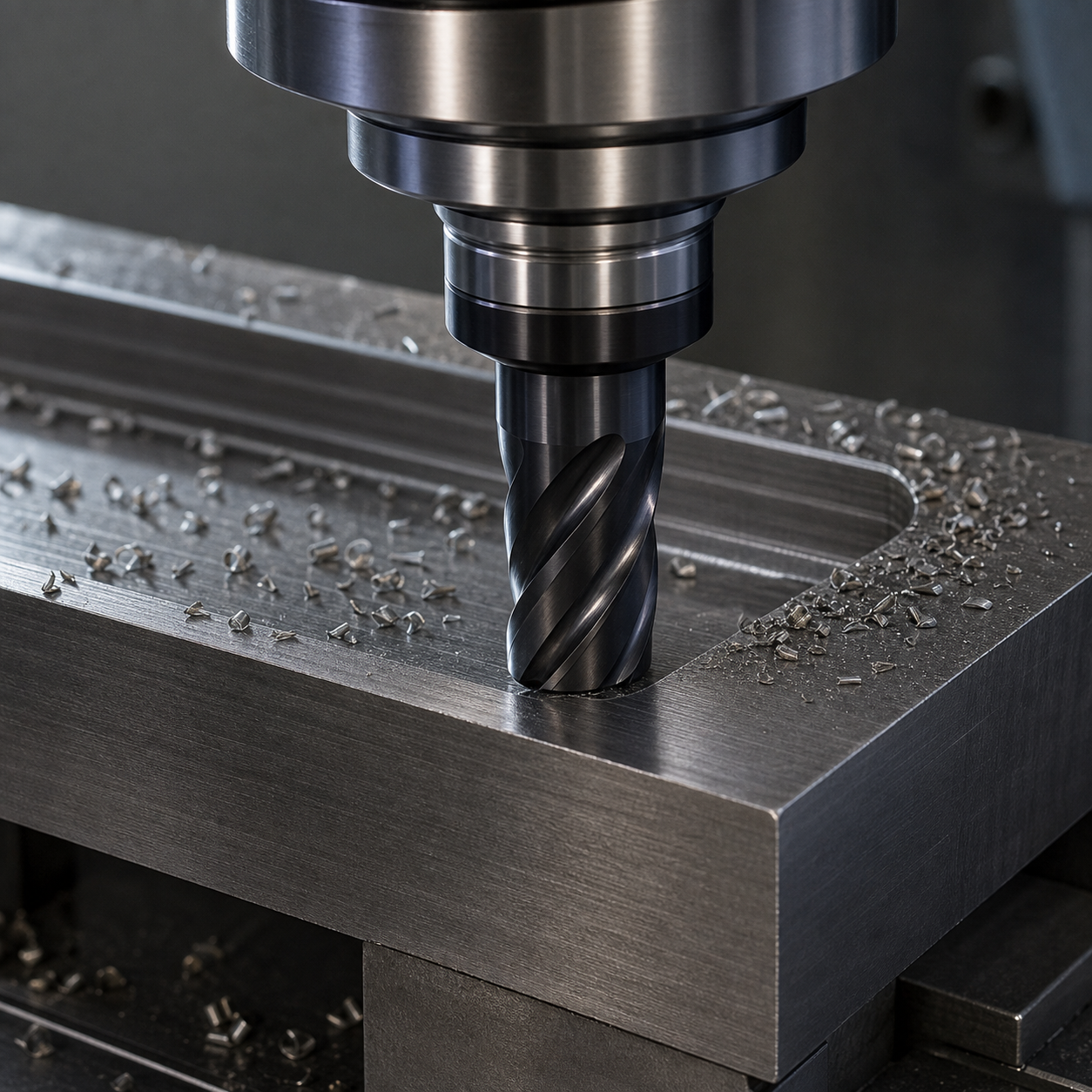
English: A Small Corner Radius Can Make a Cutting Edge Stronger
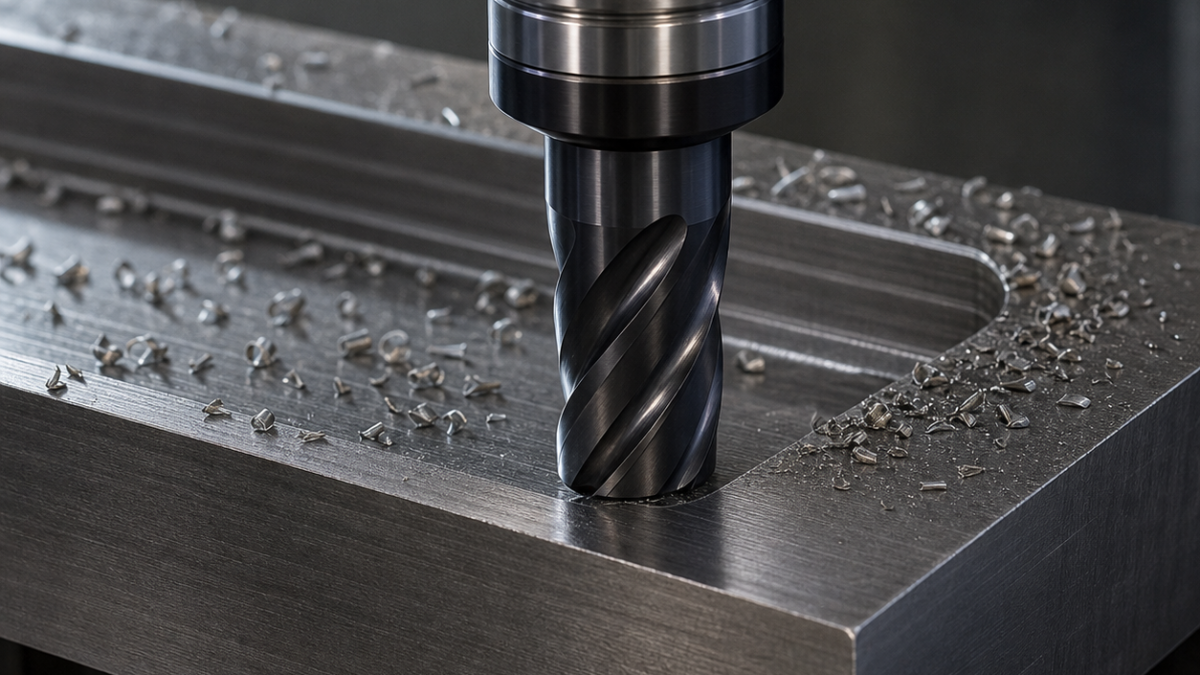
Corner radius end mills are widely used in CNC roughing because the rounded corner spreads cutting stress more evenly than a sharp square corner. This improves edge strength and reduces the risk of chipping, especially in steel, stainless steel, hardened materials and interrupted cuts. For shops trying to improve carbide tool life, switching from a square end mill to a corner radius tool can be a practical first step.
The radius also changes how the tool leaves material in corners and shoulders. Programmers should account for the corner radius in CAM strategy, especially before finishing passes. A larger radius can support heavier roughing, but it may leave more stock in internal corners.
Selection guidance
Choose the radius according to material, rigidity and finishing allowance. If chipping appears near the tool corner, check runout, corner engagement and feed per tooth. Stable roughing depends on both tool geometry and process control.