Related tooling references: Polycarbonate Optical Light Pipe CNC Tool Selection for Polished V-Grooves and Snap Tabs and Monel K-500 Marine Clevis CNC Tool Selection for Fork Slot, Pin Bore and Fillet Relief.
English: 17-4PH Drone Motor Mount Tooling for Thin Webs and Cooling Slots
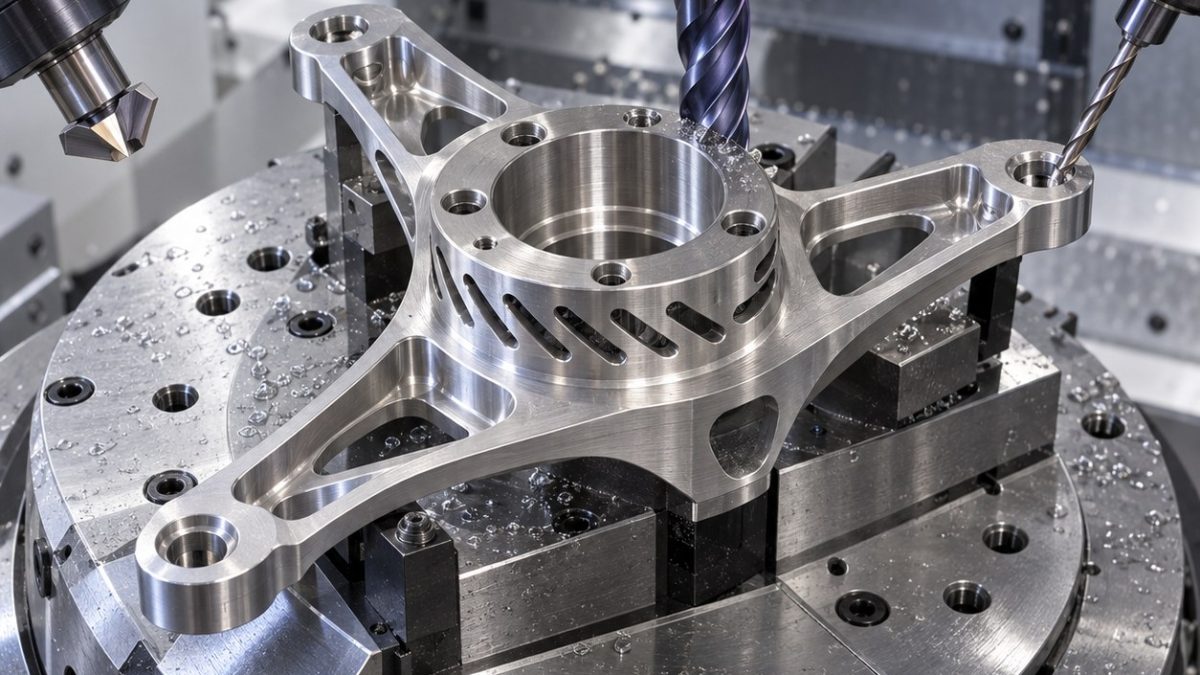
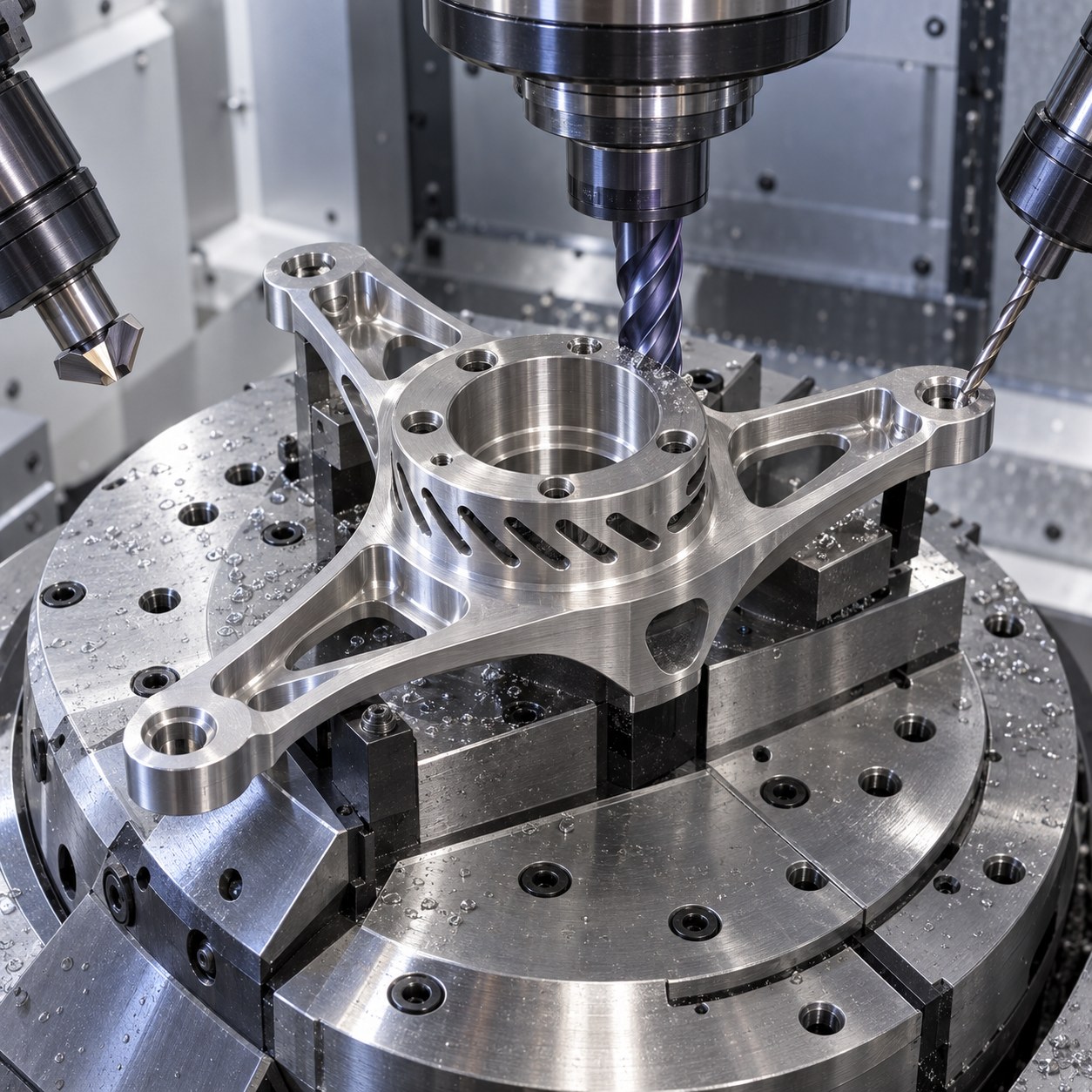
This motor-mount case targets a long-tail production question: how to select carbide tools when a 17-4PH drawing combines a flat motor boss, thin web arms and curved cooling slots. The part is small, but the tool decision is governed by stiffness loss after pocketing.
Thin-web drawing features into stable tool choices
| Drawing callout | Tool and holder | Decision tradeoff |
|---|---|---|
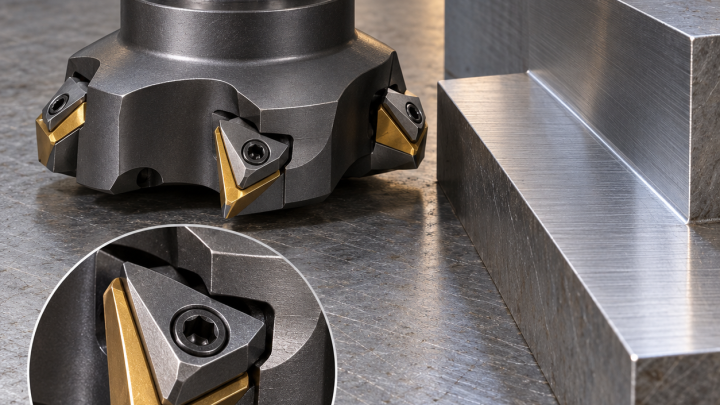
| Motor boss top face | 40 mm positive carbide face mill, TiAlN, hydraulic arbor | Finishes flatness before web thinning; a heavy negative mill would push the arms. |
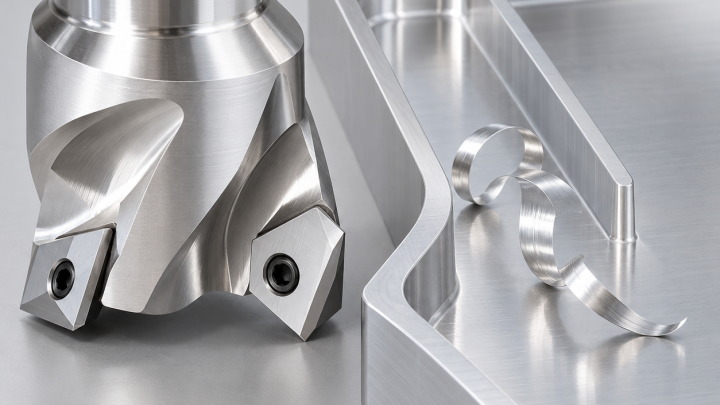
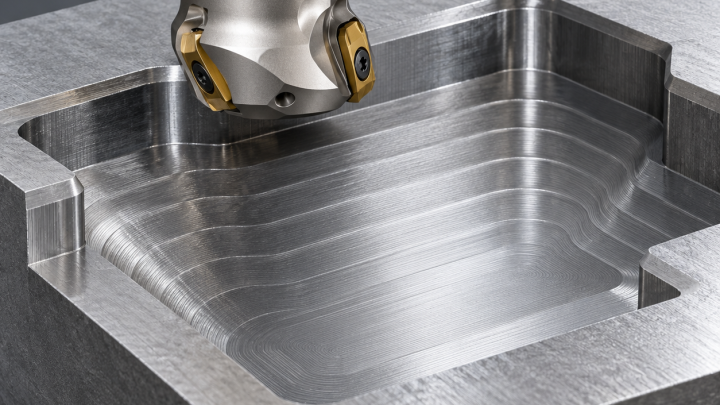
| Thin web pockets | 8 mm variable-pitch carbide rougher, 5 flute, corner radius | Keeps engagement smooth; a two-flute slotting pass leaves chatter on webs. |
| Helical cooling slots | 3 mm necked carbide end mill, AlCrN, shrink holder | Reach and stiffness are balanced; wire EDM is rejected for burr direction and setup time. |
| Counterbored screw holes | Carbide drill, piloted counterbore and 90° chamfer mill | Separates hole location from seating flatness. |
| Edge weight relief | 4 mm ball end mill, short flute | Blends ribs without thinning the motor boss. |
Balanced roughing before web release
Rough the outside while leaving bridge tabs, finish the motor boss early, then open web pockets in mirrored order. Cooling slots are cut after the arms are semi-supported, and counterbores are finished after final probing so screw seats do not inherit roughing distortion.
17-4PH chatter, burr and tool-life controls
17-4PH chips well only when the edge stays engaged. Light rubbing at slot exit creates burrs and work-hardened lips; the process uses short axial engagement, climb finishing and a tool-life stop based on web chatter marks.
Motor-boss and slot inspection
CMM checks boss flatness, arm height and counterbore position. A pin sweep through the motor bolt circle verifies that cooling-slot burr removal did not bend the webs.
Practical tooling FAQ
Why finish the boss before the thin webs are fully open?
The boss is the motor datum; once the webs are thin, clamp and cutter forces can tilt it.
What limits the 3 mm slot tool life?
Chatter at slot exit and burr growth are more useful than a fixed minutes counter.
Can the cooling slots be deburred by hand?
Only with a supported web and after checking that the bolt circle has not moved.