Related tooling references: Invar 36 Optical Spacer Frame CNC Tool Selection for Flexure Slots and Kinematic Pads and 410 Stainless Pump Impeller CNC Tool Selection for Thin Blades, Shroud Lip and Balance Pads.
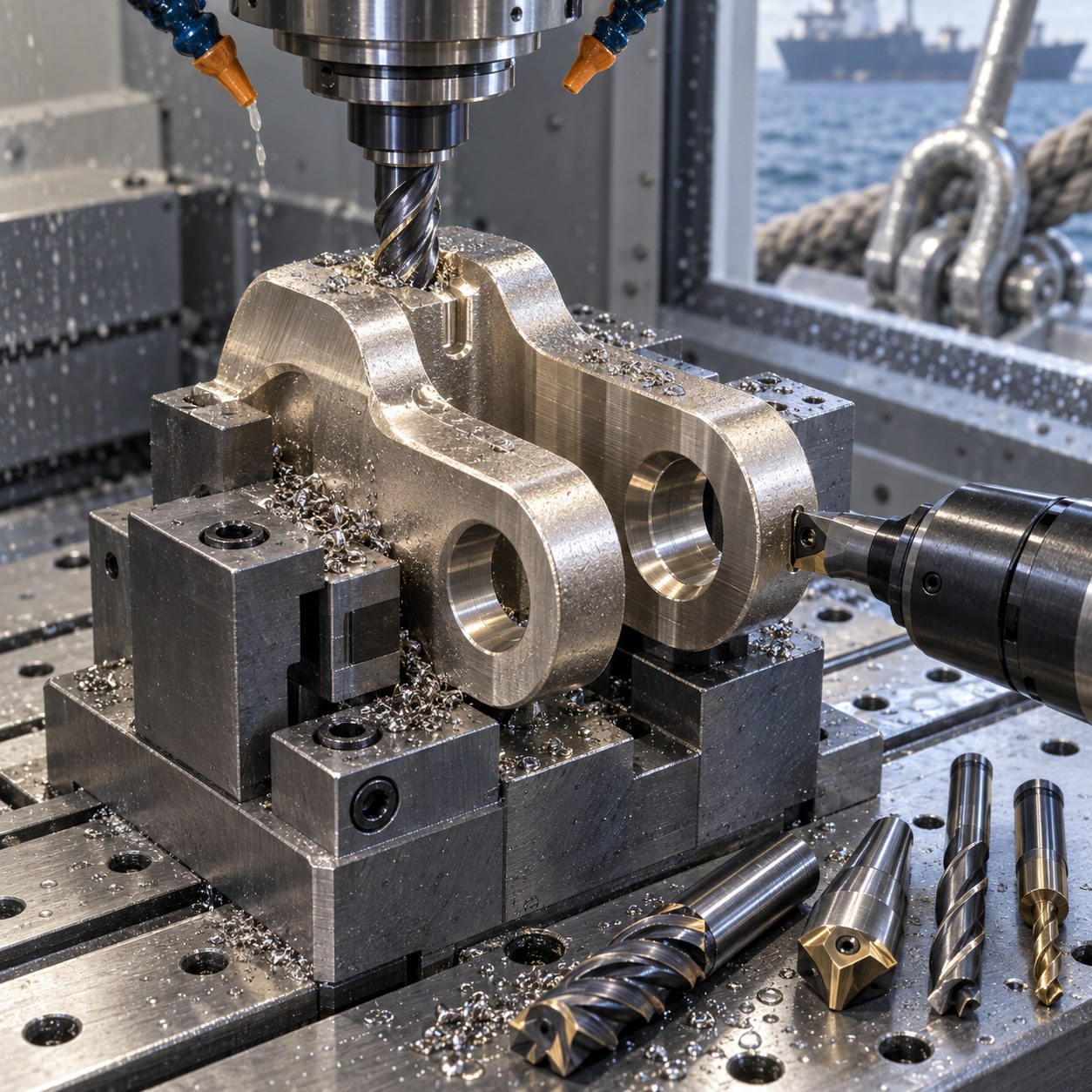
English: Monel K-500 Marine Clevis Tooling for Fork Slot and Pin Bore
For a Monel K-500 marine clevis, the search problem is how to pick carbide tools when the fork slot removes stiffness before the pin bore is final. The drawing combines bearing contact, fatigue radius and corrosion-service edges, so tool choice has to prevent work hardening instead of simply chasing metal removal rate.
Fork-slot drawing features mapped to carbide tools
| Clevis feature | Carbide tool package | Rejected shortcut |
|---|---|---|
| Deep fork slot | 12 mm variable-helix carbide rougher, AlTiN, trochoidal entry | A full-slot HSS cutter would rub and harden Monel before reaching depth. |
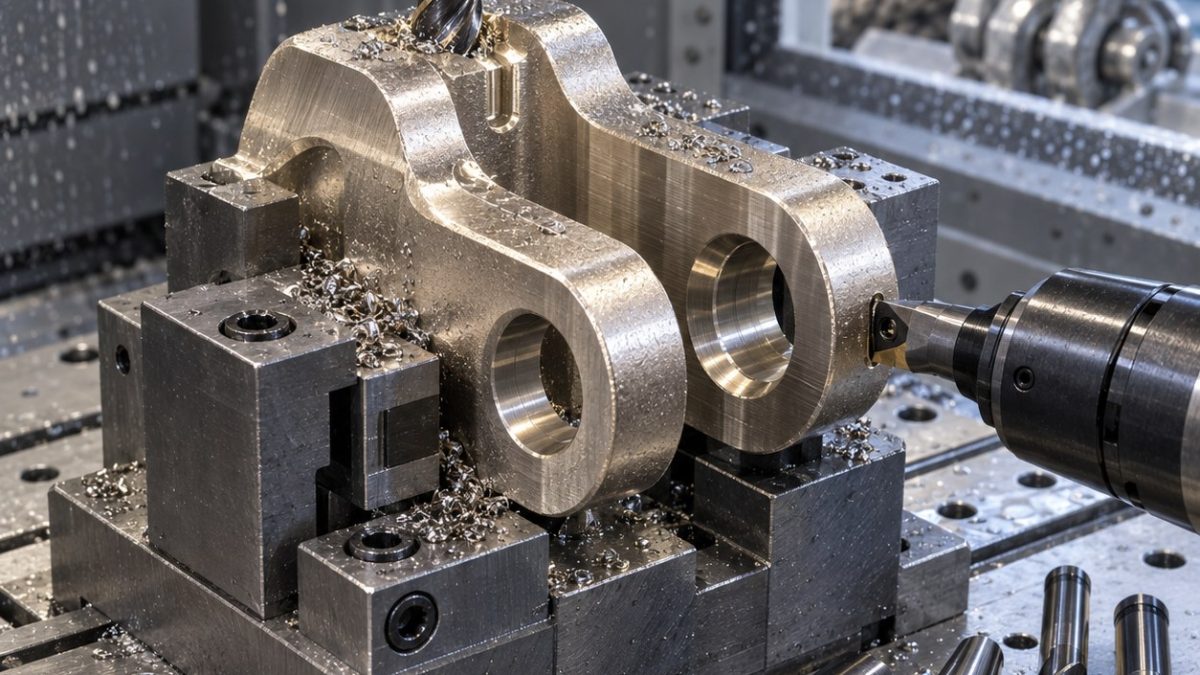
| Pin bore pair | Pilot, indexable drill, semi-bore, then carbide fine boring bar | Line-bored correction is needed after fork-slot stress release. |
| Fillet relief | 6 mm corner-radius carbide end mill, short flute, relieved neck | Matches fatigue radius; a sharp square end mill leaves a crack starter. |
| Grease groove | Formed carbide keyseat cutter with polished rake | Cuts the cross groove without hand-digging burrs into the bore. |
| Mouth chamfers | 90° coated carbide chamfer mill with limited land | Controls assembly lead-in while preserving lug thickness. |
Order of operations around the pin bore
Machine the outside stock on sacrificial tabs, rough the fork slot symmetrically, rest the part, then line-bore the pin holes from a supported orientation. The fillet relief and grease groove follow the bore so burr direction can be controlled toward accessible faces.
Work-hardening, chip load and burr control
Monel K-500 punishes rubbing. The rougher must keep chip thickness real, coolant must reach the slot bottom, and the fine boring bar is changed on bore finish trend rather than catastrophic wear. Any dwell in the grease groove is treated as a burr generator.
Inspection gates for a loaded clevis
Inspection begins with fork spacing and lug parallelism, then checks pin-bore size, coaxiality and surface finish. A flexible brush pass is accepted only after borescope review confirms the grease groove did not fold a burr into the bearing track.
Tooling FAQ
Why line-bore the clevis after roughing the fork slot?
The slot changes lug stiffness, so final bore coaxiality should be corrected after that movement.
Which tool fails first in Monel K-500?
The rougher usually loses edge honesty by rubbing; the sign is heat, curled burrs and rising spindle load.
Can the grease groove be hand cleaned?
Only after borescope confirmation; blind scraping can fold a burr into the bearing bore.
For alloy-first comparison across pockets, holes, seats, grooves and thin sections, use the nickel-alloy CNC tooling decision hub.