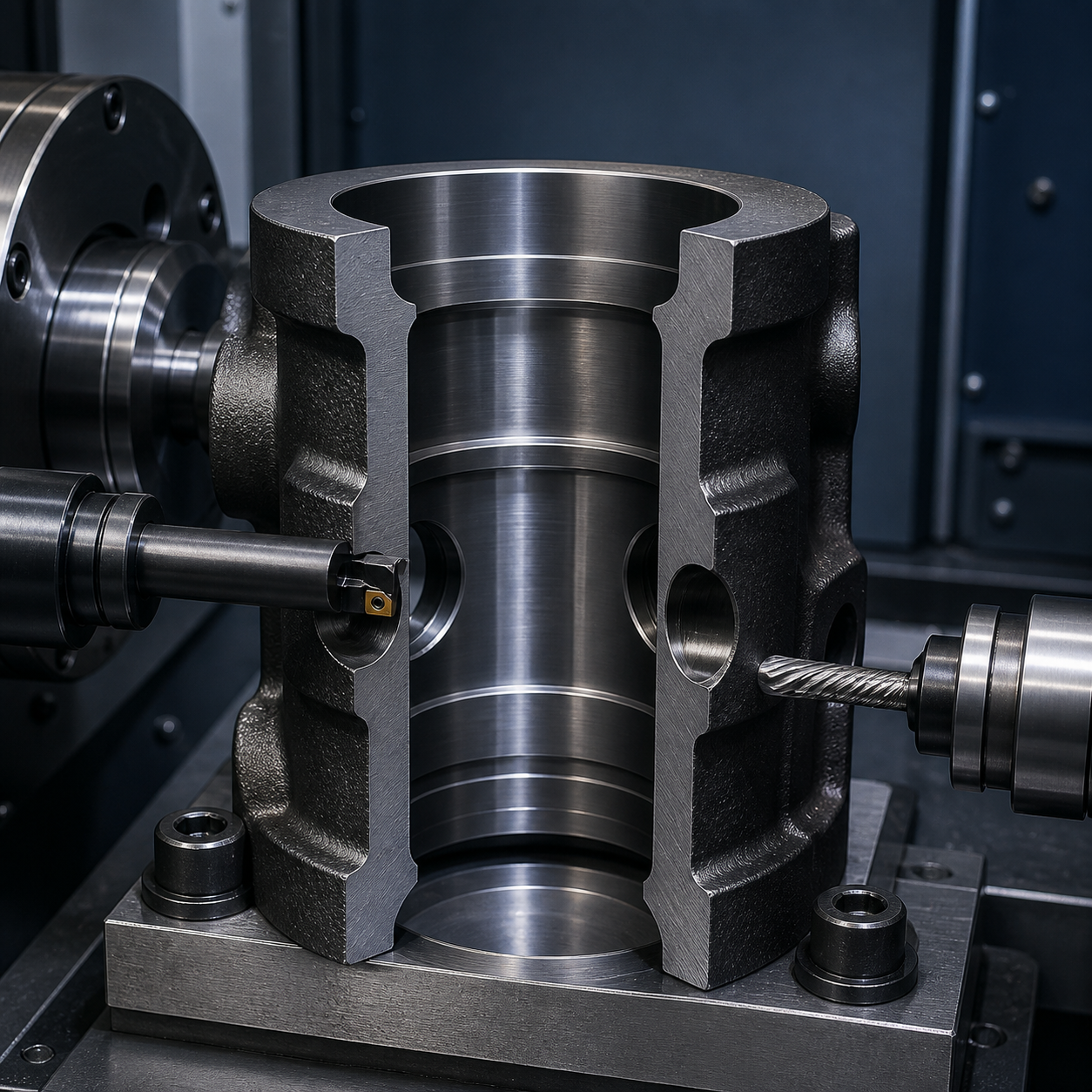
This is a realistic hypothetical process-planning case, not a customer project or confidential drawing.
English: H13 Mold Core Insert CNC Case: Deep Ribs, EDM Allowance and Polishing Datum Control
Search intent and drawing interpretation
The search intent is how to machine an H13 mold core insert with deep narrow ribs while coordinating CNC, EDM and polishing. Interpret draft angles, shutoff faces, corner radii, heat-treatment condition, parting-line datums and surface-class symbols before assigning any area to milling or EDM.
- Protect shutoff and parting-line datums
- Mark inaccessible root radii for EDM
- Separate final steel dimensions from polishing stock
Carbide tool selection
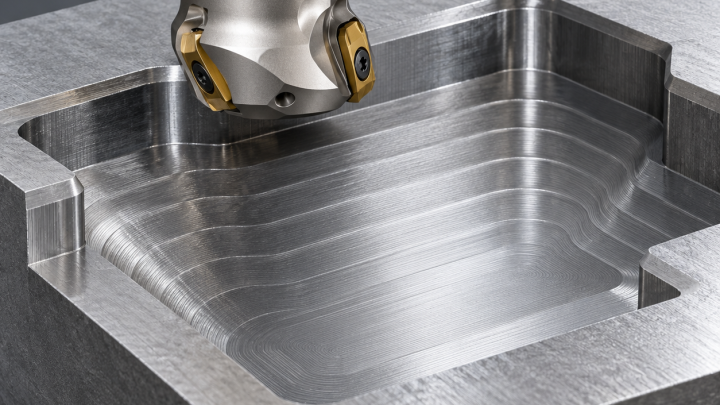
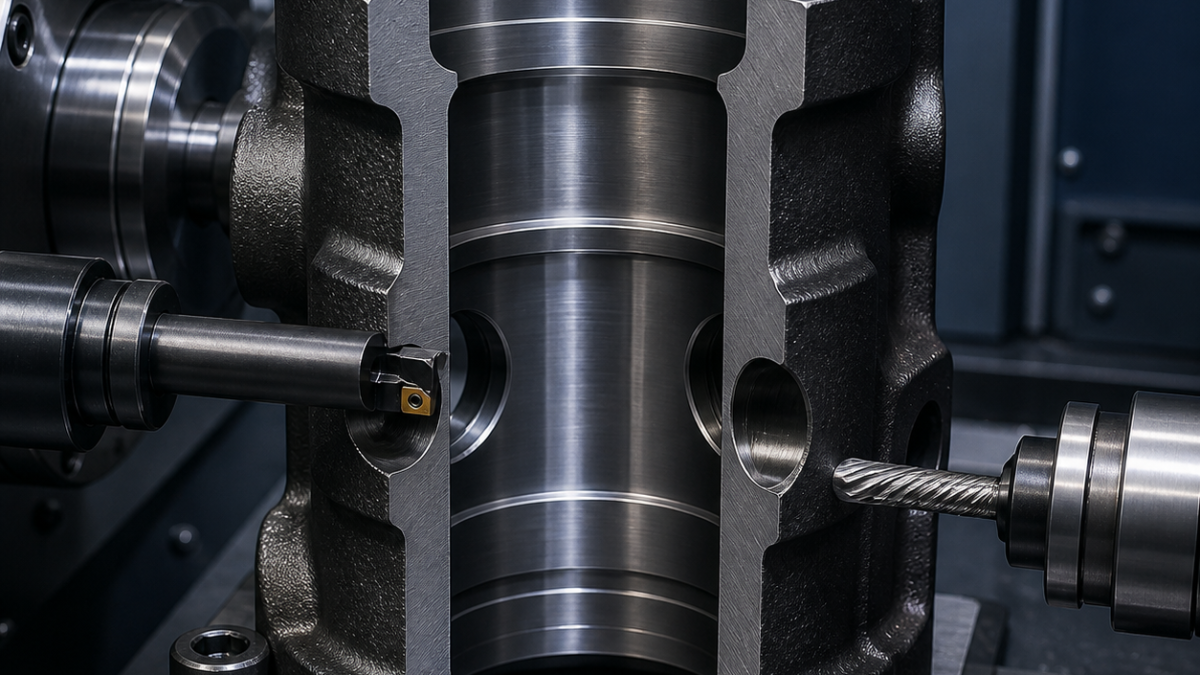
Use rigid variable-helix carbide end mills for bulk roughing, reduced-neck high-feed or bull-nose tools for deep rib corridors, and small ball-nose carbide cutters only where reach and deflection are verified. Choose coating and edge preparation for the actual H13 hardness state.
Process planning and fixture choice
Establish the base and two side datums in a rigid vise or pallet fixture. Rough symmetrically, leave heat-treatment and finishing stock, re-establish datums after hardening if required, then semi-finish before electrodes are finalized. Reserve protected reference pads for polishing and CMM alignment.
- Maximize holder clearance before increasing tool length
- Use modular pallets for repeatable CNC-to-EDM transfer
- Do not polish away the measurement datums
Roughing, finishing and toolpaths
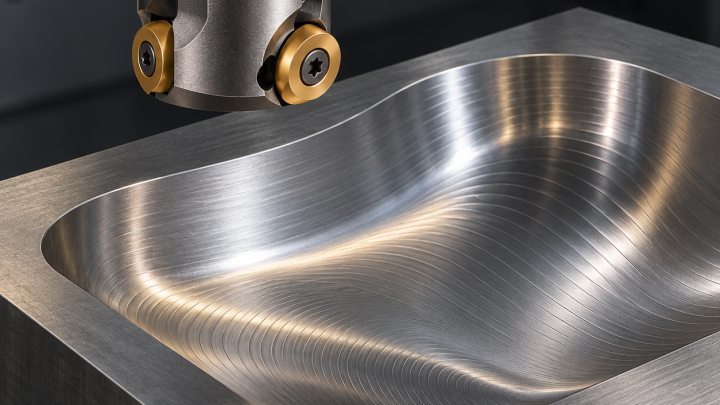
Apply rest machining from large to small tools, constant-engagement toolpaths and short step-downs in deep ribs. Blend ball-nose paths with consistent cusp height and avoid sharp reversals at slender walls. Leave explicit, uniform EDM and polishing allowances rather than an informal hand-finishing margin.
Material risks, chip or burr control and tool life
H13 hardness variation changes heat and edge strength requirements; long tools chatter, pack chips and may leave tapered walls. Recut chips damage small cutters. Track runout, cutting time, deflection marks and corner wear; replace micro tools before root-radius growth exceeds allowance.
Tolerances, surface finish and inspection
Probe base and side datums after every transfer, CMM-check rib position and draft, use optical or replica methods for deep roots, verify shutoff flatness and confirm remaining stock maps before EDM and polishing. Surface finish should be judged after the assigned process stage, not prematurely.
H13 mold insert machining FAQ
When should deep ribs be EDM instead of milled?
Use EDM when tool access, required root radius, wall deflection or tool-life risk makes milling unreliable.
How much polishing stock should be left?
It must be drawing- and process-specific, uniform, measurable and agreed with the polishing method; there is no safe universal value.
Can hardened H13 be milled with carbide?
Yes, with a grade and geometry matched to hardness, rigid setup, controlled engagement and strict wear limits.