This is a realistic hypothetical process-planning example, not a claim about a specific customer drawing or production result.
Related: Read the related CNC tooling case.
English: Long-Reach Carbide End Mill Chatter in Deep Pockets: Tool Overhang and Toolpath Fixes
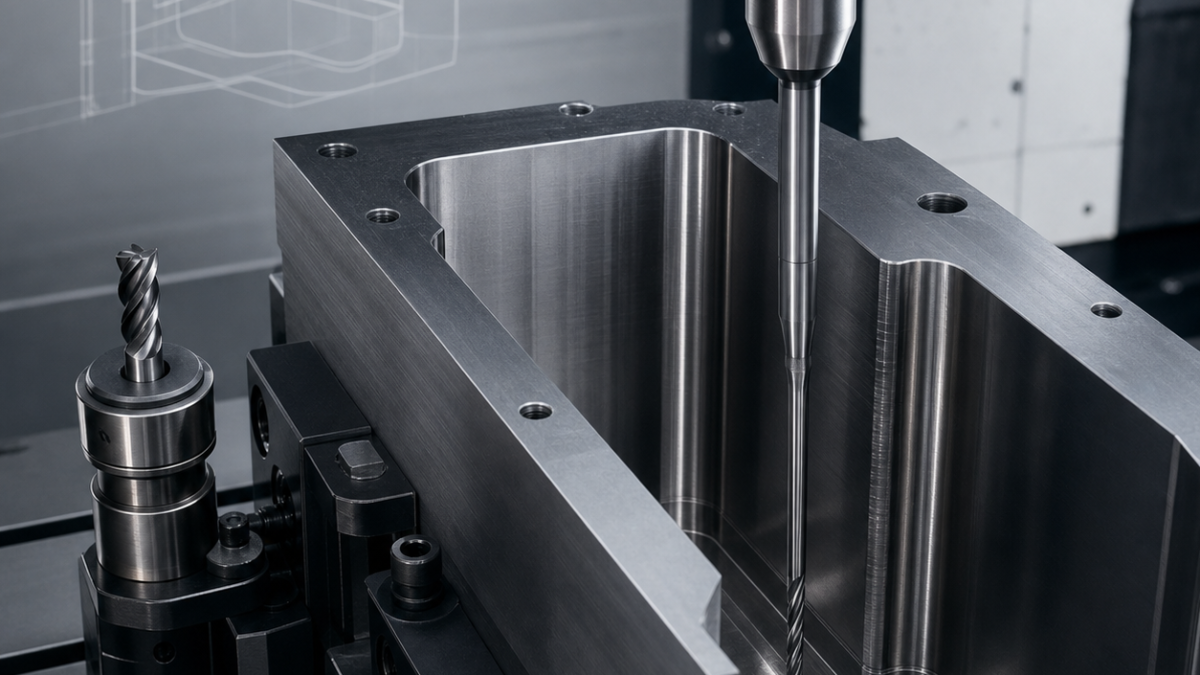
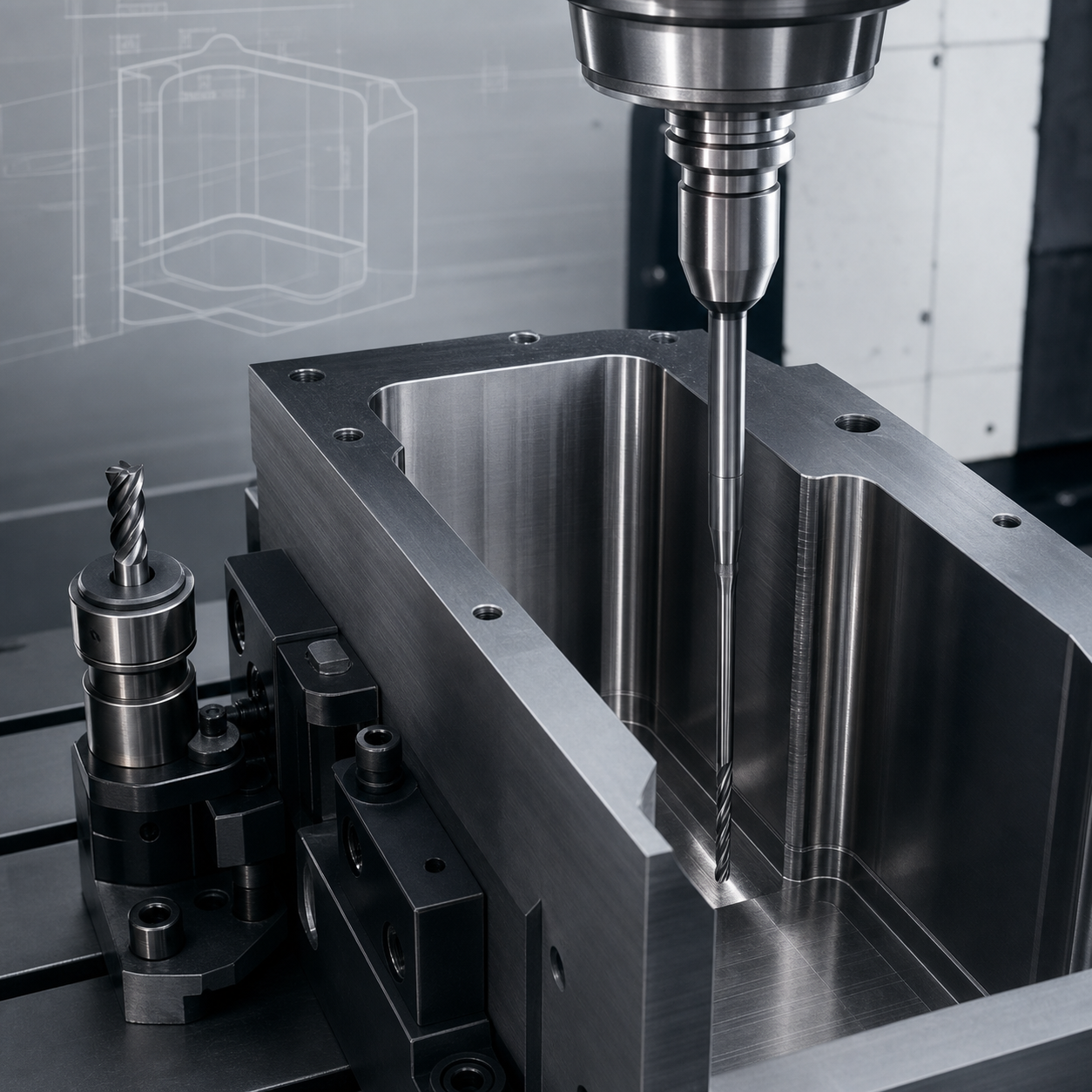
This troubleshooting case starts with a 4140 pre-hardened mold block whose deep sidewall shows repeating chatter bands. The drawing requires straight walls and a consistent finish, so simply reducing feed can worsen rubbing without removing the vibration source.
Feature and datum interpretation
This troubleshooting case starts with a 4140 pre-hardened mold block whose deep sidewall shows repeating chatter bands. The drawing requires straight walls and a consistent finish, so simply reducing feed can worsen rubbing without removing the vibration source.
Tool selection and cutting strategy
Separate reach from cutting length: use the shortest flute that clears the wall and a reduced neck for reach. Prefer a shrink-fit or high-quality hydraulic holder, verify runout, and use a variable-helix carbide finisher. A larger tool is not always better if corner radius and evacuation force excessive overhang.
Fixture and process sequence
Rough with a shorter tool in depth levels, leaving uniform wall stock. Use the long-reach tool only for semi-finish and finish, with low radial engagement, controlled axial step-down and smooth lead moves. Alternate wall segments and avoid full-depth corner engagement.
Tolerance, surface and tool-life risks
Record chatter frequency, spindle load and surface pattern before changing parameters. First shorten overhang, then test spindle speed bands, then adjust engagement. Retire the cutter when flank wear or runout makes compensation unstable; polishing cannot correct a wavy wall.
FAQ
What should be verified first?
The drawing datum, actual stock and tool runout must be confirmed before compensation.
Can one gauge prove the whole feature?
No. Functional gauging should be combined with dimensional and positional inspection.