This is a realistic hypothetical process-planning example, not a claim about a specific customer drawing or production result.
Related: Read the related CNC tooling case.
English: 42CrMo Eccentric Camshaft Segment CNC Case: Offset Journals, Oil Hole and Hardening Allowance
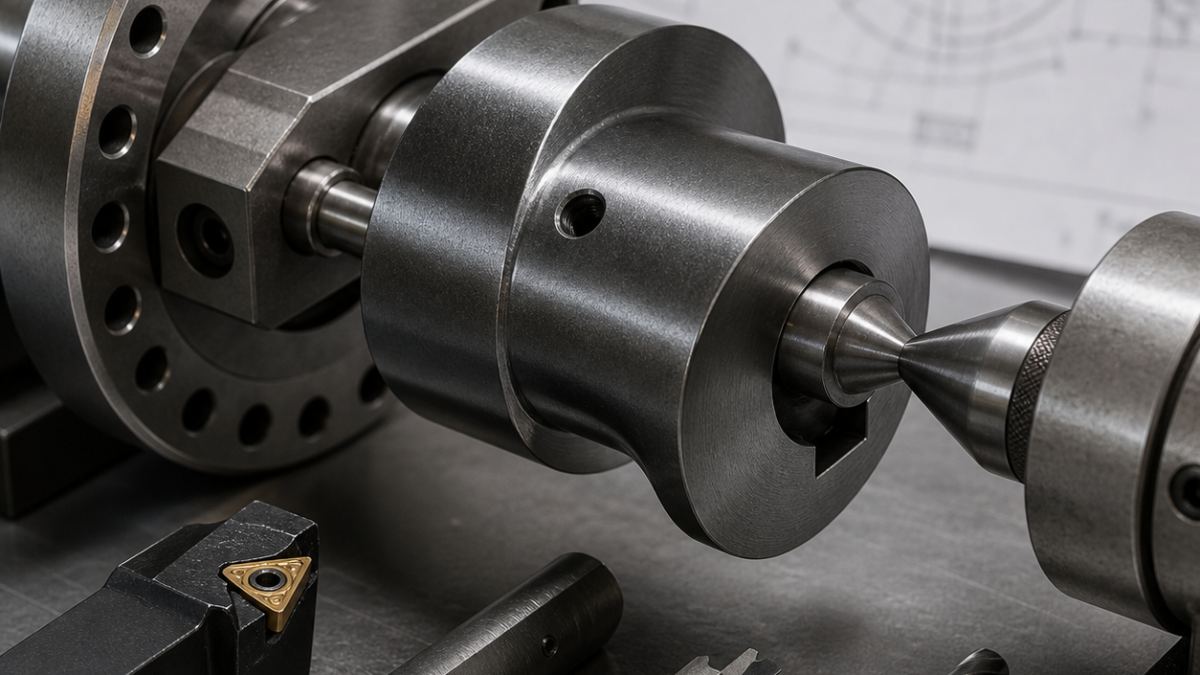
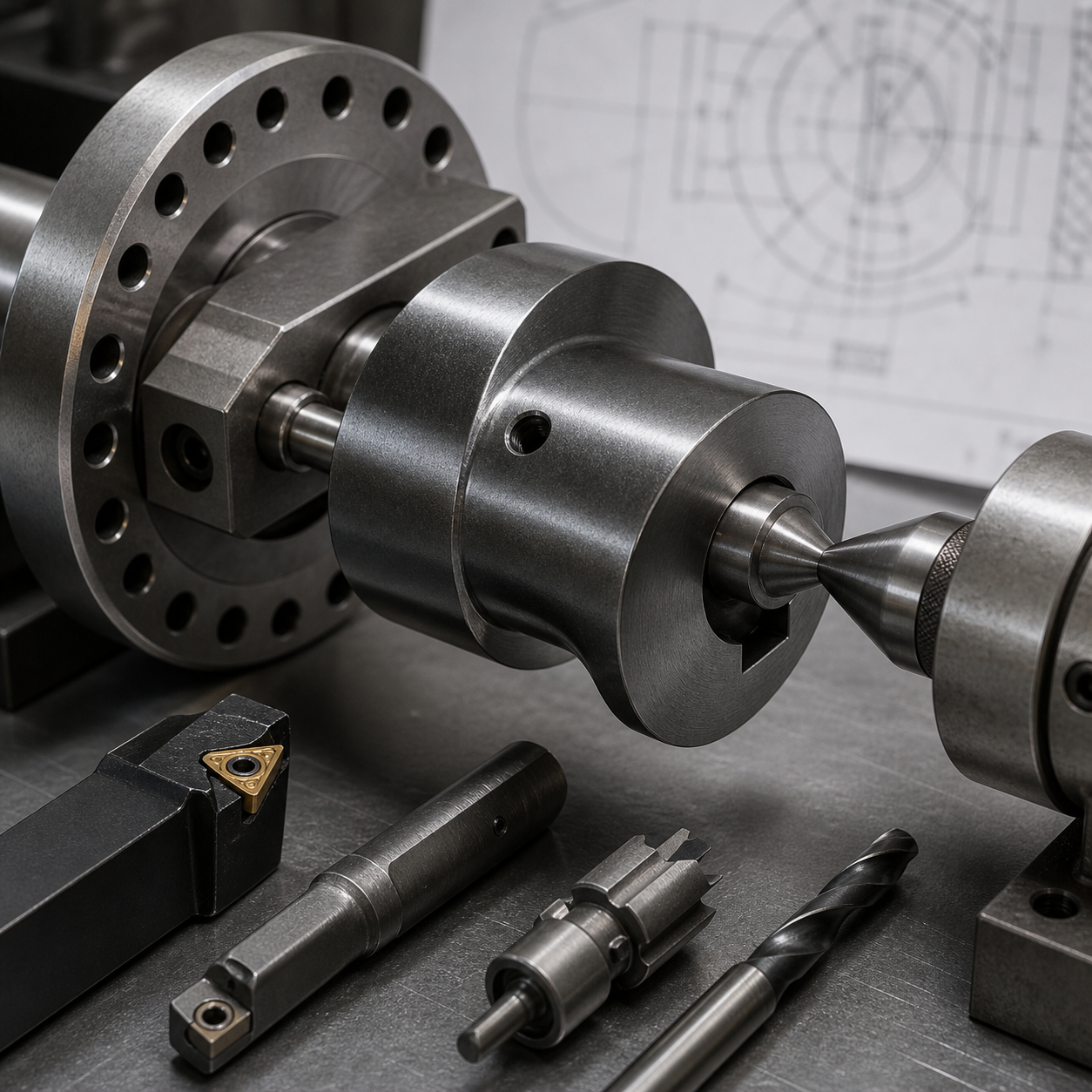
This hypothetical 42CrMo segment has a main journal, offset cam journal, axial pilot, keyway and intersecting oil hole. The drawing links eccentricity, phase angle and post-hardening runout, so datum transfer matters more than machining each diameter independently.
Feature and datum interpretation
Use the main journal axis as datum A, an axial face as B and the keyway center plane as clocking datum C. Convert the basic eccentricity and angular phase into fixture coordinates, then identify which diameters are final before induction hardening and which retain grind or hard-turn stock.
Carbide tool selection
Rough with a tough carbide turning insert, finish soft journals with a sharp wiper geometry, and use a short boring bar for the pilot. A rigid carbide end mill cuts the keyway; a stub drill and back-deburring tool complete the intersecting oil passage. Keep a separate protected edge for post-hardening cleanup.
Fixture and process sequence
Establish the main centers and face first. Transfer to a balanced eccentric fixture, verify offset with probing, and rough and finish the cam journal without changing the clocking reference. Mill the keyway and drill the oil path before heat treatment, then induction harden and recover only the specified journals and faces.
Tolerance, surface and tool-life risks
Fixture imbalance, interrupted cuts and hardening distortion can change phase or runout. Limit speed to the verified balance condition, use constant engagement and track insert wear. Inspect eccentricity and phase from the main journal axis both before and after heat treatment, and borescope the oil-hole intersection for burrs.
FAQ
Why recover datums before finishing?
Because the functional geometry must be related to the actual part, not an assumed nominal center.
Why inspect after unclamping?
Clamping can temporarily hide distortion or runout.