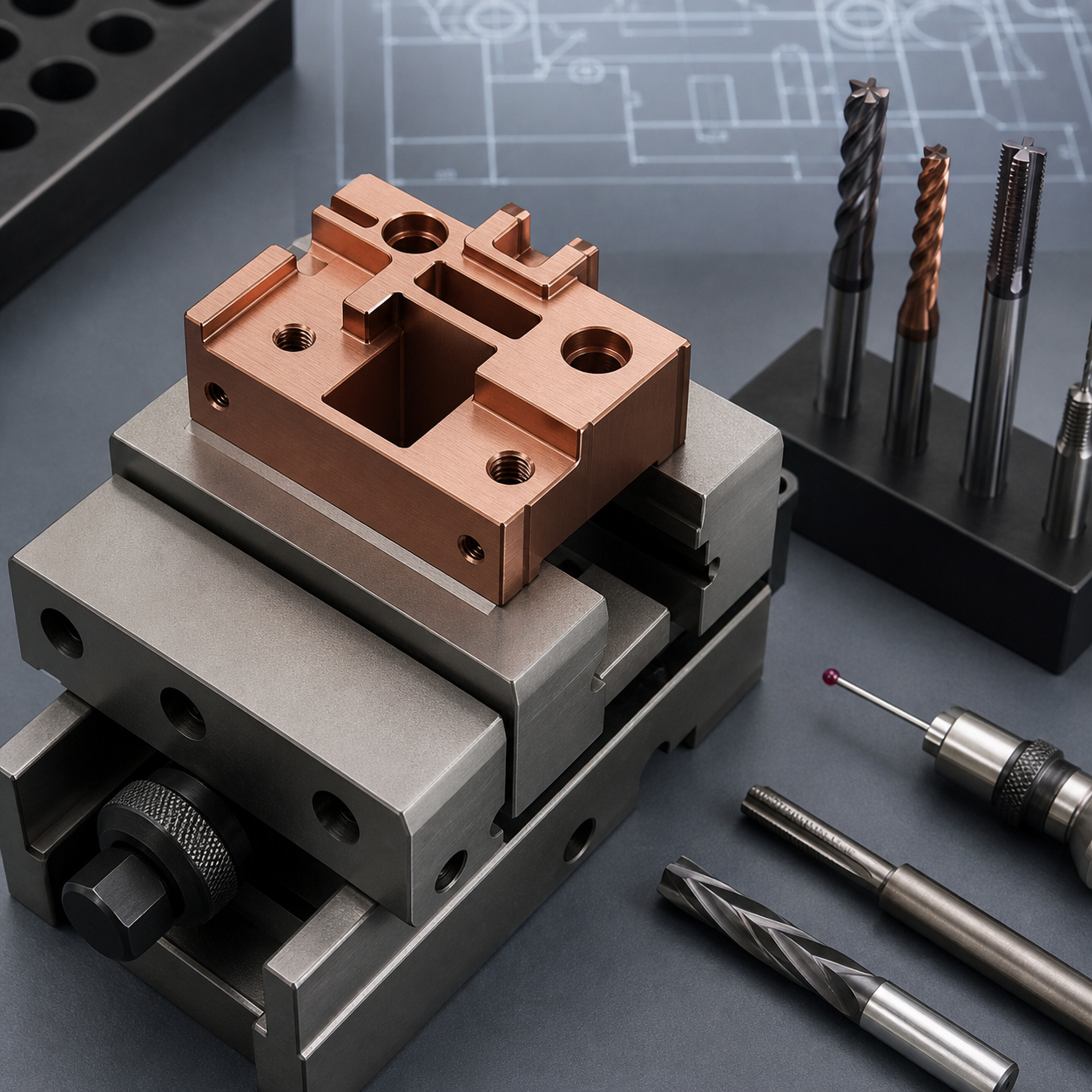
English: translating the electrode-holder drawing into datums
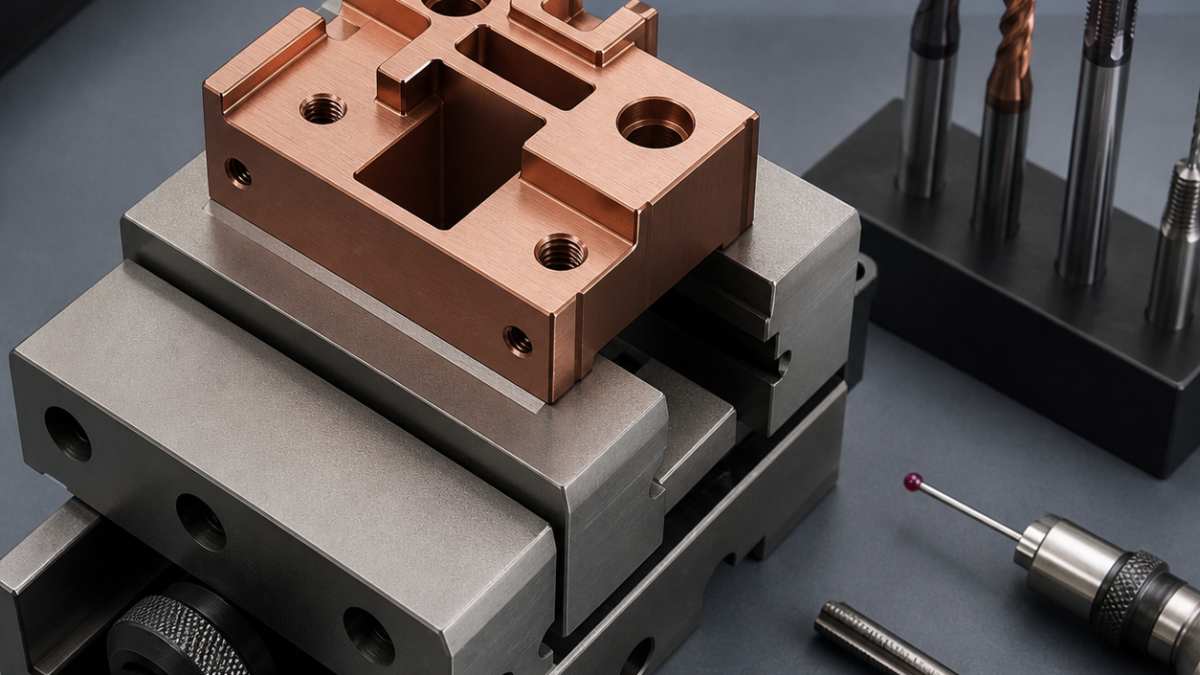
This hypothetical tungsten-copper EDM electrode holder includes a broad mounting face, two precision dowel bores, narrow electrode slots, clamping threads and small edge chamfers. The important drawing relationships are slot position to the dowel pattern, slot parallelism to the mounting face and repeatable electrode seating. Tungsten copper is dense and abrasive, while its copper phase can smear if the cutting edge is dull.
Fixture and stock preparation
Start with flat, parallel stock and reserve the broad face as datum A. Machine two perpendicular reference edges for B and C, then use a low-profile precision vise with a hard stop. Support the entire base rather than clamping across the narrow slot walls. Finish the dowel bores early enough to use them for a qualified second-operation fixture, but protect them from chips and clamp damage.
Tool selection by feature
- A coated, sharp carbide end mill roughs the outer profile and open pockets with constant engagement.
- A reduced-neck micro end mill roughs narrow slots in axial levels, leaving side and floor allowance.
- A fresh finishing tool cuts each slot wall separately so width and center position can be compensated.
- Carbide drills followed by a precision reamer or fine boring tool finish the dowel bores.
- A thread mill creates clamping threads with low torque and controlled fit.
Edge integrity and inspection
Use rigid holders with minimal runout, short gauge length and steady air blast or compatible coolant to prevent recutting dense chips. Avoid dwelling in corners. Inspect small cutters frequently because gradual abrasive wear can silently change slot width. Verify datum flatness, dowel-bore size and spacing, slot width and true position, floor depth, thread function and seating contact. Use magnification to confirm that slot edges are neither chipped nor smeared.
Related reading: dowel-hole and tool-life planning and carbide edge preparation and wear.