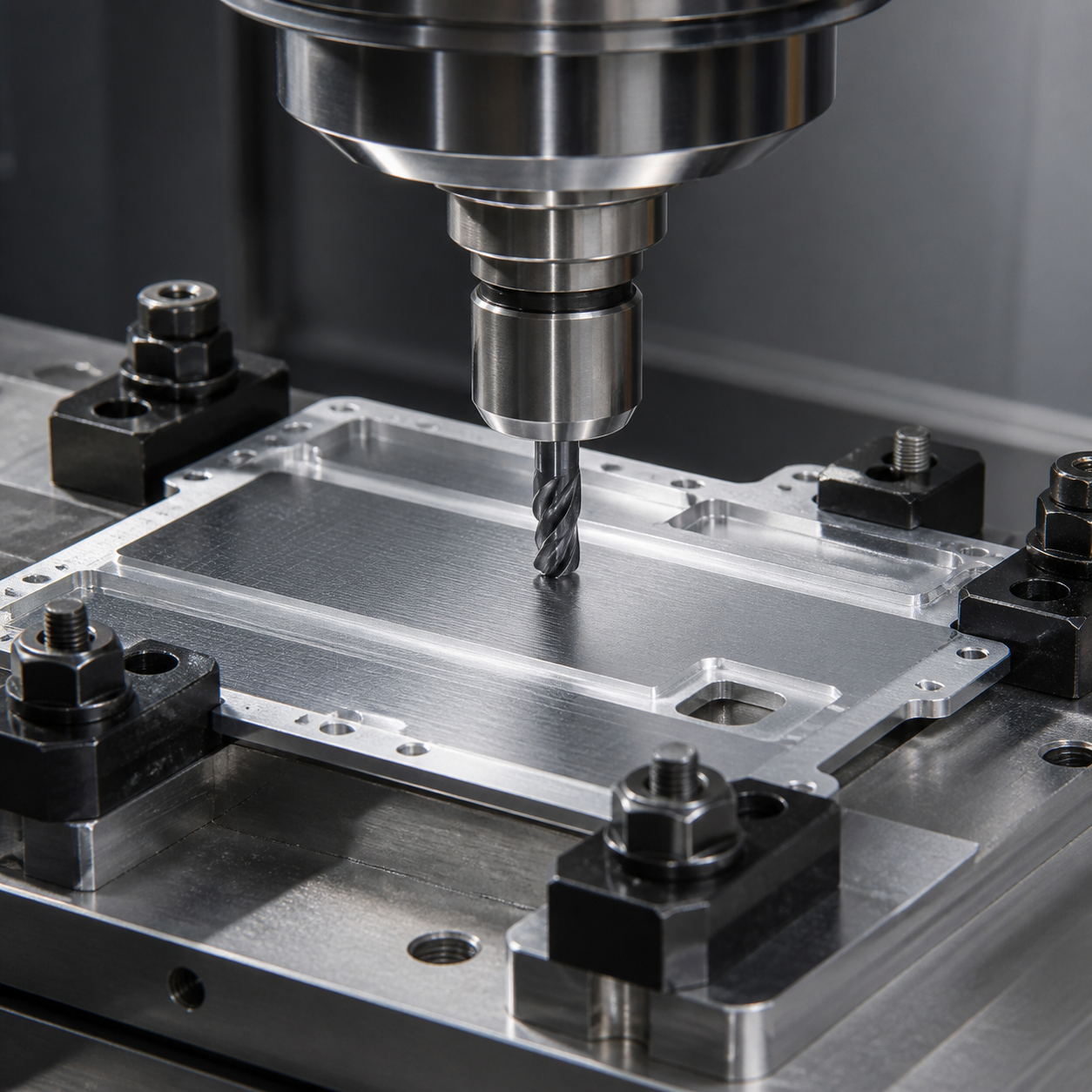
English: Residual Stress Can Move the Part After Cutting
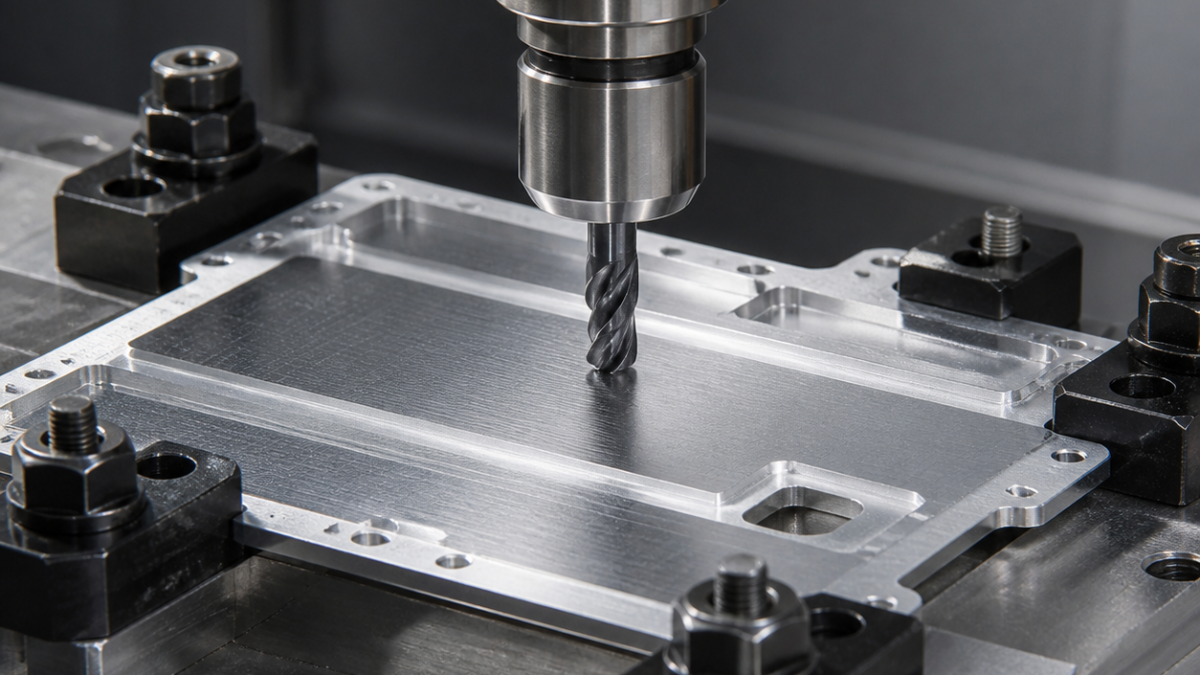
Residual stress in CNC milling can cause a precision part to warp after material is removed. This is common in thin plates, frames, aerospace-style components and parts machined from rolled or forged stock. Even when the toolpath is accurate, internal stress release can change flatness, parallelism and final dimensions.
Distortion control starts before finishing. Balanced roughing, flipping strategy, stress-relief planning and uniform finishing allowance can reduce movement. Clamping should support the part without forcing it into a shape that springs back after release.
SEO machining takeaway
When thin parts change shape after unclamping, the problem may not be only tool pressure. Material stress, sequence planning and fixture support should be reviewed together.