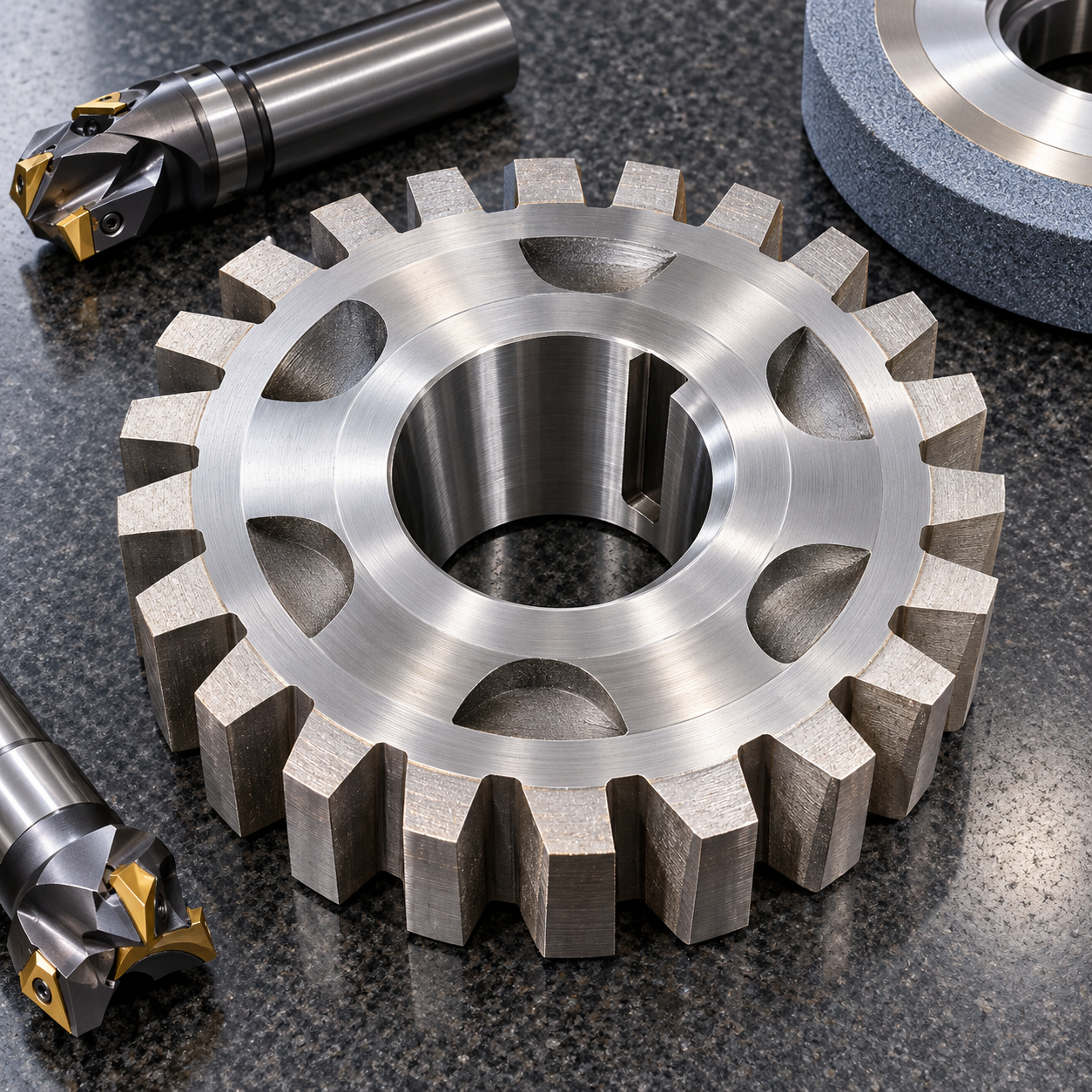
English: M42 Gear-Shaper Cutter Blank Tooling for Taper Bore, Keyway and Grinding Stock
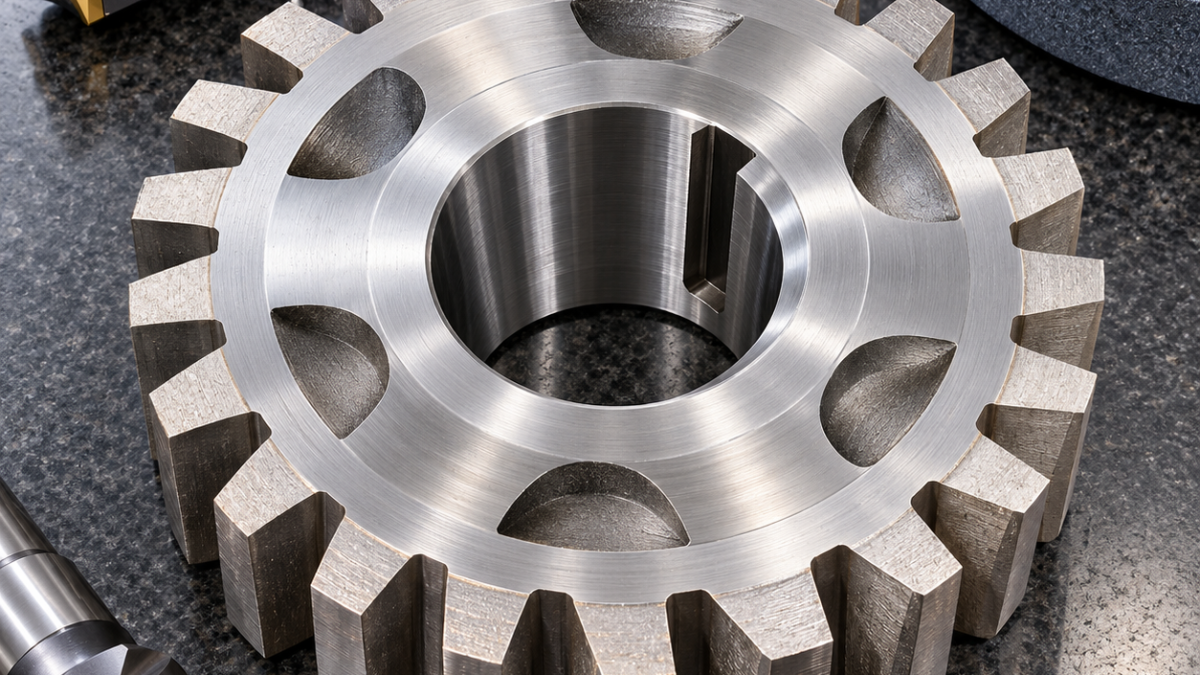
This case is governed by the finished cutter datum rather than the visible tooth rim. The arbor taper establishes rotation, the keyway transfers torque, and the tooth preform must retain enough uniform stock for heat-treatment movement and final profile grinding. Cutting every feature to nominal before hardening would remove the correction budget.
Let the finished arbor taper own the tooth runout
Annealed M42 is faced and turned with a wear-resistant PVD carbide grade at stable feed. A 12 mm indexable drill opens the center; a damped carbide boring bar produces the arbor taper with stock for finish grinding. The keyway is roughed by a 4 mm AlCrN carbide end mill using trochoidal passes, not pushed through by a narrow broach that could bell the soft taper.
Tool map for the M42 cutter blank
| Drawing feature | Carbide tool and holder | Selection logic / rejected alternative |
|---|---|---|
| Faces and outside diameter | PVD carbide turning insert with controlled hone | Stable annealed cutting; a polished aluminum edge chips in cobalt HSS. |
| Taper arbor bore | 12 mm carbide drill then damped carbide boring bar | Correctable taper axis; a taper reamer follows entry error. |
| Internal drive keyway | 4 mm AlCrN carbide end mill, shrink-fit extension | Trochoidal force is limited; a thin broach can bell the bore. |
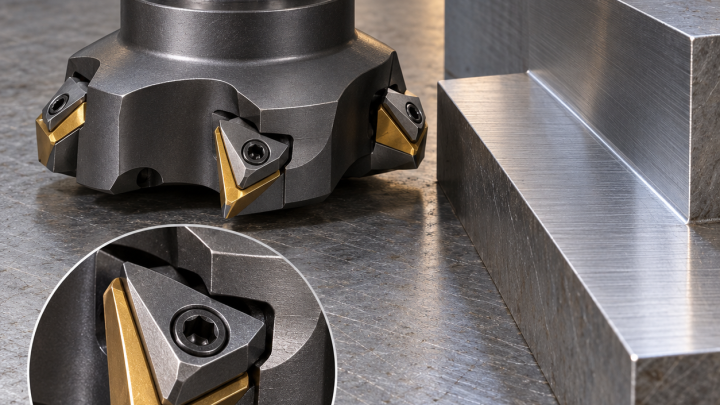
| Scallops and tooth gashes | 10 mm 5-flute AlTiN mill; indexable carbide slot mill | Alternating cuts balance stress and stock. |
| Hardened taper and faces | Vitrified CBN internal and face wheels | Restores datum after heat treatment; hard turning may leave interrupted runout. |
Create a measurable soft-state preform
A 10 mm five-flute AlTiN end mill opens radial chip-clearance scallops in an alternating sequence. The tooth rim is gashed with an indexable carbide slot mill sized to leave equal flank and root stock. After vacuum hardening and triple tempering, the taper and both faces are finished first with vitrified CBN; they then become the setup reference for profile grinding.
Reserve grinding stock by surface function
Blue-check the taper on a master arbor and verify face runout at clamping force. CMM inspection maps gash spacing and remaining flank stock before the expensive profile-grind operation. Magnetic-particle inspection and hardness traverse precede acceptance. Tool-life gates are taper chatter, gash-width drift and corner wear, not a fixed piece count alone.
Related tooling comparisons: hardened plate allowance planning; carburized profile allowance.
Gear-shaper cutter FAQ
Why not finish the keyway after hardening? It would require EDM or grinding access and can disturb the finished taper. Why finish faces before teeth? They establish axial seating for profile grinding. Can the gash cutter define the final tooth? No; it creates balanced grind stock, not the cutting geometry.