Related tooling references: PPSU Sterilization Tray Latch Rail CNC Tool Selection for Snap Hooks and Drain Slots and H13 Hot Runner Nozzle Tip CNC Tool Selection for Conical Gate Seat and Spiral Heater Groove.
English: Kovar Header Tooling for Glass Seal Bores and Pin Hole Array
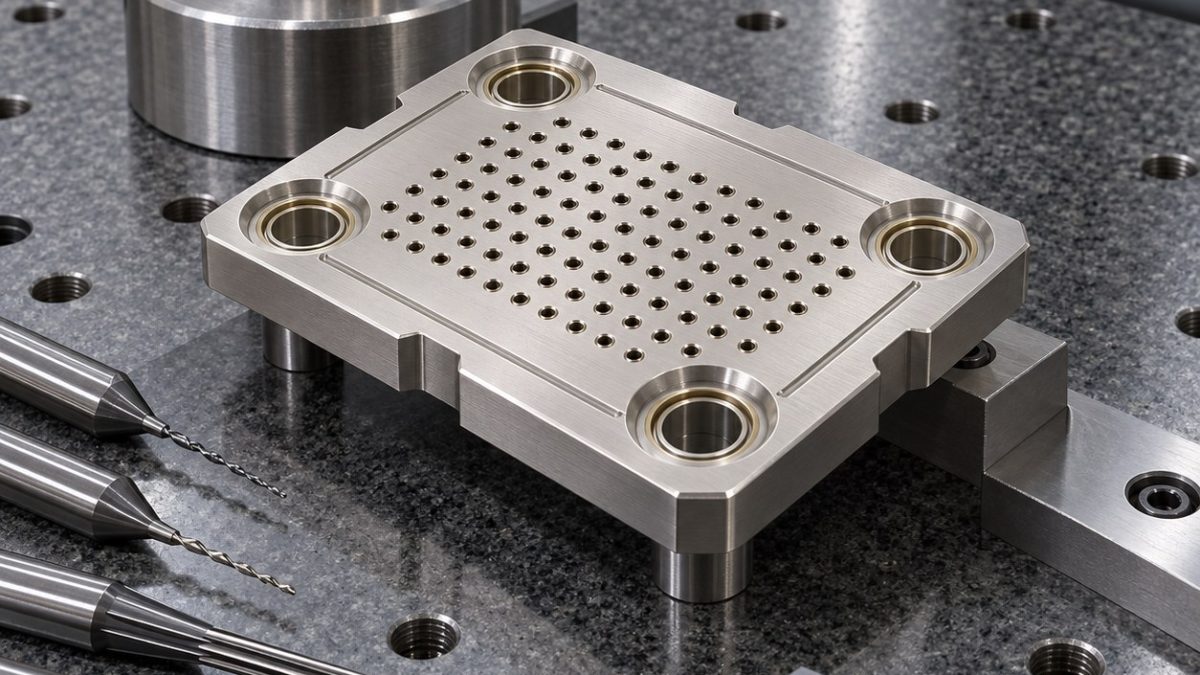
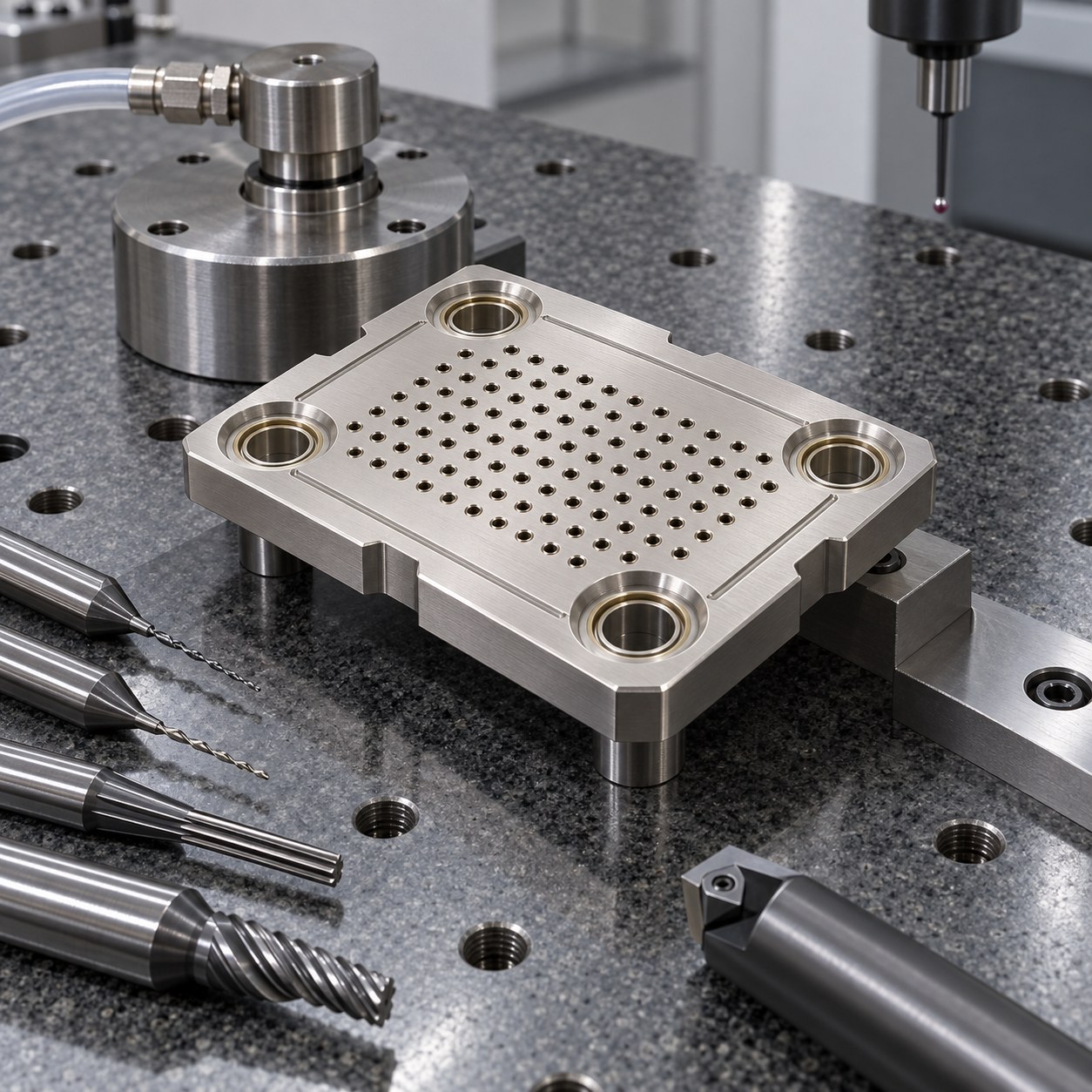
This Kovar header case answers how to select tools when a hermetic connector drawing combines glass seal bores, a dense pin field and a leak-test groove. The tool plan is driven by positional stability and by avoiding smeared nickel-cobalt burrs that can disturb glass sealing.
Kovar drawing callouts and tool mapping
| Feature | Tool and holder | Tradeoff |
|---|---|---|
| Glass seal bores | 3 mm carbide pilot drill, micro boring bar and sharp machine reamer in hydraulic holder | Boring corrects position before reaming; drilling to size would bell-mouth the seal land. |
| Pin hole array | 0.55 mm TiAlN carbide micro drill with spot drill and peck cycle | Each pin needs repeatable entry; laser drilling is rejected because recast harms glass wetting. |
| Leak-test groove | 1 mm polished carbide slot mill, short gauge length | A polished flute reduces Kovar rollover at the groove floor. |
| Anti-rotation flats | 8 mm variable-pitch carbide end mill | Cuts flats after the pin field so clamp movement does not shift the array. |
| Micro chamfers | 60° carbide spot/chamfer tool | Breaks edges without widening glass seal bores. |
Pin-array process order
Machine the outer datum and leak groove lightly, then drill and bore the larger glass seal bores before the pin array. The pin holes are drilled from a supported face with strict runout control, and flats are left until the hole pattern is stable.
Kovar burr and tool-life control
Kovar work-hardens when rubbed. Sharp micro tools, positive rake, short pecks and clean coolant flow prevent burr rollover. Tool life is judged by entry burr growth and pin gauge drag, not by minutes.
Hermetic inspection plan
Inspection uses CMM hole pattern, pin gauges, glass-bore roundness, groove width and a helium-leak-oriented visual review of every seal edge.
Kovar tooling FAQ
Why not drill Kovar seal bores directly to size?
Boring before reaming corrects location and avoids bell-mouth seal edges.
What indicates micro drill wear?
Entry burr height, pin gauge drag and darkened chip color.
Why leave flats until late?
Flat milling can relax the plate and shift a dense pin pattern.
For a one-pin coaxial variant, compare the Kovar single-feedthrough bore, thread and seal-face tooling plan.