Related tooling references: C360 Brass Microfluidic Valve Seat CNC Tool Selection for Conical Seat and Tiny Cross Holes and Maraging 300 Aerospace Latch Hook CNC Tool Selection for Thin Hook Profile and Reamed Pivot Bore.
English: Hardened D2 Stripper Plate Tooling for Slug Windows and Punch Bores
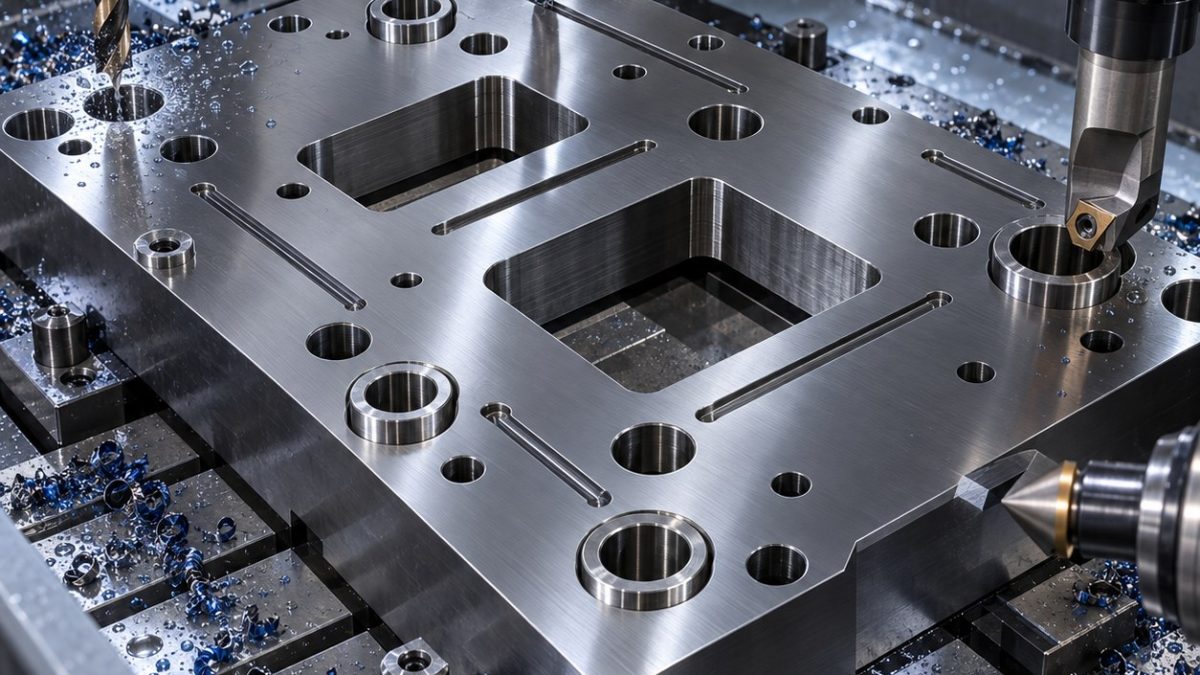
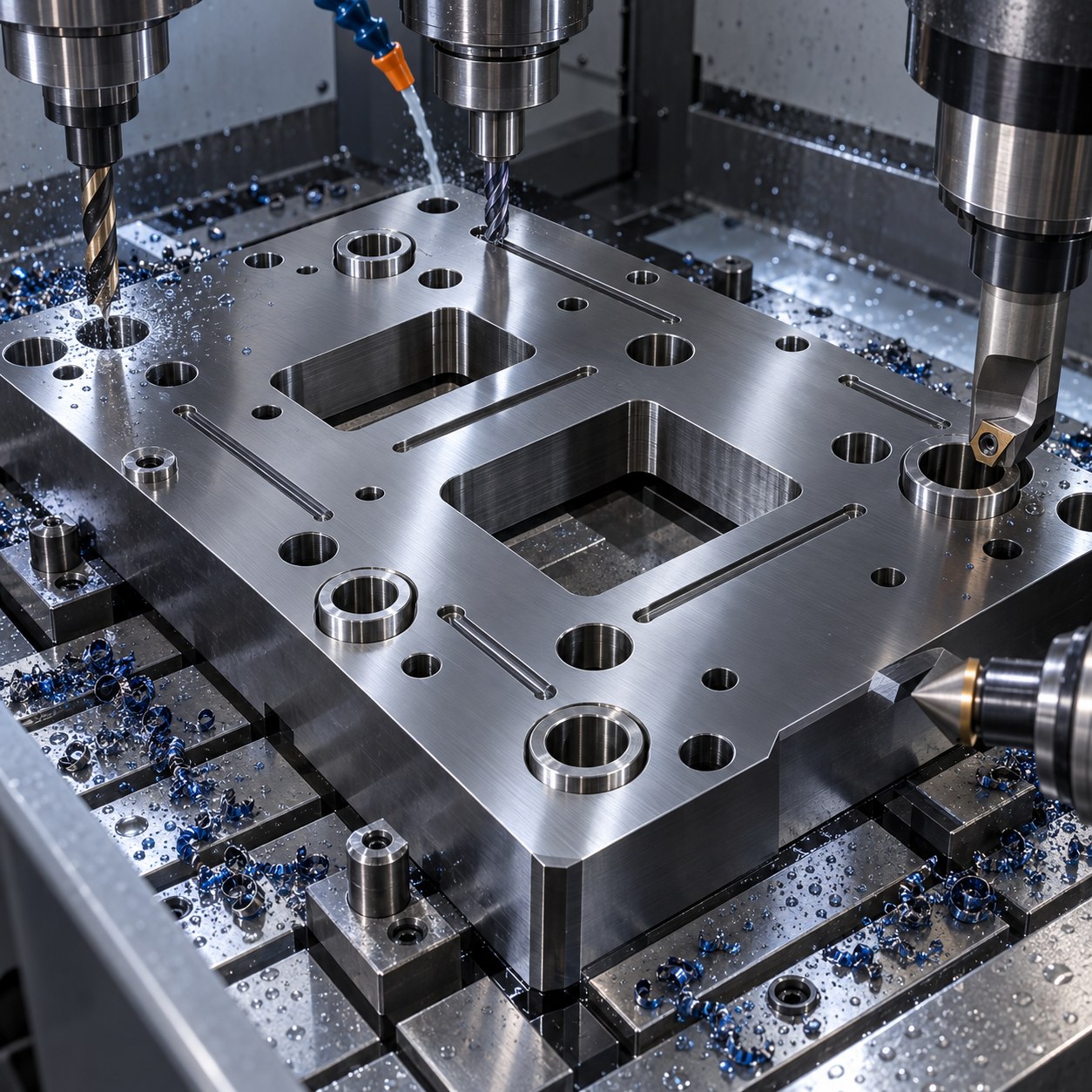
This hardened D2 stripper plate case focuses on hard-milling tool choices after heat treatment. The drawing combines slug windows, guided bores and press-fit pockets, so tool selection has to protect both hole geometry and plate flatness.
Hardened die features mapped to CBN and carbide
| Die feature | Tool package | Control reason |
|---|---|---|
| Slug windows | 6 mm CBN end mill, light radial step, air-oil mist | Carbide roughing alone would crater in hardened D2 corners. |
| Guided punch bores | Carbide drill undersize, CBN circular interpolation, fine boring pass | Maintains bore location and finish instead of trusting a reamer. |
| Dowel holes | Hard carbide drill then jig-bore finish | Protects die-set location. |
| Oil grooves | 1.5 mm coated carbide slot mill | Cuts shallow lubrication paths without EDM setup. |
| Insert pockets | CBN finish mill with spring-pass verification | Controls press-fit without grinding every pocket. |
Hard-milling order for plate stability
Start with skim passes on datum faces, open slug windows in balanced order, then finish punch bores and insert pockets from the most stable side. Oil grooves are cut late so they do not interrupt bore finishing.
Heat checking, burr and insert-fit control
Hardened D2 punishes dwell and heat checking. CBN tools run with small radial engagement, carbide drills are used only where geometry supports them, and air-oil mist keeps chips from recutting window corners.
Press-fit and punch-bore inspection
Inspection uses bore gauges, CMM location, insert plug checks and blue-contact review on press-fit shoulders. The plate is accepted only if punch bores stay round after insert test fitting.
Hard-milling FAQ
Why use CBN after D2 hardening?
CBN tolerates hardened corners with less crater wear than carbide.
Can guided punch bores be reamed?
Only after location and roundness are established; the script chooses boring first.
Why cut oil grooves late?
They would interrupt bore finishing and collect chips if cut too early.