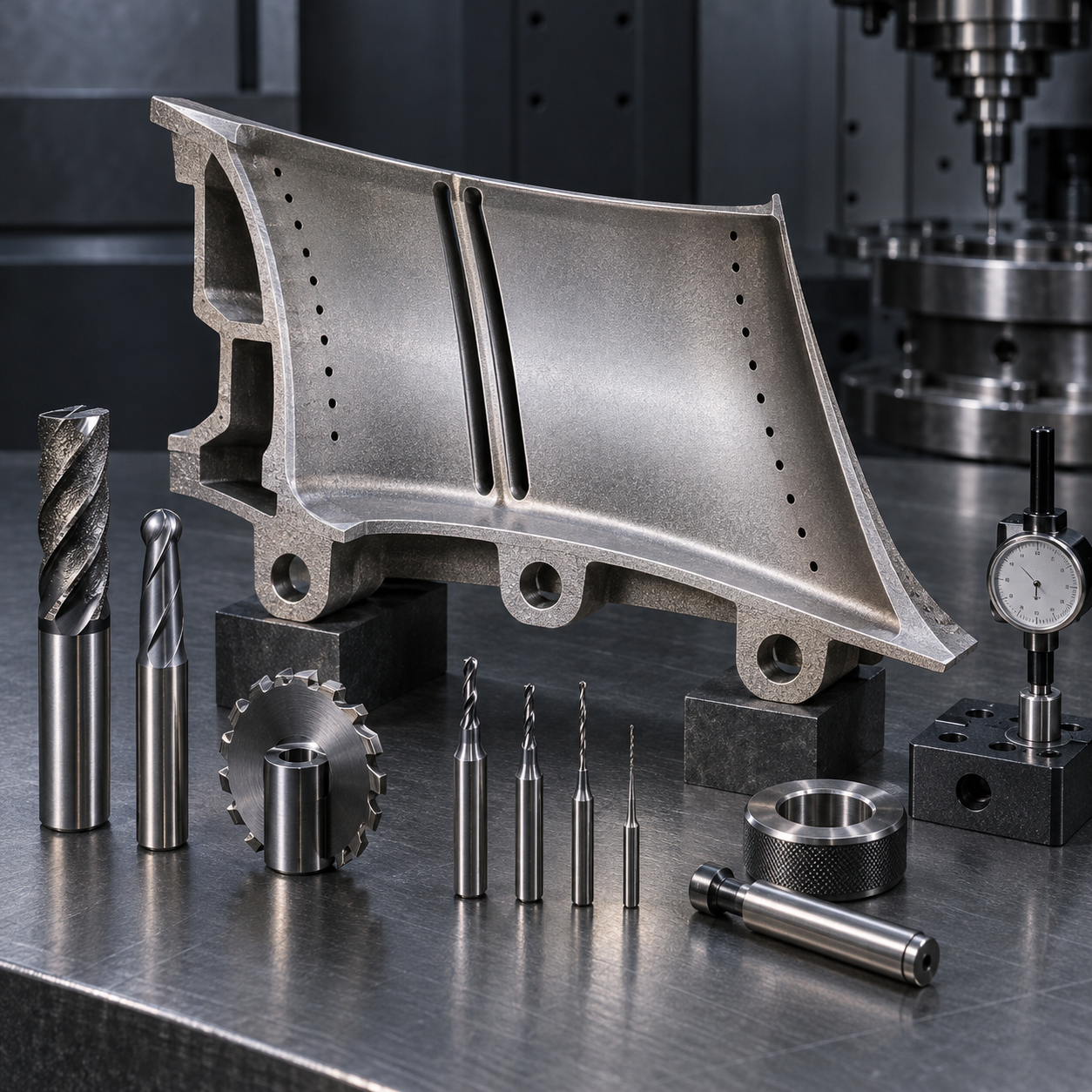
English: Gamma TiAl Shroud Tooling for Feather-Seal Slots and Cooling Holes
The long-tail problem is how to machine a gamma titanium aluminide shroud segment without turning a small exit chip into a structural crack. The drawing couples curved gas-path profile, feather-seal slot depth, minimum edge ligament and clocked cooling holes, so force direction and exit support govern every tool choice.
Build a fracture map before assigning cutters
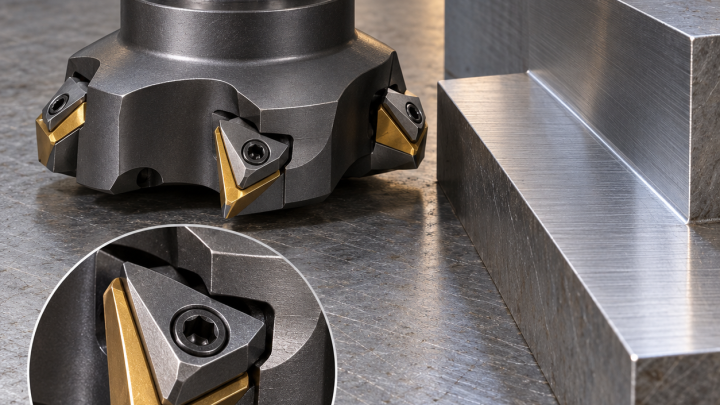
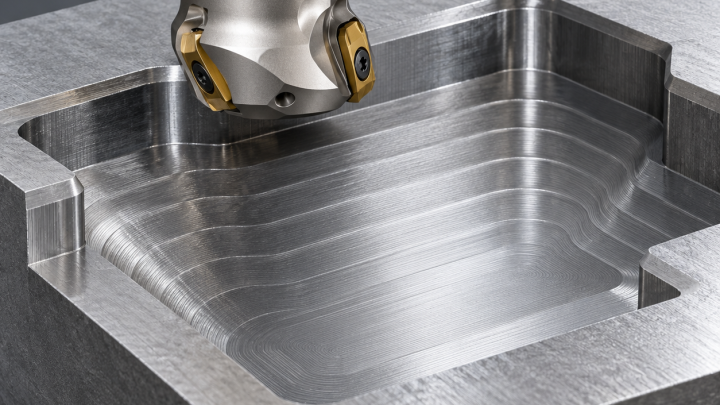
Locate the cast segment from three inspected pads in a low-pressure nest. Rough datum faces with a 40 mm fine-pitch cutter using sharp PVD carbide inserts, then semi-finish the gas path with an 8 mm four-flute diamond-coated radius mill at constant engagement. Leave both thin edges thick; a ceramic insert is rejected because an interrupted casting skin can chip it unpredictably.
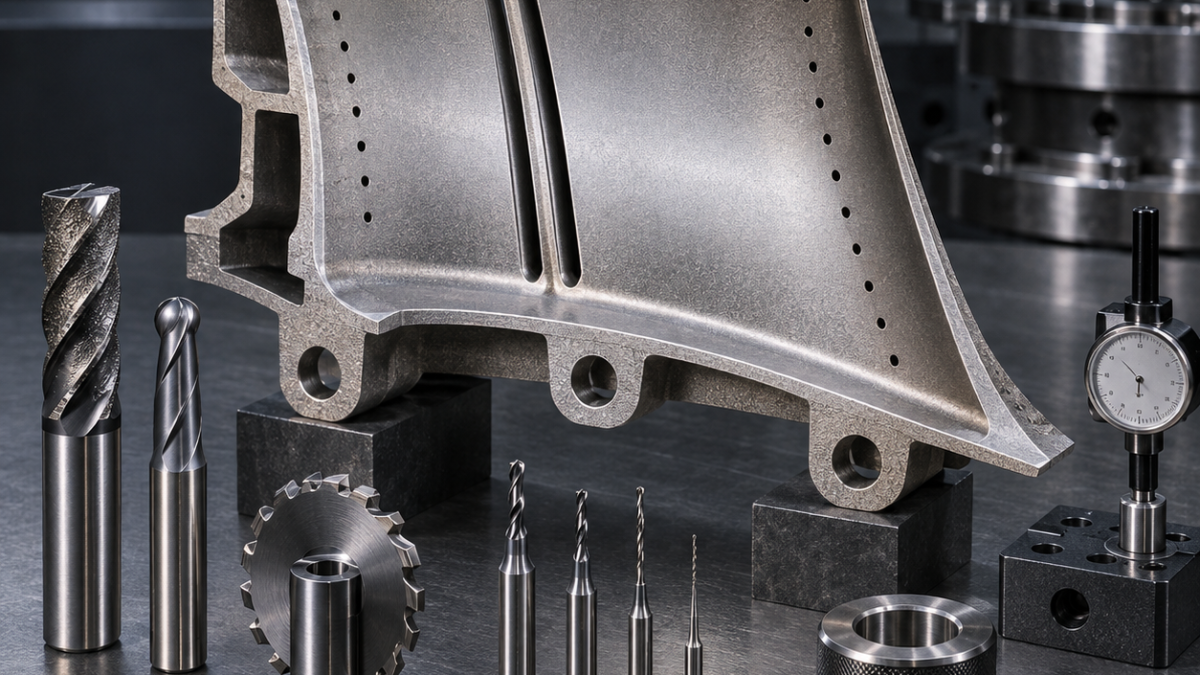
Feature-to-tool map for the TiAl shroud
| Drawing feature | Carbide tool and holder | Selection logic / rejected alternative |
|---|---|---|
| Datum pads and casting skin | 40 mm fine-pitch cutter, sharp PVD carbide inserts, rigid arbor | Distributes load; ceramic can chip on interrupted skin. |
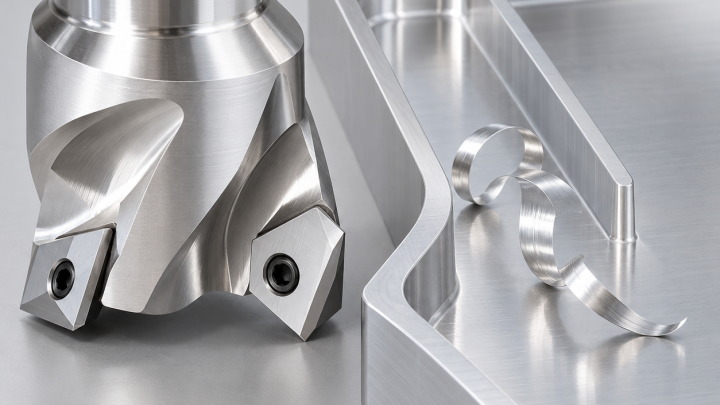
| Curved gas path roughing | 8 mm 4-flute diamond-coated radius mill, hydraulic holder | Abrasive resistance with controlled engagement; high flute count traps powder. |
| Gas-path finish | 6 mm 2-flute diamond-coated ball mill, short shrink-fit holder | Tilted contact avoids center rubbing and edge shock. |
| Feather-seal slots | 1.5 mm carbide slot mill, shallow alternating passes | Limits root tension; a full-depth saw can start cracks. |
| Cooling holes and exits | 1.0 mm diamond-coated drill plus micro membrane-removal tool | Low thrust and supported breakout; direct breakthrough chips the edge. |
Finish the curved surface while the segment is stiff
Finish the gas path using a 6 mm two-flute diamond-coated ball mill with short reach and tilted tool axis to avoid center rubbing. Machine each feather-seal slot with a 1.5 mm solid-carbide slot mill in several shallow passes, entering from the supported boss and alternating ends. A full-depth slitting saw is rejected because side load and runout can open a corner crack.
Cut feather-seal slots from supported ends
Spot cooling holes with a 120-degree diamond-coated spotter and drill 1.0 mm from the compression-supported surface using minimum projection and continuous mist or qualified coolant. Leave a thin exit membrane, then remove it from the supported side with a fresh micro tool. Inspect slot roots and hole exits by fluorescent penetrant or qualified microscopy; CMM verifies profile and slot relation, while optical scanning records edge chips.
Related tooling comparisons: Rene 41 seal-segment tooling; Hastelloy X swirl-cup tooling.
Gamma TiAl shroud FAQ
Why diamond-coated carbide? It resists abrasive intermetallic wear while retaining a defined edge. Why shallow slot passes? They cap tensile load at the slot root. When is a tool retired? At thrust drift, edge-chip growth or any crack indication, not only dimensional wear.
For the drill, holder, exit-support and burr-control decision behind this feature, use the Micro-hole decision hub.