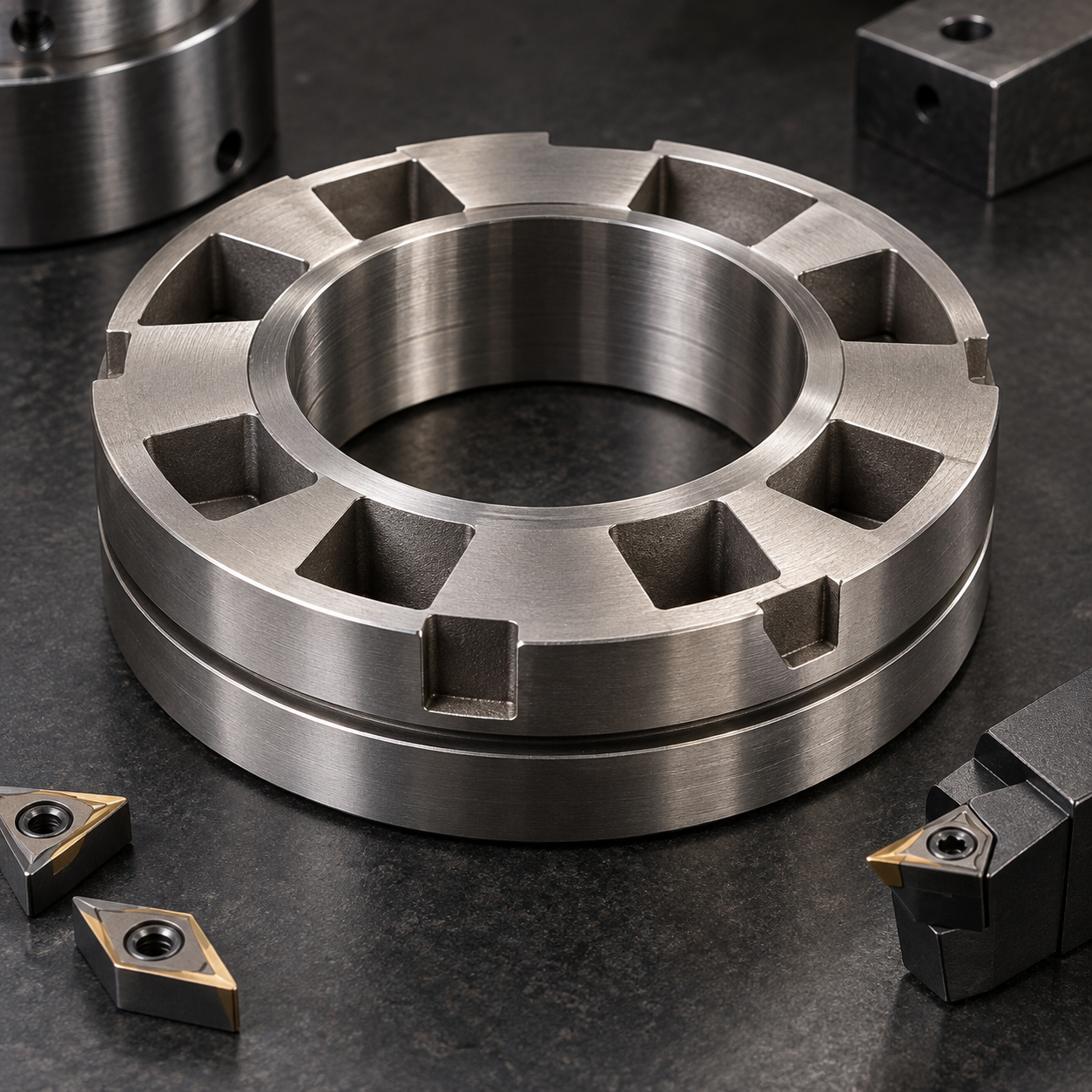
English: Nimonic 80A Valve Rotator Ring Tooling for Wedge Pockets and Snap Groove
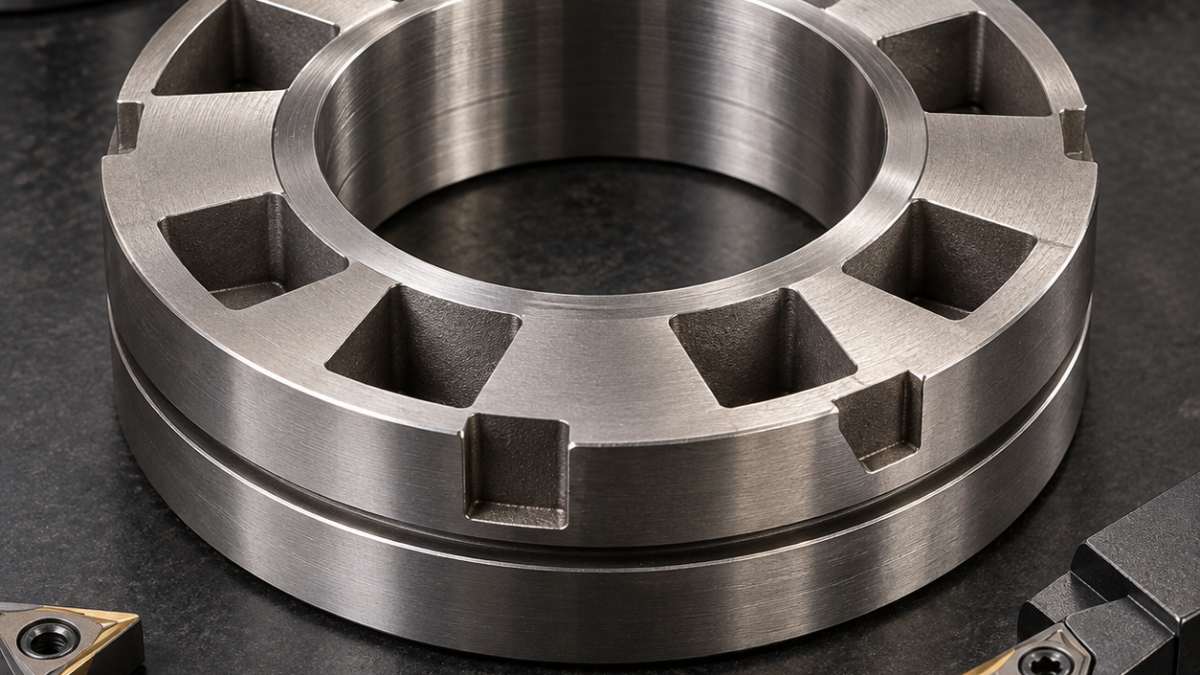
This drawing is governed by angular equality between wedge pockets and by the axial relationship of the snap groove to the running face. The ring will be interrupted twice: first by indexed pockets, then when the finished face crosses those openings. A successful tooling plan decides which surfaces are completed before interruption and which cutters can tolerate the remaining shock.
Use the bore-face axis to control every indexed pocket
Rough-turn both faces, bore and outside diameter while the forging is continuous, using a tough CVD-coated carbide rougher. Leave a balanced axial skin, heat-stabilize, then finish the bore and datum face with a PVD-coated positive insert. Transfer the ring to an expanding mandrel backed by a ground face stop; clamping on the OD would distort the final bore-to-pocket relationship.
Tools chosen for interrupted ring features
| Drawing feature | Carbide tool and holder | Selection logic / rejected alternative |
|---|---|---|
| Bore, OD and datum face | CVD carbide rougher; positive PVD finisher in Capto block | Rougher survives scale, finisher lowers force; one grade cannot optimize both. |
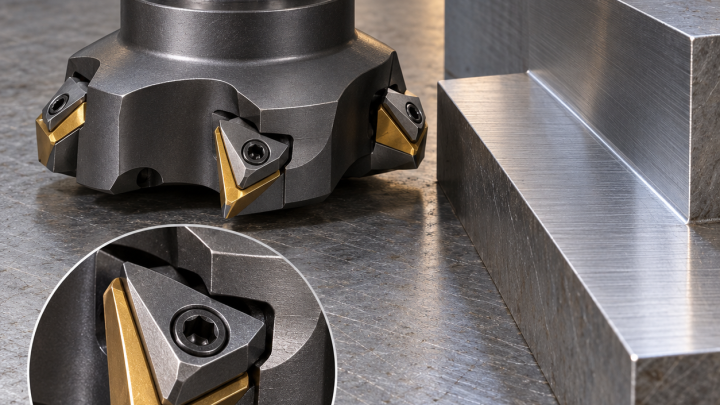
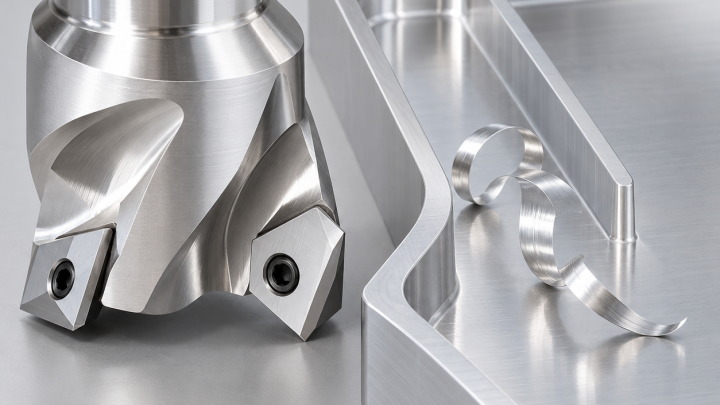
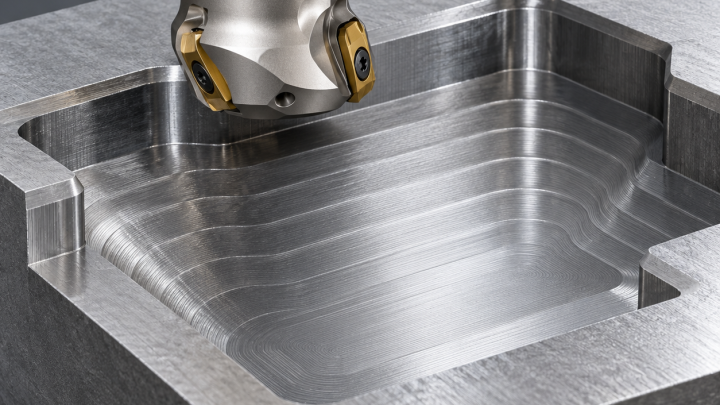
| Wedge-pocket roughing | 10 mm 4-flute variable-helix AlTiN end mill, hydraulic holder | Helical entry and pitch variation suppress shock; a 6-flute cutter packs chips. |
| Pocket ramps and corners | 6 mm 5-flute corner-radius AlTiN finisher, short reach | Stable wall angle and root strength; ball nose leaves load-face scallops. |
| Snap-ring groove | Rigid modular blade with fine-grain PVD insert and measured hone | Controls width and flank; a brazed form tool hides progressive corner wear. |
| Interrupted final face | Positive round carbide insert, tough PVD grade, small depth | Spreads entry shock; ceramic risks edge fracture at the pocket openings. |
Sequence the stable surfaces before the interruptions
Index the wedge pockets with a 10 mm four-flute variable-helix AlTiN carbide end mill for helical entry and adaptive roughing. A separate 6 mm five-flute corner-radius finisher cuts the ramp walls in one direction, so cutter deflection does not alternate the pocket angle. A ball nose would leave scallops on the load face and complicate angle inspection.
Separate pocket entry from pocket-wall finishing
Cut the snap groove before the final interrupted face pass using a rigid modular blade and a fine-grain PVD-coated insert with controlled edge hone. Track groove width, flank wear and cutting-force peaks at fixed pocket counts. When the final face crosses pocket openings, reduce engagement and use constant surface speed; do not dwell at each interrupted entry because the work-hardened lip will notch the insert.
Related tooling comparisons: interrupted nickel-alloy seat machining; high-temperature ring feature control.
Inspection and practical FAQ
Inspect bore-to-face runout, snap-groove axial position and width, then probe every pocket at common radial stations. Why not finish the face first? Pocket milling can relax the ring and remove support. Why two pocket cutters? Roughing life and wall-angle accuracy fail by different mechanisms. What is the rejection signal? Angular spread or groove flank damage, not merely a uniform dark tool mark.