Related tooling references: GG25 Cast Iron Vacuum Pump End Cover CNC Tool Selection for Spiral Seal Groove and Dowel Bore Grid and Delrin AF Rotary Indexing Star Wheel CNC Tool Selection for Ratchet Teeth and Spring Detent Pockets.
English: CuCrZr Electrode Holder Tooling for Water Channel and Threaded Tip Seat
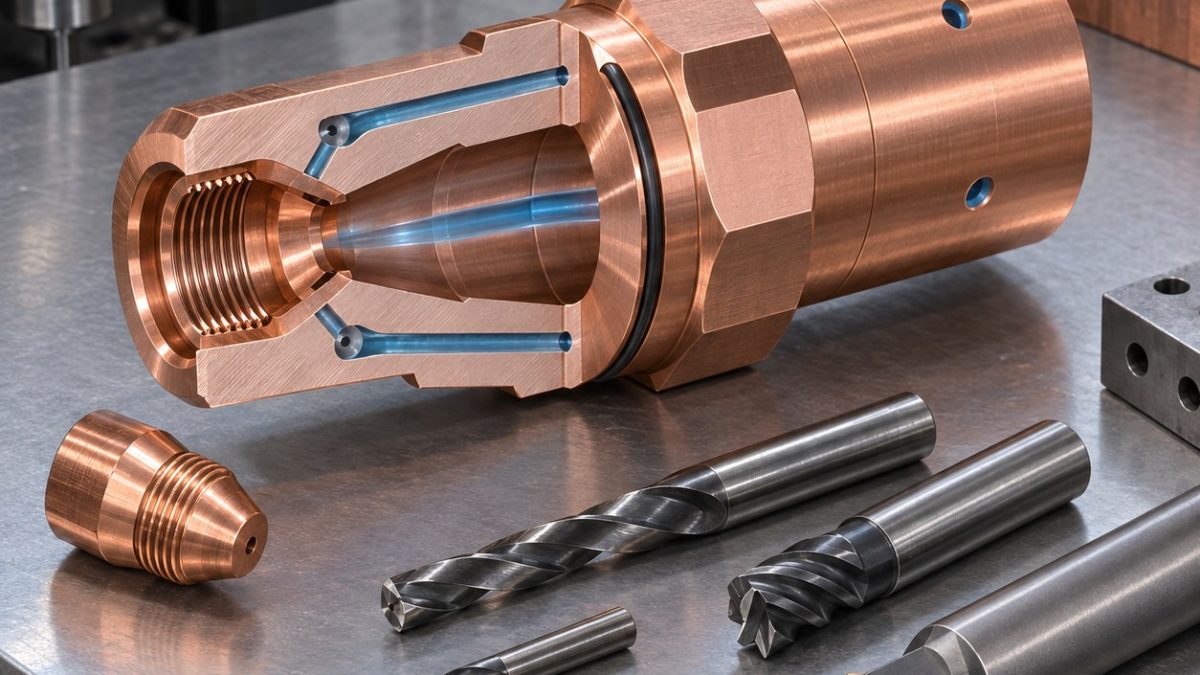
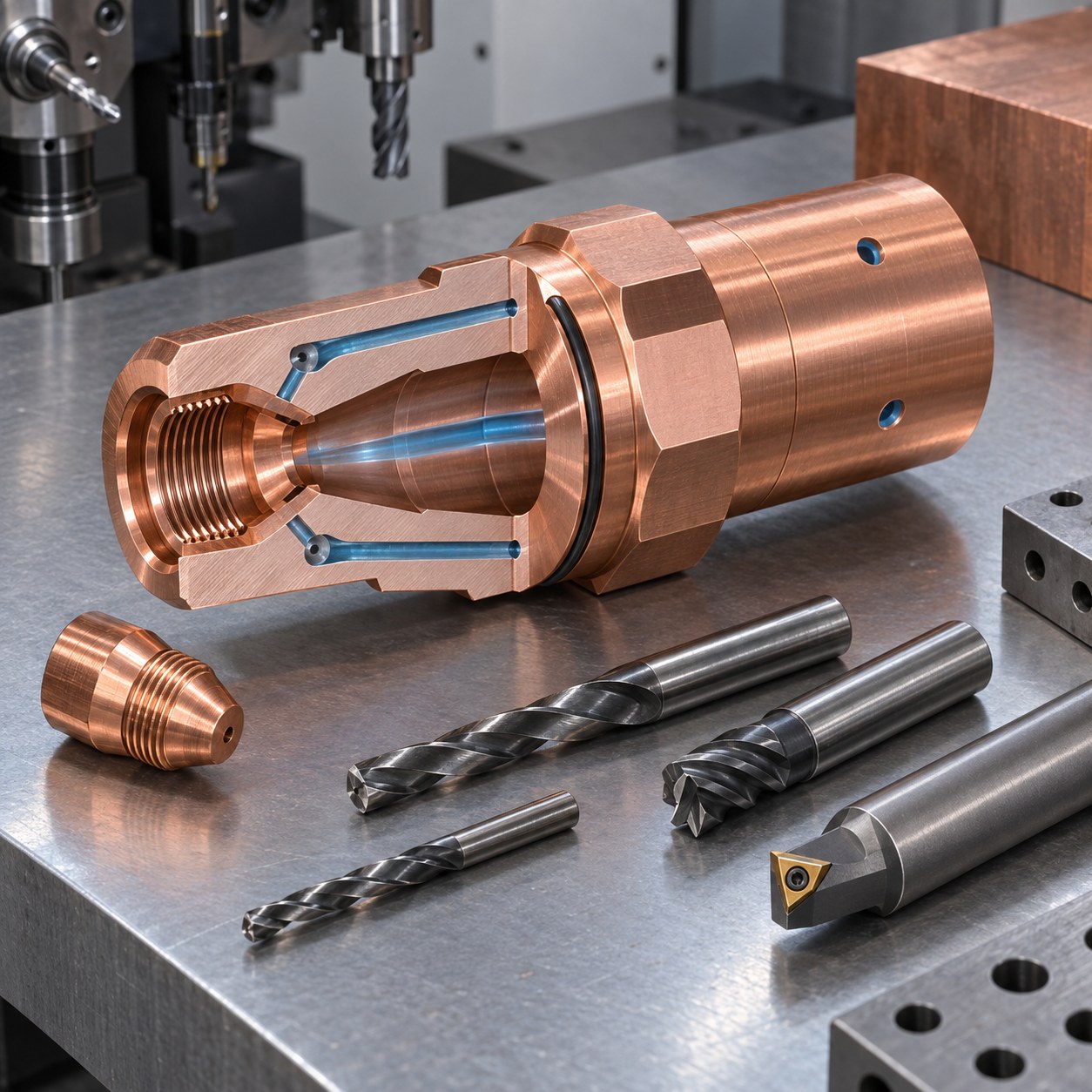
This CuCrZr electrode-holder case answers a practical search intent: which carbide tools should be chosen when a resistance welding holder drawing combines water flow, replaceable tip threading and seal geometry in one copper alloy body. The tooling plan is driven by heat removal and by preventing copper smearing in the threaded tip seat.
Drawing features converted into CuCrZr tool choices
| Drawing feature | Carbide tool and holder | Why this choice wins |
|---|---|---|
| Tapered water channel | 6 mm through-coolant carbide drill, semi-boring bar and 3-flute tapered finisher in hydraulic holder | The channel must guide flow without rubbing copper; a twist drill alone would leave taper error and smeared lips. |
| Threaded replaceable tip seat | Carbide thread mill after single-lip boring, TiB2 coating, runout below 0.01 mm | Thread milling controls chip evacuation; tapping is rejected because copper chips can gall and seize. |
| O-ring groove | 1.5 mm polished carbide grooving tool with neutral rake | Keeps groove corners clean without rolling CuCrZr into the seal flank. |
| Wrench flats | 10 mm sharp 3-flute carbide end mill in a short collet chuck | Cuts flats after bores so clamping loads do not distort the water channel. |
| Cross coolant ports | 1.2 mm carbide drill plus miniature back-chamfer cutter | Breakthrough burrs are removed inside the channel rather than left to restrict water flow. |
Machining order for cooling accuracy
Rough turn or mill the outside only enough for reference, drill and semi-bore the water path while the part is still rigid, then finish the taper before opening cross ports. The threaded tip seat is bored, thread-milled and checked before wrench flats are cut, because flat milling can relax the clamp section.
Copper alloy chip, burr and tool-life controls
CuCrZr is conductive but sticky. Sharp polished edges, TiB2 where useful, high coolant velocity and short chip evacuation paths are more important than heavy feed. Tool life is stopped by burr color, thread flank pickup and water-port restriction rather than by time alone.
Leak and fit inspection plan
Inspection combines thread gauge, bore gauge, borescope through the water channel, O-ring groove width and a low-pressure flow check. The cross-hole deburring pass is accepted only if it leaves no visible burr inside the taper.
CuCrZr tooling FAQ
Why not tap the CuCrZr tip thread?
Copper alloy chips can gall in a tap flute; thread milling gives cleaner chip evacuation and adjustable pitch diameter.
Which feature sets the first datum?
The water channel, because flow and tip seating depend on its axis.
How is internal burr risk checked?
By borescope and flow check after back-chamfering the cross ports.