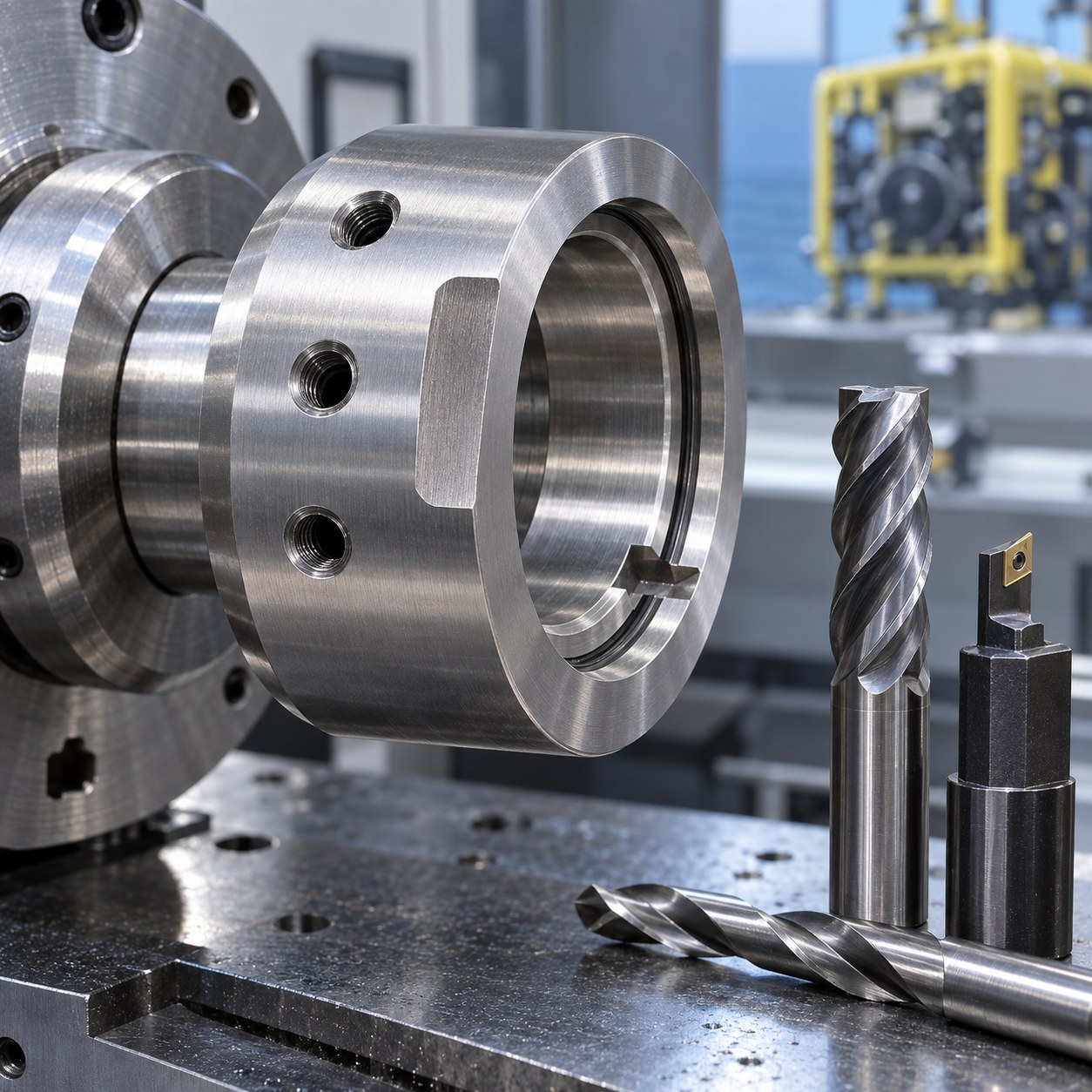
English: S32760 Sensor Collar Tooling for Seal Groove and Radial Keyway
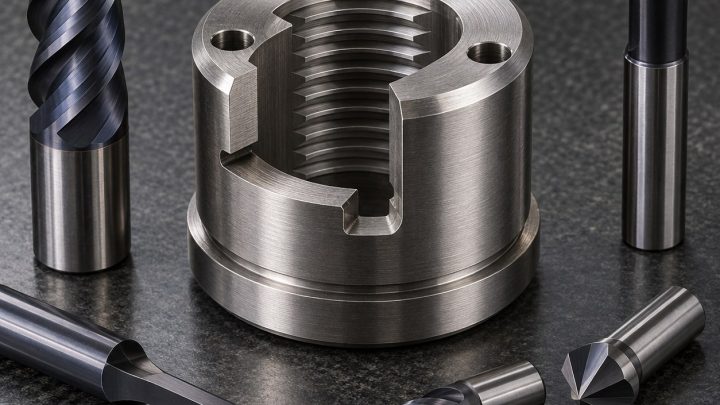
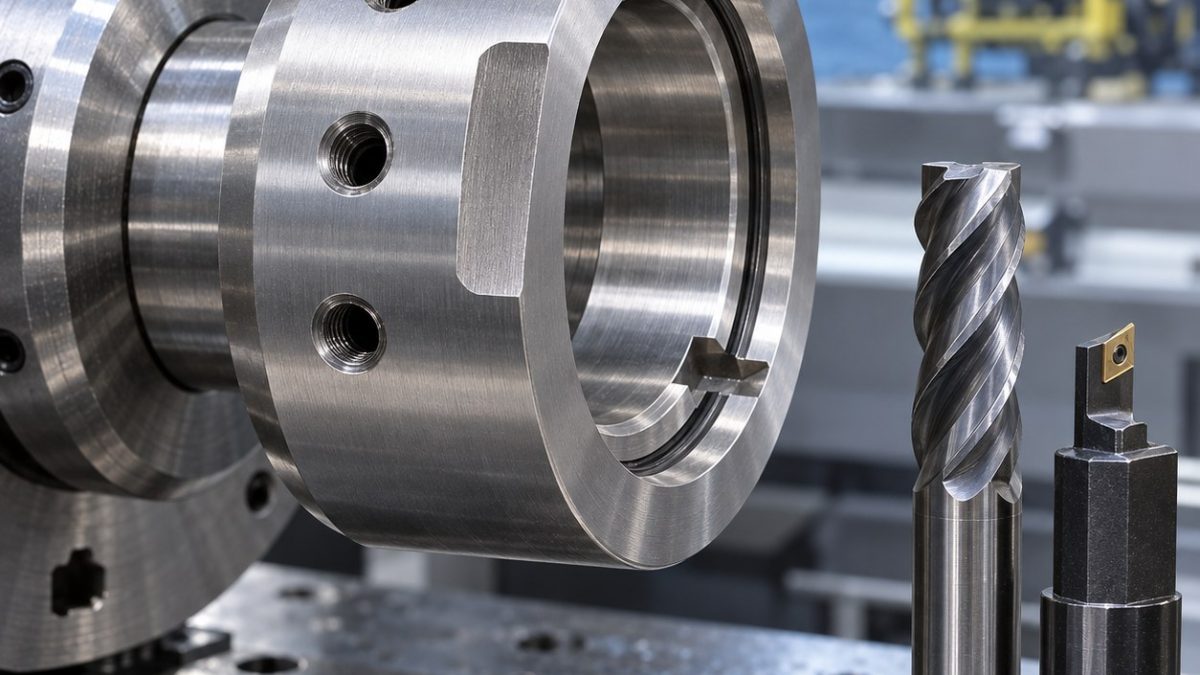
On this hypothetical subsea sensor collar, the internal groove and radial keyway share a bore datum but ask different things of the cutter. The groove protects a sealing element, while the keyway transfers angular position. Example tolerances only explain the planning logic; actual pressure, material certification and service acceptance remain separate.
Bore datum before the interruptions
Turn and fine-bore the ring while the wall is continuous, then mount from the finished bore on an expanding mandrel. Cut the internal groove before opening the keyway, and mill the keyway with steady side engagement. Drill set-screw bores last, with the bore still protected from chips.
Feature-to-tool decisions
| Feature | Tool | Decision |
|---|---|---|
| Bore datum | Coated carbide drill followed by short fine-boring bar in rigid holder | Finish the bore before slots; a reamer cannot correct distortion from later interruption. |
| Internal seal groove | 1.5 mm carbide internal grooving insert, positive rake, minimum overhang | Plunge with dwell-free exits; hand-form tool rubs and hardens the flank. |
| Radial keyway | 4 mm variable-helix AlTiN carbide end mill, short flute, shrink holder | Adaptive side milling controls notch wear; full-width plunging shocks the tool. |
| Set-screw bores | Carbide spot drill and 2.5 mm coolant-through drill | Spot on the curved OD; an unspotted drill skates and work-hardens surface. |
| Wrench flat edge | 45° carbide chamfer mill, small land | Break only the specified edge; abrasive disc rounds the datum. |
Avoiding duplex work hardening
Super duplex rewards a firm cut and punishes rubbing. Maintain chip load, avoid a stopped tool in the groove, and deliver coolant consistently where allowed by the documented process. A shiny rubbed keyway wall, notch wear or torn groove edge calls for tool inspection before altering the route.
Fit and groove inspection
After release, measure bore roundness, groove width and depth, keyway position from the bore datum, and set-screw axes from the outside reference. Use a representative dummy shaft and key only for mechanical-fit checks; subsea sealing and pressure tests are separate requirements.
Practical tooling FAQ
Why machine the groove before the keyway?
A continuous wall gives the internal grooving tool better support.
Can a gauge prove subsea sealing?
No; it checks geometry, not pressure performance.
440C Encoder Disc CNC Tool Selection for Radial Windows and Datum Bore · PCTFE Cryogenic Valve Poppet CNC Tool Selection for Seal Cone and Spring Pocket